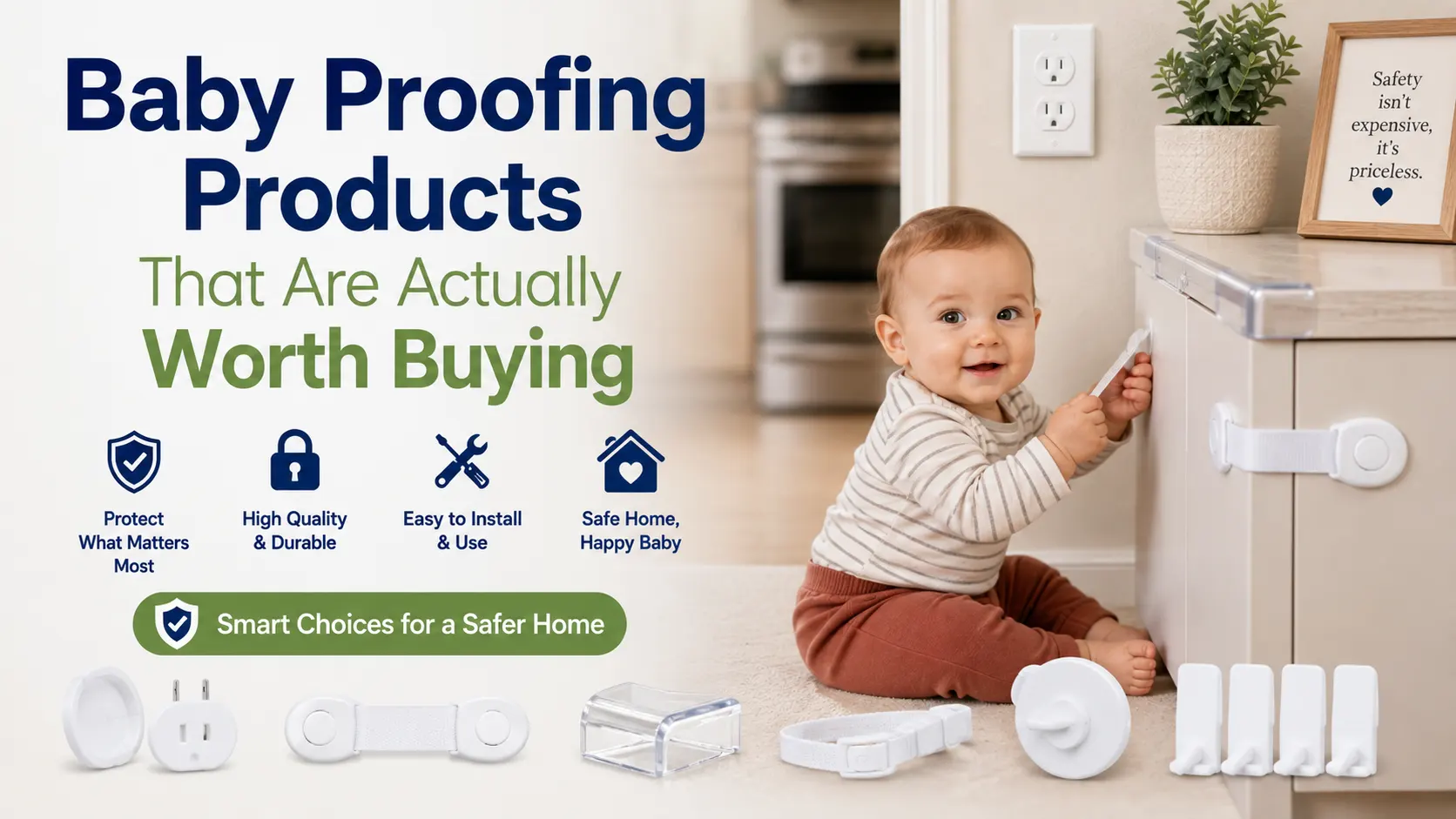

Most baby proofing product round-ups are really “best-tested-brand” lists — useful, but they go out of date the moment a product gets discontinued or a “best pick” sells out. This guide takes a different approach: it ranks product categories by how much real injury risk they address, and tells you what features to look for so you can choose confidently from whatever’s actually in stock, rather than chasing one specific SKU.
How These Categories Are Ranked
Products below are grouped by how directly they address a leading cause of home injury to babies and toddlers — tip-over accidents, falls, poisoning, burns, and choking — rather than by review star ratings. A product can be well-reviewed and still address a low-frequency risk, and a product can be unglamorous and still be one of the most important things you buy.
Tier 1: Worth Buying for Nearly Every Home
Furniture Anchors
Why it matters: Furniture tip-overs are a leading cause of serious injury and death in young children, especially once a baby starts pulling to stand and climbing. This is arguably the single highest-value purchase on this list. What to look for: Metal strap-and-bracket anchors rated for the weight of your specific furniture piece, not just adhesive-only straps. Anchors should mount into a wall stud where possible, not just drywall. Buy for: Any bookshelf, dresser, TV stand, or other furniture taller than it is wide.
Stair Gates
Why it matters: Falls down stairs are one of the most common injury-related ER visits for mobile babies and toddlers. What to look for: Hardware-mounted gates for the top of any staircase (pressure-mounted gates can be pushed loose from the top and aren’t rated for that location). Pressure-mounted gates are fine at the bottom of stairs or between rooms on a flat surface. Buy for: Any home with stairs, once baby starts crawling.
Cabinet and Drawer Latches
Why it matters: Poisoning from cleaning products and medications, and injury from sharp kitchen tools, are both high-frequency risks once a baby can open cabinets. What to look for: Latches that survive a hard, repeated tug test and that you can operate one-handed while holding a baby — a latch too fussy to use gets skipped after the first week. Buy for: Any cabinet or drawer with chemicals, medications, or sharp objects, at floor level or reachable-from-standing height.
Outlet Covers (the Built-In Kind, Not Loose Plugs)
Why it matters: Electrical injuries are less common than falls or poisoning but serious when they happen, and this is a genuinely cheap, easy fix. What to look for: Tamper-resistant outlet plates or sliding safety covers that stay attached to the outlet itself. Skip loose plug-in covers — a baby can pull these out, and the covers themselves then become a choking hazard. Buy for: Any accessible outlet at or below baby’s reach once mobile.
Smoke and Carbon Monoxide Detectors
Why it matters: This isn’t baby-specific, but a new baby in the home is a good prompt to check detectors are present, working, and have fresh batteries. What to look for: Combination smoke/CO detectors are convenient; check your local building code for placement requirements. Buy for: Every home, regardless of a baby’s mobility stage.
Tier 2: Worth Buying If It Matches Your Specific Home Layout
Corner and Edge Guards
Why it matters: Coffee table and hearth corners are a common source of minor-to-moderate head injuries once a baby is cruising and unsteady on their feet. What to look for: Dense foam or silicone guards that stay adhered under real pressure — thin, cheap guards can peel off and become a separate hazard. Buy for: Sharp-cornered furniture at head height for a standing or cruising baby, especially near where baby plays or walks most.
Toilet Lid Locks
Why it matters: Drowning risk from an open toilet is real for a mobile baby, though lower-frequency than tip-overs or falls. What to look for: A lock that’s genuinely difficult for a toddler to defeat but still usable one-handed by an adult. Buy for: Homes where the bathroom door can’t be reliably kept closed.
Stove Knob Covers
Why it matters: Burns from an accidentally-turned stove knob are preventable with a cheap, simple product. What to look for: Clear covers that don’t interfere with normal cooking use, since a cover that’s annoying to remove gets left off entirely. Buy for: Stoves with knobs at or below a toddler’s standing reach.
Door Knob Covers
Why it matters: Lower-severity than most items on this list, but useful for keeping a mobile toddler out of specific rooms (a home office, a garage door to outside). What to look for: Covers that still allow quick adult access in an emergency — some styles are frustrating enough that adults stop using them consistently. Buy for: Doors leading to specific off-limits rooms or outside access, not every interior door.
Tier 3: Situational, Not Universal
Baby Gates for Open Doorways (Non-Stair)
Why it matters: Useful for keeping a baby out of a specific room, but not addressing a major injury category the way a stair gate does. What to look for: Same hardware-vs-pressure-mount logic as stair gates — hardware-mounted for anywhere a baby could push hard against it. Buy for: Rooms with concentrated hazards (a home office with cords and small objects, a room with a fireplace) rather than every doorway in the house.
Furniture Corner Cushioning for Soft-Edged Furniture
Why it matters: Lower priority than hard-cornered furniture — rounded, upholstered furniture edges present much less real risk. Skip or downgrade if: Your furniture already has soft, rounded edges; this is one of the more skippable items on most standard baby proofing kits.
Baby Proofing Kits (All-in-One Bundles)
Why it matters: Convenient for getting started quickly, but often include a mix of high-value items (anchors, latches) and low-value filler (extra corner guards you won’t need, redundant covers). What to look for: Check the included item list against Tier 1 above — a kit heavy on Tier 1 items is worth it; a kit padded mostly with Tier 3 filler probably isn’t the best value compared to buying individual Tier 1 items separately.
Products Not Worth Prioritizing
- Loose, pull-out outlet plug covers — as noted above, these introduce a choking hazard and are less effective than built-in covers.
- Baby knee pads for crawling — marketed heavily, but not something most pediatric safety guidance treats as necessary; most babies crawl comfortably without them.
- Elaborate multi-camera monitoring systems marketed as a “baby proofing” solution — a monitor is a useful tool but doesn’t substitute for physical barriers or supervision, and shouldn’t be prioritized ahead of Tier 1 items on a limited budget.
- Full-coverage outlet plates on outlets permanently blocked by furniture — not a wasted purchase exactly, but not a priority if the outlet isn’t actually reachable.
How to Prioritize on a Budget
If you can’t buy everything at once, this order roughly follows injury-risk severity and frequency:
- Furniture anchors
- Stair gates (if you have stairs)
- Cabinet/drawer latches for chemicals and medications
- Outlet covers (built-in style)
- Corner guards on hard-edged furniture at head height
- Toilet lid lock and stove knob covers
- Everything else, situationally
The Bottom Line
The baby proofing products actually worth your money are the ones that address the highest-frequency, highest-severity risks — furniture anchors, stair gates, and cabinet latches — not necessarily the ones that show up first in a product round-up or come bundled in the biggest kit. Buy Tier 1 first, add Tier 2 based on your specific home layout, and treat anything below that as optional rather than essential.
Continue exploring: browse the full Baby Safety hub.
Frequently Asked
Common Questions