
The bathroom is consistently ranked as the second most hazardous room in the house, right behind the kitchen — and for a reason many parents underestimate: drowning is the leading cause of unintentional death for children ages 1 to 4, and it can happen in as little as one to two inches of water. This isn’t a room to leave for later, even though it’s tempting to assume a newborn “isn’t there yet.”
Quick answer: The three non-negotiable bathroom fixes are a toilet lid lock, a water heater set to 120°F (49°C) or lower, and locked storage for all medications and cleaning products — these address drowning, scalding, and poisoning, the three leading bathroom-specific risks.
Why Drowning Risk Is Worse Than Most Parents Assume
Most parents picture drowning risk as a pool or bathtub scenario requiring several inches or feet of water. In reality, a baby or toddler can drown in one to two inches of water — enough to be present in a toilet bowl, a half-drained bathtub, or a forgotten bucket. It also tends to happen silently, without the splashing or calling out that people expect, which is part of why constant supervision (not just physical barriers) matters so much in this specific room.
This is the reasoning behind why toilet locks and “never leave the water running unattended” rules apply even when a baby seems too small to be at risk yet — mobility can arrive faster than expected, and the hazard doesn’t require much water to be real.
Toilet Safety: 3 Lock Types Compared
| Lock Type | How It Works | Best For |
|---|---|---|
| Toilet lid lock | A latch connects the lid to the tank, requiring adult-level grip strength to release | Most households; the standard first fix |
| Door knob cover | A loose plastic cover spins around the doorknob, requiring a two-handed squeeze most toddlers can’t manage, restricting bathroom access entirely | Households that prefer to block the room rather than the toilet specifically |
| High door lock | A slide lock mounted high on the outside of the bathroom door, out of a toddler’s reach | Bathrooms with an existing habit of being left open, or multiple children of different ages |
A toilet lid lock is the most direct fix, but restricting bathroom access with a door-based option is a reasonable alternative or addition, especially if other bathroom hazards (medicine cabinet, cords) aren’t yet fully addressed.
Bathtub and Water Temperature Safety
- Set your water heater thermostat to 120°F (49°C) or lower — a baby’s skin is thinner than an adult’s and burns significantly faster at higher temperatures
- Always test bathwater with your wrist or elbow, not your hand, before placing your baby in — even with the water heater adjusted
- Add non-slip mats or adhesive strips to the bottom of the tub
- Use a cushioned spout cover to prevent head injuries from bumping against the hard faucet
- Never leave your baby unattended in the bath, even for a few seconds to grab a towel or answer the door — bring everything you need into the bathroom before starting
- Never leave standing water in the tub after bath time, and don’t leave the water running while you step out, even briefly
Medicine Cabinet and Storage
- Use a keyed or combination lock on the medicine cabinet — a simple latch is often not enough for a determined older toddler
- Store medications, vitamins, and supplements up high and in a locked cabinet, not just on a high shelf, since climbing ability arrives sooner than most parents expect
- Store cleaning products, mouthwash, nail polish and remover, and razors the same way — none of these belong under the sink within easy reach
- Use a shower caddy to keep shampoo, soap, and other supplies up and off the tub edge, both for safety and to reduce clutter a baby could pull down
- Keep the toilet brush and plunger out of reach — not a poisoning risk, but a hygiene one worth addressing anyway
Electrical Safety in a Wet Room
- Confirm bathroom outlets are GFCI (ground-fault circuit interrupter) outlets, which cut power automatically if water contact or a short circuit occurs
- Insert tamper-resistant outlet covers into any unused outlets
- Unplug hair dryers, curling irons, straighteners, and razors after each use rather than leaving them plugged in on the counter
- Wrap and store these cords out of sight, since a dangling cord is both a pulling and a strangulation risk
Other Bathroom Hazards
- Large or floor-length mirrors that lean or prop against a wall need furniture anchors, the same as any tall furniture elsewhere in the house
- Scented or brightly colored soaps can attract a curious baby the same way candy would — store out of reach if they’re within a baby’s typical reach zone
- Door hinges and gaps can pinch small fingers; a foam door-hinge guard is a low-cost fix if your bathroom door is one your baby regularly interacts with
- Bath toys with mold buildup aren’t a proofing issue in the traditional sense, but are worth checking periodically for the same “what could my baby end up mouthing” logic that applies to everything else in this room
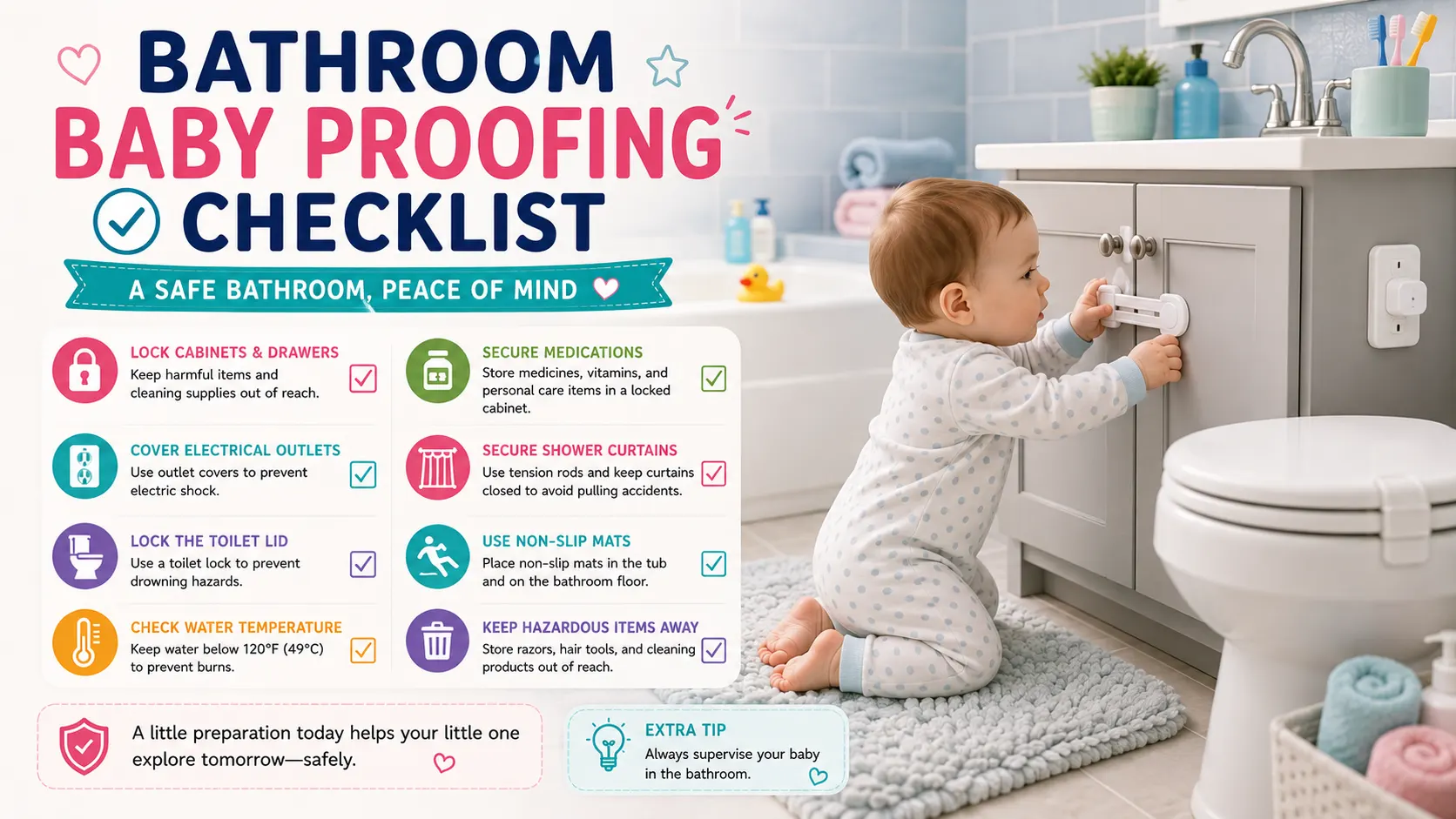
The Full Checklist
- Install a toilet lid lock (or a door-based lock/cover as an alternative)
- Set water heater to 120°F (49°C) or lower
- Add non-slip mat/strips to the tub
- Add a cushioned faucet spout cover
- Lock the medicine cabinet with a keyed or combination lock
- Move cleaning products, mouthwash, and razors to locked storage
- Confirm bathroom outlets are GFCI
- Add tamper-resistant covers to unused outlets
- Unplug and store hair tools and their cords after each use
- Anchor any large or leaning mirrors
- Never leave your baby unattended near any amount of water in this room
Continue exploring: browse the full Baby Safety hub.
Frequently Asked
Common Questions