
Skip to content
DidYouSearch DidYouSearch
  • did you search?
  • Baby Plus+
    • Baby Activities
      • Arts & Crafts
      • Indoor Activities
      • Montessori
      • Music
      • Outdoor Activities
      • Reading
      • Sensory Play
      • Tummy Time
    • Baby Development
      • Brain Development
      • Cognitive Development
      • Emotional Development
      • Fine Motor Skills
      • Growth Milestones
      • Monthly Milestones
      • Motor Skills
      • Physical Development
      • Social Development
      • Speech Development
    • Baby Feeding
      • Allergies
      • Baby Led Weaning
      • Bottle Feeding
      • Breast feeding
        • Breastfeeding Diet
        • Breastfeeding Positions
        • Latch Problems
        • Low Milk Supply
        • Mastitis
        • Pumping Schedule
        • Weaning
      • Burping
      • Cluster Feeding
      • Feeding Schedule
      • Formula Feeding
        • Formula Amount
        • Formula Brands
        • Formula Comparison
        • Formula Preparation
        • Formula Storage
      • Hydration
      • Pumping
      • Solid Foods
    • Baby Gear Reviews
      • Best Baby Carrier
      • Best Baby Monitor
      • Best Baby Strollers
      • Best Bottles
      • Best Breast Pump
      • Best Car Seat
      • Best Cribs
      • Best Diapers
      • Best Formula
      • Best Toys
    • Baby Growth
      • Growth Spurts
      • Height Charts
      • Monthly Growth
      • Percentiles
      • Weight Charts
    • Baby Health
      • Allergies
      • Cold
      • Constipation
      • Cough
      • Diarrhea
      • Ear Infection
      • Fever
      • Flu
      • Pediatric Visits
      • Rashes
      • Teething
      • Vaccines
      • Vomiting
    • Baby Nutrition
      • Dairy
      • Drinks
      • Eggs
      • Fish
      • Fruits
      • Healthy Recipes
      • Meat
      • Snacks
      • Vegetables
      • Vitamins
    • Baby Products
      • Baby Carriers
      • Bassinets
      • Bottles
      • Breast Pumps
      • Car Seats
      • Cribs
      • Diaper Bags
      • High Chairs
      • Monitors
      • Strollers
      • Swings
      • Toys
      • Walkers
    • Baby Recipes
      • BLW Recipes
      • Breakfast
      • Dinner
      • Finger Foods
      • Lunch
      • Purees
      • Snacks
    • Baby Safety
      • Baby Proofing
      • Car Seats
      • Choking Hazards
      • CPR
      • Home Safety
      • Poison Prevention
      • Safe Sleep
      • Sun Protection
      • Water Safety
  • Baby Names
    • Boy Names
    • Girl Names
    • American baby boy names
    • American baby girl names
    • Biblical Names
    • Middle Names
    • Modern Names
    • Short Names
    • Unique Names
    • Unisex Names
  • Recommended
    • Baby Shopping
      • Baby Registry
      • Budget Baby Shopping
      • Hospital Bag
      • Must Have Products
      • Newborn Checklist
      • Nursery Ideas
    • Baby Sleep
      • Bedtime Routine
      • Co Sleeping
      • Crib Safety
      • Nap Schedules
      • Night Wakings
      • Sleep Environment
      • Sleep Products
      • Sleep Regression
      • Sleep Training
      • Wake Windows
      • White Noise
    • Childcare
      • Daycare
      • Babysitters
      • Kindergarten
      • Nannies
      • Preschool
    • Newborn Care
      • Nail Care
      • Baby Hygiene
      • Bathing
      • Crying
      • Diapering
      • Ear Care
      • Eye Care
      • Skin Care
      • Soothing Techniques
      • Temperature
      • Umbilical Cord
    • Special Needs
      • Premature Babies
      • Autism Signs
      • Developmental Delays
      • Down Syndrome
      • NICU
      • Twins
    • Seasonal Baby Care
      • Spring
      • Summer
      • Travel
      • Fall
      • Holidays
      • Winter
  • Parenting
    • Bonding
    • Discipline
    • Emotional Intelligence
    • First Time Parents
    • Gentle Parenting
    • Positive Parenting
    • Routines
    • Single Parents
    • Working Parents
  • Pregnancy
    • Pregnancy Complications
    • Labor & Delivery
    • Postpartum Recovery
    • Pregnancy Exercises
    • Pregnancy Medications
    • Pregnancy Nutrition
    • Pregnancy Sleep
    • Pregnancy Symptoms
    • Pregnancy Tests
    • Pregnancy Vitamins
    • Pregnancy Weeks
  • Toddler
    • Preschool
    • Speech
    • Tantrums
    • Toddler Food
    • Toddler Sleep
    • Behavior
    • Independence
    • Learning
    • Potty Training
  • Traveling with Baby
    • Road Trips
    • Beach
    • Camping
    • Flying
    • Hotels
    • Packing Lists
  • did you search?
  • Baby Plus+
    • Baby Activities
      • Arts & Crafts
      • Indoor Activities
      • Montessori
      • Music
      • Outdoor Activities
      • Reading
      • Sensory Play
      • Tummy Time
    • Baby Development
      • Brain Development
      • Cognitive Development
      • Emotional Development
      • Fine Motor Skills
      • Growth Milestones
      • Monthly Milestones
      • Motor Skills
      • Physical Development
      • Social Development
      • Speech Development
    • Baby Feeding
      • Allergies
      • Baby Led Weaning
      • Bottle Feeding
      • Breast feeding
        • Breastfeeding Diet
        • Breastfeeding Positions
        • Latch Problems
        • Low Milk Supply
        • Mastitis
        • Pumping Schedule
        • Weaning
      • Burping
      • Cluster Feeding
      • Feeding Schedule
      • Formula Feeding
        • Formula Amount
        • Formula Brands
        • Formula Comparison
        • Formula Preparation
        • Formula Storage
      • Hydration
      • Pumping
      • Solid Foods
    • Baby Gear Reviews
      • Best Baby Carrier
      • Best Baby Monitor
      • Best Baby Strollers
      • Best Bottles
      • Best Breast Pump
      • Best Car Seat
      • Best Cribs
      • Best Diapers
      • Best Formula
      • Best Toys
    • Baby Growth
      • Growth Spurts
      • Height Charts
      • Monthly Growth
      • Percentiles
      • Weight Charts
    • Baby Health
      • Allergies
      • Cold
      • Constipation
      • Cough
      • Diarrhea
      • Ear Infection
      • Fever
      • Flu
      • Pediatric Visits
      • Rashes
      • Teething
      • Vaccines
      • Vomiting
    • Baby Nutrition
      • Dairy
      • Drinks
      • Eggs
      • Fish
      • Fruits
      • Healthy Recipes
      • Meat
      • Snacks
      • Vegetables
      • Vitamins
    • Baby Products
      • Baby Carriers
      • Bassinets
      • Bottles
      • Breast Pumps
      • Car Seats
      • Cribs
      • Diaper Bags
      • High Chairs
      • Monitors
      • Strollers
      • Swings
      • Toys
      • Walkers
    • Baby Recipes
      • BLW Recipes
      • Breakfast
      • Dinner
      • Finger Foods
      • Lunch
      • Purees
      • Snacks
    • Baby Safety
      • Baby Proofing
      • Car Seats
      • Choking Hazards
      • CPR
      • Home Safety
      • Poison Prevention
      • Safe Sleep
      • Sun Protection
      • Water Safety
  • Baby Names
    • Boy Names
    • Girl Names
    • American baby boy names
    • American baby girl names
    • Biblical Names
    • Middle Names
    • Modern Names
    • Short Names
    • Unique Names
    • Unisex Names
  • Recommended
    • Baby Shopping
      • Baby Registry
      • Budget Baby Shopping
      • Hospital Bag
      • Must Have Products
      • Newborn Checklist
      • Nursery Ideas
    • Baby Sleep
      • Bedtime Routine
      • Co Sleeping
      • Crib Safety
      • Nap Schedules
      • Night Wakings
      • Sleep Environment
      • Sleep Products
      • Sleep Regression
      • Sleep Training
      • Wake Windows
      • White Noise
    • Childcare
      • Daycare
      • Babysitters
      • Kindergarten
      • Nannies
      • Preschool
    • Newborn Care
      • Nail Care
      • Baby Hygiene
      • Bathing
      • Crying
      • Diapering
      • Ear Care
      • Eye Care
      • Skin Care
      • Soothing Techniques
      • Temperature
      • Umbilical Cord
    • Special Needs
      • Premature Babies
      • Autism Signs
      • Developmental Delays
      • Down Syndrome
      • NICU
      • Twins
    • Seasonal Baby Care
      • Spring
      • Summer
      • Travel
      • Fall
      • Holidays
      • Winter
  • Parenting
    • Bonding
    • Discipline
    • Emotional Intelligence
    • First Time Parents
    • Gentle Parenting
    • Positive Parenting
    • Routines
    • Single Parents
    • Working Parents
  • Pregnancy
    • Pregnancy Complications
    • Labor & Delivery
    • Postpartum Recovery
    • Pregnancy Exercises
    • Pregnancy Medications
    • Pregnancy Nutrition
    • Pregnancy Sleep
    • Pregnancy Symptoms
    • Pregnancy Tests
    • Pregnancy Vitamins
    • Pregnancy Weeks
  • Toddler
    • Preschool
    • Speech
    • Tantrums
    • Toddler Food
    • Toddler Sleep
    • Behavior
    • Independence
    • Learning
    • Potty Training
  • Traveling with Baby
    • Road Trips
    • Beach
    • Camping
    • Flying
    • Hotels
    • Packing Lists
Close

Search

Home/Baby Safety/Baby Proofing/Kitchen Baby Proofing Ideas
Baby ProofingBaby Safety

Kitchen Baby Proofing Ideas

By Ali
August 2, 2026 4 Min Read
0

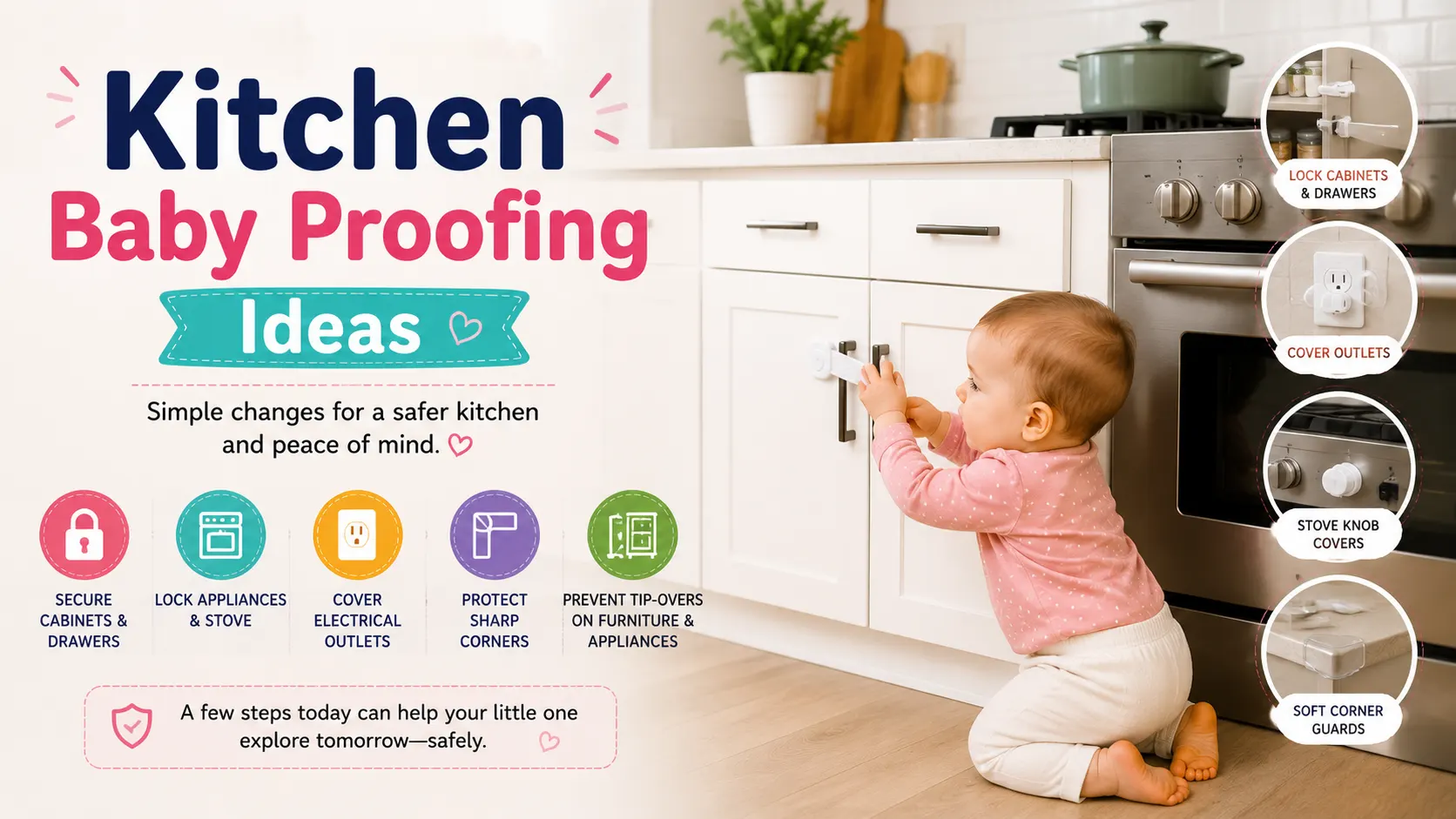
The kitchen is consistently identified as the most hazardous room in the house for young children, and the reason is specific: it’s the one room that combines heat, toxic substances, and sharp or heavy objects all within a toddler’s reach, often at the same time. This guide breaks the kitchen into zones — the danger zones to lock down completely, and the “yes zone” that keeps your baby occupied without a fight.

Quick answer: The three highest-priority kitchen fixes are locking the under-sink cabinet (cleaning chemicals), securing dishwasher pods in a locked, high cabinet, and adding stove knob covers plus a stove guard — these three address the categories responsible for the most kitchen-related injuries.

The Three Danger Zones to Lock Down First

Contents hide
1 The Three Danger Zones to Lock Down First
2 Which Cabinet Lock Should You Actually Buy
3 Stove and Oven Safety, Layered
4 Dishwasher Safety (Often Overlooked)
5 The “Yes Cabinet” Strategy
6 Other Kitchen Hazards Worth Addressing
7 Frequently Asked
8 Common Questions

1. The under-sink cabinet. This is typically the single most dangerous cabinet in the kitchen — it commonly holds drain cleaner, bleach, dish soap, and sprays, all at exactly toddler-reaching height.

2. Dishwasher pods. Brightly colored, squishy, and shaped like candy or a teething toy, dishwasher pods contain concentrated detergent that can cause serious burns to the mouth, throat, and esophagus if bitten into. Never leave a pod sitting in the dispenser “for later” — add it right before starting the cycle, and store the container in a high, locked cabinet, not the under-sink area.

3. The stovetop. Burns from stoves and hot cookware are among the most common kitchen injuries. This needs more than one fix — see the layered approach below.

If you only have time for three things this week, these are them.

Which Cabinet Lock Should You Actually Buy

Not all cabinet locks work the same way, and the “best” one depends on your cabinets and how often you access them:

Lock Type Pros Cons Best For
Magnetic locks Invisible from outside, clean look Requires a separate magnetic key; more involved install Cabinets you rarely open (chemicals, rarely-used items)
Adhesive strap locks Fast to install, renter-friendly, no drilling Adhesive can loosen over time near heat/humidity Quick setup, rentals, temporary use
Sliding bar locks Simple, effective, works on cabinet pairs Visible, some toddlers eventually figure out simple versions Under-sink cabinets, pantry doors
Spring latches Inexpensive, widely available Can be awkward for adults on high-use drawers Low-priority cabinets you rarely need quick access to

Practical rule: the best lock is the one every adult in the house will actually use correctly every time — a highly secure lock that gets left unlatched because it’s annoying isn’t actually protecting anyone.

Re-check adhesive-mounted locks every few weeks, especially near the dishwasher or oven, since heat and humidity can loosen the adhesive over time.

Stove and Oven Safety, Layered

The stove is worth a layered approach rather than a single fix, since no single product addresses every risk:

  • Stove knob covers fit over each burner control, requiring a two-step press-and-turn motion most toddlers can’t replicate
  • A stove guard — a raised barrier along the front edge of the range — physically blocks small hands from reaching pots and pans on the stovetop, even if the knobs themselves are covered
  • An oven door lock prevents pulling the oven door down, which can cause pinched fingers or burns from a hot door
  • A pull-out drawer latch for any storage drawer at the base of the oven, which is often overlooked
  • Cooking habits — turn pot handles inward and use rear burners when possible, since these habits cost nothing and reduce risk even before any product is installed

None of these fully replace supervision while cooking, but together they significantly reduce risk during the moments a baby is nearby but not being watched every second.

Dishwasher Safety (Often Overlooked)

An open dishwasher door creates two separate risks: it acts as a step stool at counter height, and it exposes sharp utensils and detergent residue.

  • Load knives and other sharp utensils blade-down, not blade-up
  • Add detergent right before starting the cycle, not in advance
  • Check for a built-in mechanical safety latch — many modern dishwashers have a small lever near the top or side of the door frame that locks it physically, separate from any electronic control lock
  • If your dishwasher doesn’t have a built-in lock, add a childproofing latch or appliance strap to keep the door from opening
  • If a toddler frequently interrupts the wash cycle by pressing buttons, a simple stiff cardboard or plastic shield taped over the control panel works, or you can buy dedicated button covers

The “Yes Cabinet” Strategy

Locking every cabinet in the kitchen isn’t necessary, and it can create more frustration (from both baby and parent) than it prevents. A widely recommended approach:

  • Choose one low cabinet, ideally away from the stove and sink, and leave it unlocked
  • Fill it with baby-safe items: plastic containers, wooden spoons, silicone lids, dish towels
  • This satisfies natural curiosity to open and explore cabinets without a daily fight over the ones that actually matter

This one adjustment often reduces how hard a baby pulls at the locked cabinets, since they have somewhere else to direct that curiosity.

Other Kitchen Hazards Worth Addressing

  • Trash and recycling — use a lidded bin your baby can’t open, or store behind a locked cabinet
  • Small appliances — unplug and store blenders, toasters, and similar items when not in use, keeping cords off the counter edge where they could be pulled
  • Magnets — small, strong decorative fridge magnets are a serious ingestion hazard if swallowed; keep them well above reach
  • Plastic bags — store on a high shelf, not left loose, due to suffocation risk
  • Garbage disposal switch — if within reach, replace with a locking cover plate or key switch
  • Floor spills — clean up promptly, since a wet kitchen floor is a fall risk for a new walker as much as a slip risk for adults

Continue exploring: browse the full Baby Safety hub.

Frequently Asked

Common Questions

The under-sink cabinet is consistently flagged as the highest-risk storage area, since it typically holds multiple chemical products at exactly the height a crawling or early-walking baby can reach.
Yes — their bright colors and squishy texture make them look like candy or a toy, but they contain concentrated detergent capable of causing serious burns to the mouth and throat if bitten into. They should always be stored in a high, locked cabinet, not left in the dishwasher's dispenser.
No. Locking cabinets that contain chemicals, sharp items, or heavy breakables is the priority — leaving one "yes cabinet" unlocked with baby-safe items often reduces overall frustration for both baby and parent.
A play yard or gate positioned within your sightline but away from the stove lets your baby stay close without being within reach of the cooking area — combined with turning pot handles inward and using rear burners when possible.
Author

Ali

Digital Marketing enthusiast with a passion for SEO, web design, analytics, and creative problem-solving.

Follow Me
Other Articles
Previous

Ultimate Baby Proofing Checklist Before Baby Crawls

Next

Bathroom Baby Proofing Checklist

No Comment! Be the first one.

Leave a Reply Cancel reply

Your email address will not be published. Required fields are marked *

What is Did You Search?

The “Did You Search” website was created for all mothers and families. Just search to find all your needs about your children.

Links

  • about
  • contact
  • privacy policy
  • medical disclaimer
  • sitemap
Copyright 2026 — DidYouSearch. All rights reserved.