
There’s something magical about a baby’s first beach day — wide eyes at the waves, tiny fists gripping sand for the first time, that unmistakable delight at a cool breeze off the water. Beach trips can be some of the most memorable outings with a baby, but they also come with real safety considerations, from sun exposure to sand hazards to unpredictable water. Here’s a practical, age-aware guide to beach activities for babies, along with the safety essentials worth knowing before you go.
When Can Babies Go to the Beach?
There’s no strict age minimum for a beach visit, but how you spend the day changes a lot with age. Newborns and babies under 2 months typically aren’t ready to splash or play — a beach day at this stage looks more like a shaded walk in a carrier or a quiet hour on a blanket. Once babies are a bit older and can sit up, a much wider range of beach activities for babies becomes possible.
Beach Safety Basics for Babies
Before getting into activity ideas, the safety fundamentals are worth covering first, since the beach presents risks that a backyard or park doesn’t.
Sun protection — babies under 6 months should be kept out of direct sunlight entirely, using shade from an umbrella, tent, or canopy, plus lightweight, snug, UV-protective clothing and a wide-brimmed hat. Sunscreen isn’t generally recommended before 6 months; after that, use a broad-spectrum SPF 30+ sunscreen and reapply every two hours
Timing — visiting early morning or late afternoon avoids the sun’s peak intensity between 10 a.m. and 4 p.m.
Water safety — always stay within arm’s reach of a baby in or near water, since ocean conditions can change quickly; a Coast Guard–approved flotation device is recommended for babies and toddlers near open water
Sand hazards — supervise closely to prevent baby from eating sand, which is both a choking hazard and can cause digestive upset; also avoid letting anyone dig deep holes, since sand hole collapses are a known but underrecognized danger
Hydration — offer extra breast milk, formula, or water (for babies over 6 months) throughout the day, since heat increases fluid needs
Best Beach Activities for Babies by Age
0 to 5 Months: Shade and Sensory Exposure
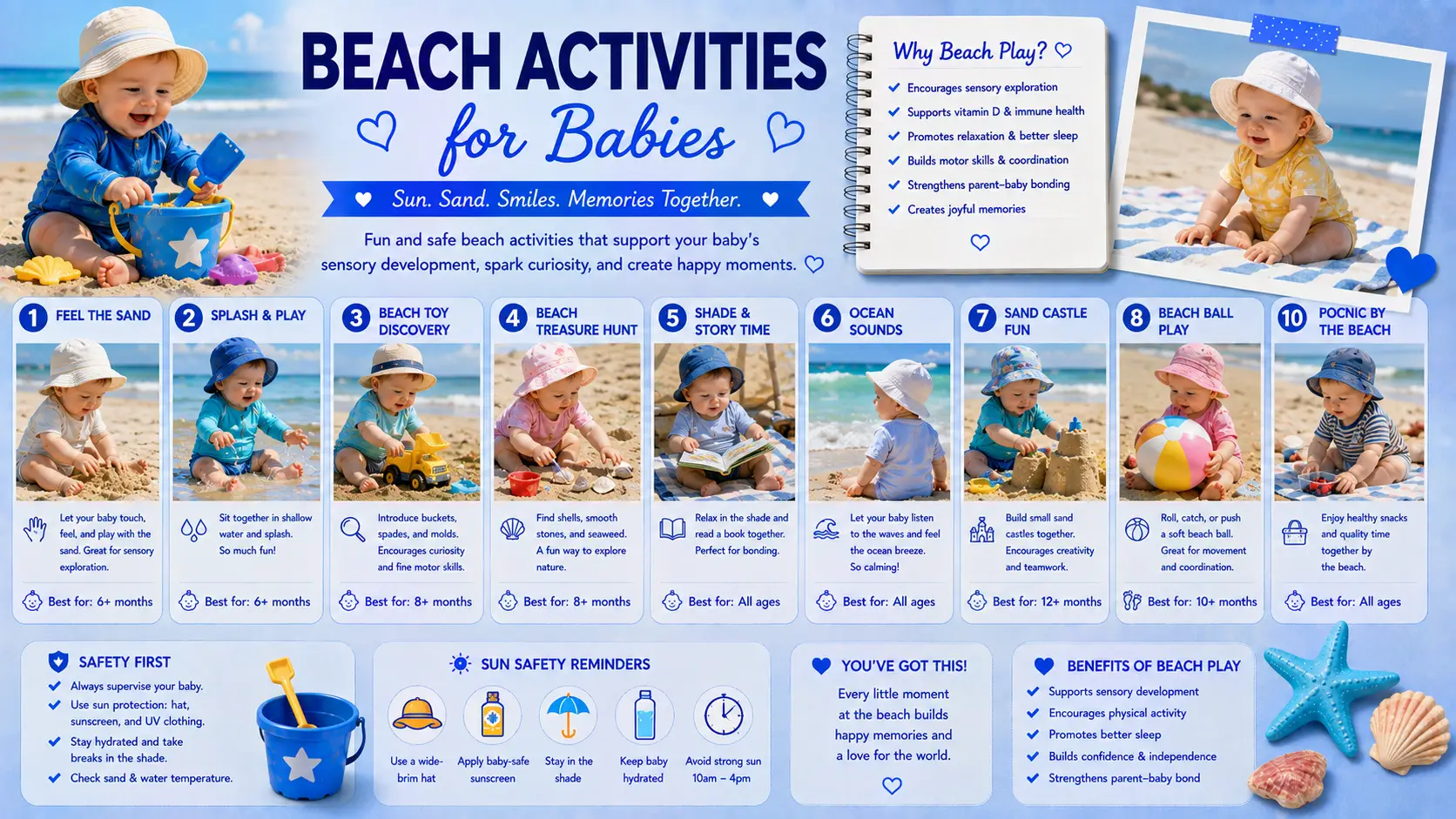
At this stage, the beach itself is the activity. Set up a shaded spot with a blanket or a pop-up tent, and let baby take in the sound of waves, the smell of sea air, and the feel of a light breeze. A carrier walk along the shoreline (away from direct sun) is another gentle way to enjoy the setting.
6 to 11 Months: Sand and Water Exploration
Once babies can sit up, a whole new set of beach activities opens up:
Sand play — let baby touch, pat, and squish sand with supervision; bring a soft sand toy or shovel for early motor-skill practice
Shallow water dipping — with an adult holding baby securely, gentle wave-edge water play offers new sensory input (always supervised, within arm’s reach)
Shell and texture hunting — hold interesting shells or smooth stones for baby to touch and examine
Beach blanket tummy time — a shaded blanket area works well for tummy time with a beach view
12+ Months: Active Beach Play
Walking or almost-walking babies can enjoy more hands-on beach activities:
Sandcastle building — even simple bucket-and-shovel play builds fine motor skills and is endlessly entertaining
Water limbo or splash games — shallow, supervised water play near the shoreline
Kite watching — babies are often mesmerized by a kite moving overhead
Mini inflatable pool — setting up a small, shallow inflatable pool on the sand gives toddlers their own contained water play area, separate from open water
What to Pack for a Beach Day with a Baby
A well-stocked beach bag makes a huge difference. Focus on the essentials: diapers, wipes, a wide-brimmed sun hat, baby-safe sunscreen (for 6 months and up), a change of clothes, a lightweight blanket or towel, a shade tent or umbrella, snacks or bottles, and a first-aid kit. A cooler for drinks and a wet/dry bag for sandy clothes are also worth bringing along.
Final Thoughts
A beach day with a baby doesn’t need to be elaborate to be memorable — shade, a blanket, some sand to touch, and close supervision near the water are really all it takes. With a bit of planning around sun and water safety, the beach can be one of the most sensory-rich, enjoyable outdoor outings for babies of any age.
FAQ
At what age can I first take my baby to the beach?
There’s no strict minimum age, though many parents wait until after the newborn stage. Babies under 6 months should be kept out of direct sunlight, so early beach visits should focus on shaded time rather than sun or water play.
Is sunscreen safe for babies at the beach?
Sunscreen isn’t generally recommended for babies under 6 months; rely on shade, UV-protective clothing, and wide-brimmed hats instead. For babies over 6 months, use a broad-spectrum SPF 30+ sunscreen and reapply every two hours.
What beach activities are safe for a sitting baby?
Supervised sand play, shallow shoreline water dipping (while held securely), and shell or texture exploration are all safe, age-appropriate beach activities once a baby can sit up.
How do I keep my baby safe in the water at the beach?
Always stay within arm’s reach in or near water, use a Coast Guard–approved flotation device for babies and toddlers, and avoid open water in favor of calm, shallow areas.
What should I pack in a beach bag for a baby?
Key essentials include diapers, wipes, sunscreen (for 6 months and up), a wide-brimmed hat, a shade tent or umbrella, a change of clothes, snacks or bottles, and a first-aid kit.