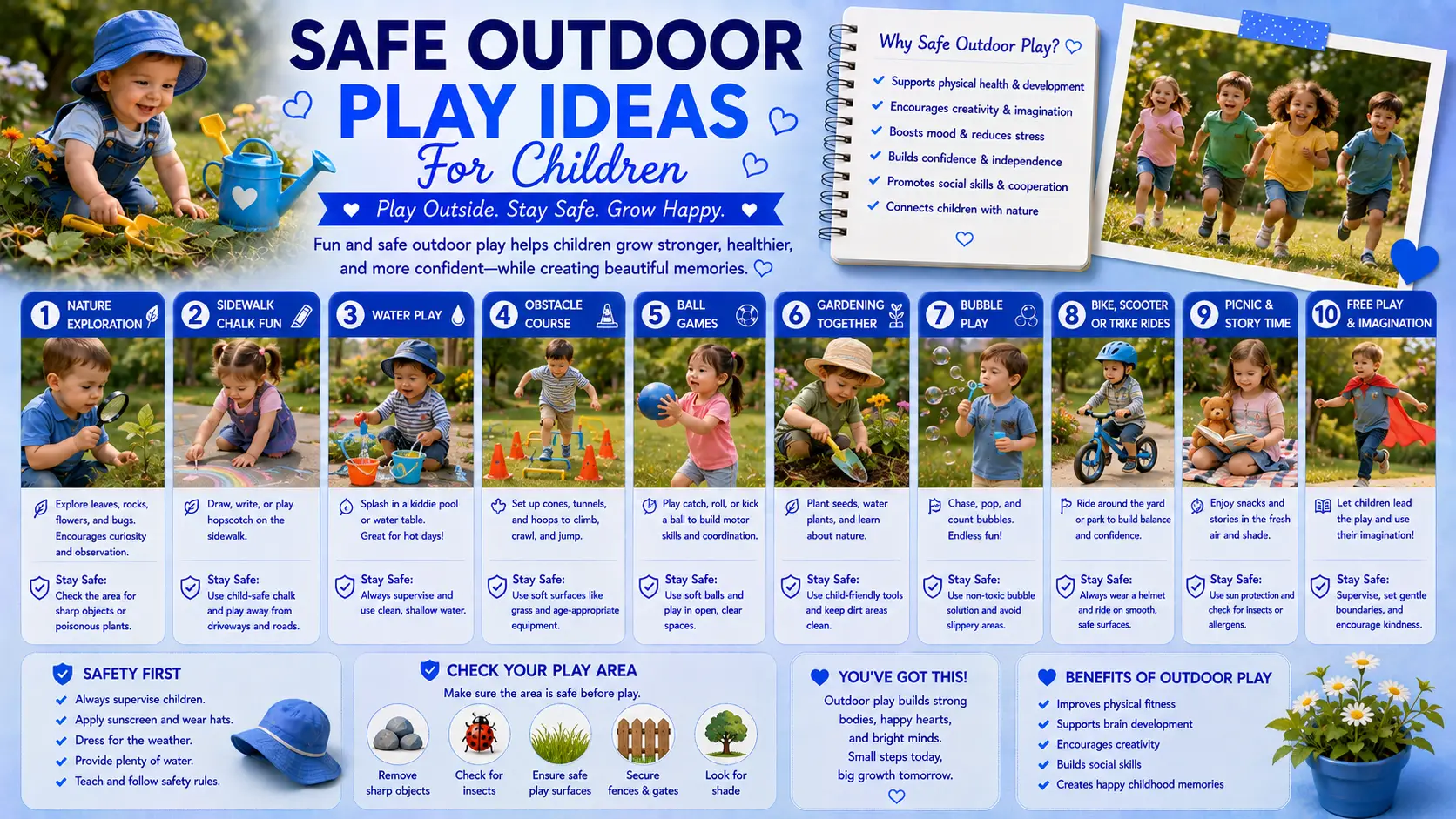

Outdoor play is one of the best things you can offer a child — it builds strength, confidence, and imagination in ways that screens and indoor toys simply can’t match. But “safe outdoor play” isn’t just about supervision; it’s also about choosing the right activities, equipment, and setup for your child’s age. Here’s a practical guide to safe outdoor play ideas for children, along with the safety essentials every parent should know.
Why Outdoor Play Matters
Outdoor play supports far more than physical fitness. Time outside has been linked to better mood regulation, improved sleep, and even a lower chance of developing short-sightedness in children. It also builds resilience and problem-solving skills, since the outdoors naturally offers more unpredictable, hands-on challenges than a living room floor. And because outdoor play tends to be messier and more physical, it’s often where children release the most energy and burn off the most restlessness.
Building a Safe Outdoor Play Space
Before diving into activity ideas, a safe setup makes everything else easier and lower-risk.
Do a hazard sweep — check for exposed roots, uneven ground, sharp edges, or loose fencing before letting kids play freely
Choose impact-absorbing surfaces — rubber mulch, sand, or synthetic turf under climbing equipment or swings significantly reduces injury risk from falls
Secure play equipment properly — anchor swing sets and climbers to the ground on flat, stable surfaces
Define boundaries — fencing or clear “stay in this area” rules help, especially near roads, water, or driveways
Keep a shaded rest spot — a shaded table or reading nook gives kids (and supervising adults) a break from direct sun
Safe Outdoor Play Ideas by Category
Active, Gross-Motor Play
Obstacle courses — hula hoops, cones, pool noodles, and chalk lines make an easy, ever-changing backyard challenge
Chase games — classics like tag, “chasey,” or hide-and-seek need no equipment and burn plenty of energy safely
Rope ladders and climbing structures — great for building grip strength and coordination, provided they’re properly secured and placed over soft ground
Mini sports zones — a dedicated corner for soccer, basketball, or catch keeps active play contained to one safer area
Sensory and Nature Play
Nature walks and scavenger hunts — collecting leaves, rocks, and sticks builds curiosity while keeping kids moving
Mud kitchens — old pots, spoons, and a patch of dirt turn messy play into open-ended pretend play
Sand and water play — sandboxes and water tables are reliably engaging and easy to keep low-risk with supervision
Gardening tasks — watering plants or digging in a designated garden bed gives kids a sense of purpose alongside sensory exploration
Creative and Quiet Outdoor Play
Sidewalk chalk art — a low-mess, screen-free way to encourage creativity outdoors
Reading nooks — a shaded spot with cushions or a blanket gives kids a calm outdoor retreat between active play
Building forts or cubbyhouses — cardboard boxes, blankets, or a simple playhouse structure spark imaginative play
Age-by-Age Safety Considerations
Babies and toddlers need constant, within-arm’s-reach supervision, soft ground, and hazard-free play zones free of small objects
Preschoolers can handle more independent play but still benefit from clear rules and equipment sized to their height and ability
School-age children can take on more physical risk-taking play (climbing, balancing) but still need properly maintained equipment and defined boundaries, especially near roads or water
General Outdoor Safety Tips
Apply and reapply sunscreen, and offer shade breaks during peak sun hours
Keep children hydrated, especially during active play in warm weather
Supervise water play at all times, regardless of how shallow the water appears
Check playground or backyard equipment regularly for wear, loose bolts, or damage
Talk to children about natural hazards (insects, thorny plants) rather than removing every element of risk — a little supervised risk-taking play supports healthy development
Final Thoughts
Safe outdoor play doesn’t mean eliminating every risk — it means setting up an environment where kids can explore, move, and get messy with confidence, while the real hazards are managed ahead of time. Whether it’s a sandbox, an obstacle course, or a simple nature walk, the best outdoor play ideas are often the simplest ones, backed by a little planning and consistent supervision.
FAQ
What are the safest outdoor play surfaces for children?
Impact-absorbing materials like rubber mulch, sand, wood chips, or certified synthetic turf are recommended under climbing equipment and swings to cushion falls.
How much outdoor play time do children need each day?
Many pediatric guidelines recommend at least 60 minutes of active outdoor play daily for children, though younger kids benefit from several shorter outdoor sessions throughout the day.
What safety checks should I do before backyard play?
Check for tripping hazards, sharp edges, loose fencing, unstable play equipment, and standing water before letting children play unsupervised.
Is unsupervised outdoor play ever safe for young children?
Toddlers and preschoolers should always be closely supervised outdoors, while older, school-age children can often handle brief unsupervised play in a secured, hazard-checked space.
How can I make backyard play safe without removing all the fun?
Focus on managing real hazards — secure equipment, soft surfacing, and clear boundaries — rather than eliminating every element of risk, since supervised risk-taking play supports children’s confidence and development.