
Skip to content
DidYouSearch DidYouSearch
  • did you search?
  • Baby Plus+
    • Baby Activities
      • Arts & Crafts
      • Indoor Activities
      • Montessori
      • Music
      • Outdoor Activities
      • Reading
      • Sensory Play
      • Tummy Time
    • Baby Development
      • Brain Development
      • Cognitive Development
      • Emotional Development
      • Fine Motor Skills
      • Growth Milestones
      • Monthly Milestones
      • Motor Skills
      • Physical Development
      • Social Development
      • Speech Development
    • Baby Feeding
      • Allergies
      • Baby Led Weaning
      • Bottle Feeding
      • Breast feeding
        • Breastfeeding Diet
        • Breastfeeding Positions
        • Latch Problems
        • Low Milk Supply
        • Mastitis
        • Pumping Schedule
        • Weaning
      • Burping
      • Cluster Feeding
      • Feeding Schedule
      • Formula Feeding
        • Formula Amount
        • Formula Brands
        • Formula Comparison
        • Formula Preparation
        • Formula Storage
      • Hydration
      • Pumping
      • Solid Foods
    • Baby Gear Reviews
      • Best Baby Carrier
      • Best Baby Monitor
      • Best Baby Strollers
      • Best Bottles
      • Best Breast Pump
      • Best Car Seat
      • Best Cribs
      • Best Diapers
      • Best Formula
      • Best Toys
    • Baby Growth
      • Growth Spurts
      • Height Charts
      • Monthly Growth
      • Percentiles
      • Weight Charts
    • Baby Health
      • Allergies
      • Cold
      • Constipation
      • Cough
      • Diarrhea
      • Ear Infection
      • Fever
      • Flu
      • Pediatric Visits
      • Rashes
      • Teething
      • Vaccines
      • Vomiting
    • Baby Nutrition
      • Dairy
      • Drinks
      • Eggs
      • Fish
      • Fruits
      • Healthy Recipes
      • Meat
      • Snacks
      • Vegetables
      • Vitamins
    • Baby Products
      • Baby Carriers
      • Bassinets
      • Bottles
      • Breast Pumps
      • Car Seats
      • Cribs
      • Diaper Bags
      • High Chairs
      • Monitors
      • Strollers
      • Swings
      • Toys
      • Walkers
    • Baby Recipes
      • BLW Recipes
      • Breakfast
      • Dinner
      • Finger Foods
      • Lunch
      • Purees
      • Snacks
    • Baby Safety
      • Baby Proofing
      • Car Seats
      • Choking Hazards
      • CPR
      • Home Safety
      • Poison Prevention
      • Safe Sleep
      • Sun Protection
      • Water Safety
  • Baby Names
    • Boy Names
    • Girl Names
    • American baby boy names
    • American baby girl names
    • Biblical Names
    • Middle Names
    • Modern Names
    • Short Names
    • Unique Names
    • Unisex Names
  • Recommended
    • Baby Shopping
      • Baby Registry
      • Budget Baby Shopping
      • Hospital Bag
      • Must Have Products
      • Newborn Checklist
      • Nursery Ideas
    • Baby Sleep
      • Bedtime Routine
      • Co Sleeping
      • Crib Safety
      • Nap Schedules
      • Night Wakings
      • Sleep Environment
      • Sleep Products
      • Sleep Regression
      • Sleep Training
      • Wake Windows
      • White Noise
    • Childcare
      • Daycare
      • Babysitters
      • Kindergarten
      • Nannies
      • Preschool
    • Newborn Care
      • Nail Care
      • Baby Hygiene
      • Bathing
      • Crying
      • Diapering
      • Ear Care
      • Eye Care
      • Skin Care
      • Soothing Techniques
      • Temperature
      • Umbilical Cord
    • Special Needs
      • Premature Babies
      • Autism Signs
      • Developmental Delays
      • Down Syndrome
      • NICU
      • Twins
    • Seasonal Baby Care
      • Spring
      • Summer
      • Travel
      • Fall
      • Holidays
      • Winter
  • Parenting
    • Bonding
    • Discipline
    • Emotional Intelligence
    • First Time Parents
    • Gentle Parenting
    • Positive Parenting
    • Routines
    • Single Parents
    • Working Parents
  • Pregnancy
    • Pregnancy Complications
    • Labor & Delivery
    • Postpartum Recovery
    • Pregnancy Exercises
    • Pregnancy Medications
    • Pregnancy Nutrition
    • Pregnancy Sleep
    • Pregnancy Symptoms
    • Pregnancy Tests
    • Pregnancy Vitamins
    • Pregnancy Weeks
  • Toddler
    • Preschool
    • Speech
    • Tantrums
    • Toddler Food
    • Toddler Sleep
    • Behavior
    • Independence
    • Learning
    • Potty Training
  • Traveling with Baby
    • Road Trips
    • Beach
    • Camping
    • Flying
    • Hotels
    • Packing Lists
  • did you search?
  • Baby Plus+
    • Baby Activities
      • Arts & Crafts
      • Indoor Activities
      • Montessori
      • Music
      • Outdoor Activities
      • Reading
      • Sensory Play
      • Tummy Time
    • Baby Development
      • Brain Development
      • Cognitive Development
      • Emotional Development
      • Fine Motor Skills
      • Growth Milestones
      • Monthly Milestones
      • Motor Skills
      • Physical Development
      • Social Development
      • Speech Development
    • Baby Feeding
      • Allergies
      • Baby Led Weaning
      • Bottle Feeding
      • Breast feeding
        • Breastfeeding Diet
        • Breastfeeding Positions
        • Latch Problems
        • Low Milk Supply
        • Mastitis
        • Pumping Schedule
        • Weaning
      • Burping
      • Cluster Feeding
      • Feeding Schedule
      • Formula Feeding
        • Formula Amount
        • Formula Brands
        • Formula Comparison
        • Formula Preparation
        • Formula Storage
      • Hydration
      • Pumping
      • Solid Foods
    • Baby Gear Reviews
      • Best Baby Carrier
      • Best Baby Monitor
      • Best Baby Strollers
      • Best Bottles
      • Best Breast Pump
      • Best Car Seat
      • Best Cribs
      • Best Diapers
      • Best Formula
      • Best Toys
    • Baby Growth
      • Growth Spurts
      • Height Charts
      • Monthly Growth
      • Percentiles
      • Weight Charts
    • Baby Health
      • Allergies
      • Cold
      • Constipation
      • Cough
      • Diarrhea
      • Ear Infection
      • Fever
      • Flu
      • Pediatric Visits
      • Rashes
      • Teething
      • Vaccines
      • Vomiting
    • Baby Nutrition
      • Dairy
      • Drinks
      • Eggs
      • Fish
      • Fruits
      • Healthy Recipes
      • Meat
      • Snacks
      • Vegetables
      • Vitamins
    • Baby Products
      • Baby Carriers
      • Bassinets
      • Bottles
      • Breast Pumps
      • Car Seats
      • Cribs
      • Diaper Bags
      • High Chairs
      • Monitors
      • Strollers
      • Swings
      • Toys
      • Walkers
    • Baby Recipes
      • BLW Recipes
      • Breakfast
      • Dinner
      • Finger Foods
      • Lunch
      • Purees
      • Snacks
    • Baby Safety
      • Baby Proofing
      • Car Seats
      • Choking Hazards
      • CPR
      • Home Safety
      • Poison Prevention
      • Safe Sleep
      • Sun Protection
      • Water Safety
  • Baby Names
    • Boy Names
    • Girl Names
    • American baby boy names
    • American baby girl names
    • Biblical Names
    • Middle Names
    • Modern Names
    • Short Names
    • Unique Names
    • Unisex Names
  • Recommended
    • Baby Shopping
      • Baby Registry
      • Budget Baby Shopping
      • Hospital Bag
      • Must Have Products
      • Newborn Checklist
      • Nursery Ideas
    • Baby Sleep
      • Bedtime Routine
      • Co Sleeping
      • Crib Safety
      • Nap Schedules
      • Night Wakings
      • Sleep Environment
      • Sleep Products
      • Sleep Regression
      • Sleep Training
      • Wake Windows
      • White Noise
    • Childcare
      • Daycare
      • Babysitters
      • Kindergarten
      • Nannies
      • Preschool
    • Newborn Care
      • Nail Care
      • Baby Hygiene
      • Bathing
      • Crying
      • Diapering
      • Ear Care
      • Eye Care
      • Skin Care
      • Soothing Techniques
      • Temperature
      • Umbilical Cord
    • Special Needs
      • Premature Babies
      • Autism Signs
      • Developmental Delays
      • Down Syndrome
      • NICU
      • Twins
    • Seasonal Baby Care
      • Spring
      • Summer
      • Travel
      • Fall
      • Holidays
      • Winter
  • Parenting
    • Bonding
    • Discipline
    • Emotional Intelligence
    • First Time Parents
    • Gentle Parenting
    • Positive Parenting
    • Routines
    • Single Parents
    • Working Parents
  • Pregnancy
    • Pregnancy Complications
    • Labor & Delivery
    • Postpartum Recovery
    • Pregnancy Exercises
    • Pregnancy Medications
    • Pregnancy Nutrition
    • Pregnancy Sleep
    • Pregnancy Symptoms
    • Pregnancy Tests
    • Pregnancy Vitamins
    • Pregnancy Weeks
  • Toddler
    • Preschool
    • Speech
    • Tantrums
    • Toddler Food
    • Toddler Sleep
    • Behavior
    • Independence
    • Learning
    • Potty Training
  • Traveling with Baby
    • Road Trips
    • Beach
    • Camping
    • Flying
    • Hotels
    • Packing Lists
Close

Search

Home/Baby Activities/Tummy Time/Best Positions for Tummy Time
Tummy Time

Best Positions for Tummy Time

By DrAdam
August 15, 2026 5 Min Read
0

Tummy time is one of the simplest and most effective ways to support your baby’s early development. With the “back to sleep” recommendation for reducing SIDS risk, supervised awake time on the tummy becomes essential. It builds neck, shoulder, back, and core strength, helps prevent flat spots on the head (plagiocephaly), and lays the groundwork for rolling, sitting, and crawling.

The American Academy of Pediatrics and pediatric physical therapists recommend starting tummy time as soon as your baby comes home from the hospital. Begin with short sessions and gradually increase as your baby grows stronger and more comfortable. Many parents search for the best tummy time positions because the classic flat-on-the-floor version can feel challenging for newborns. The good news is you have several effective options that make it easier and more enjoyable.

Why Different Positions Matter

Contents hide
1 Why Different Positions Matter
2 Top Recommended Tummy Time Positions
3 How Much Tummy Time by Age
4 Tips for Success and Common Challenges
5 Safety Reminders
6 FAQ
6.1 When should I start tummy time with my newborn?
6.2 How much tummy time does a baby need each day?
6.3 What if my baby hates tummy time or cries?
6.4 Is tummy time safe for babies with reflux?
6.5 Can I do tummy time on a soft surface or bed?

Not every baby tolerates floor tummy time right away. Starting with supported or upright variations helps them get used to the position while still strengthening the same muscles. These positions also create opportunities for face-to-face interaction, which keeps sessions positive. Always supervise closely, place your baby on a firm surface, keep arms forward with elbows under the shoulders when possible, and never leave them unattended. Tummy time is only for when your baby is awake.

Top Recommended Tummy Time Positions

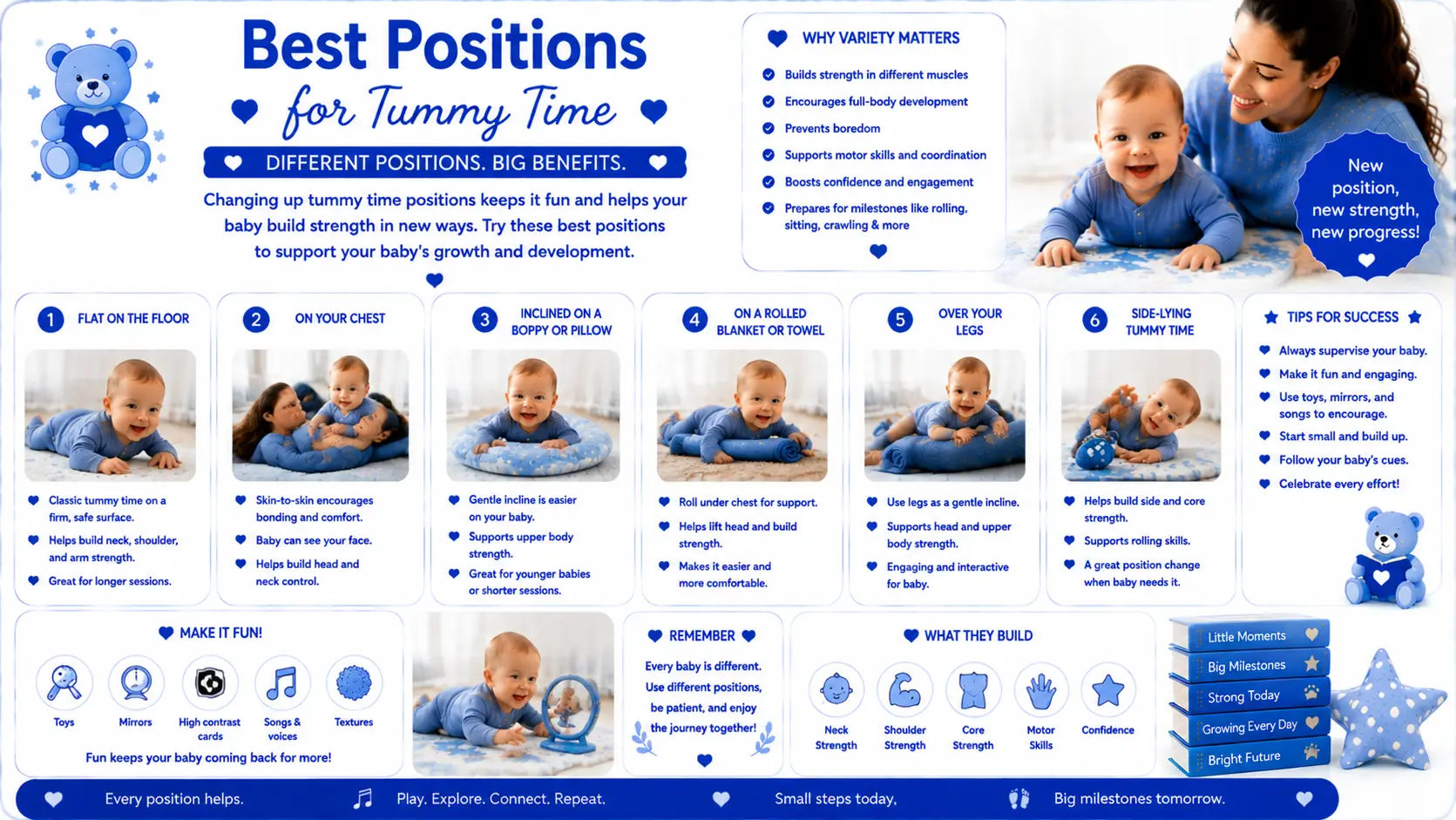
Tummy to Tummy (or Tummy to Chest) This is often the easiest starting point, especially for newborns. Recline slightly on a couch, chair, or the floor (propped with a pillow if needed) and place your baby face-down on your chest or tummy. Hold them securely. Your baby can practice lifting their head to look at your face while feeling your warmth and hearing your voice. Skin-to-skin contact makes it soothing. As they gain strength, you can recline further to increase the challenge. This position is excellent for bonding and for babies who fuss on a flat surface.

Lap Soothe (Across Your Lap) Sit comfortably and place your baby tummy-down across your thighs. You can keep both knees level or raise the leg under their chest slightly higher to make head-lifting easier. Rest a hand on their bottom for stability. This position works well for short sessions, soothing, or even during burping. It offers support while still requiring your baby to engage their neck and upper body muscles. Many parents find it convenient because it fits easily into daily routines.

Tummy-Down Carry (Football Hold) Slide one hand under your baby’s tummy and between their legs while supporting the head and neck with your other hand. Carry them facing downward. This “flying” position lets your baby experience the tummy-down feeling while looking around, which stimulates their vestibular system and neck muscles. It’s useful when you’re moving around the house and want to sneak in extra practice without setting up a play area.

Supported Floor Tummy Time (Towel Roll, Folded Blanket, or Nursing Pillow) Once your baby is ready for the floor, place them on a firm play mat or blanket. Roll a small towel or receiving blanket and position it under their chest so their arms rest forward over it. This slight elevation makes it easier to lift the head and brings the arms into a better weight-bearing position. A Boppy-style pillow can also work well, particularly for babies with reflux, because it reduces pressure on the abdomen while keeping hips flexed. Always ensure the surface is firm enough that their face cannot sink into soft material, and stay right next to them.

Eye-Level Floor Play Get down on the floor facing your baby so you’re at their eye level. Smile, talk, sing, or move a high-contrast toy or unbreakable mirror side to side. This encourages them to lift and turn their head. As strength improves, place toys just out of reach to promote reaching and pivoting. Floor time gives the most freedom for movement and is the ultimate goal once your baby can tolerate longer sessions.

How Much Tummy Time by Age

Guidelines vary slightly by source, but a practical progression looks like this:

Newborns (first weeks): Several 1–3 minute sessions totaling about 15–20 minutes per day.

1–2 months: Aim for 20–30 minutes total, spread throughout the day.

3 months: 30–60 minutes.

4 months and older: 60 minutes or more as tolerated, often in longer play sessions.

By the time many babies reach 4–6 months, they may push up on straight arms, reach for toys, and begin rolling. Continue until they can get into and out of the tummy position independently or start crawling.

Tips for Success and Common Challenges

Time sessions when your baby is alert but not hungry or overly tired, and avoid right after a full feed if reflux is an issue. Use more upright positions (chest, lap, or gym ball) for babies who spit up frequently—tummy time is still recommended and beneficial. Make it fun with your voice, music, or toys. If your baby cries, switch positions or take a short break and try again later. Consistency matters more than long single sessions.

Watch for even head turning to both sides. Consistent preference for one side warrants a conversation with your pediatrician, as it can relate to torticollis. Premature babies or those with medical needs should follow guidance from their care team, often starting with shorter, closer-to-body positions.

Safety Reminders

Always place your baby on their back for sleep and naps. Tummy time happens only when they are awake and supervised. Use firm, flat surfaces free of soft bedding, pillows (except for controlled support under the chest during play), or loose blankets that could pose a risk. Never use inclined sleep products for tummy time or sleep.

With a mix of these positions, most babies gradually build tolerance and strength. What starts as brief, supported moments turns into confident floor play that supports the motor milestones parents look forward to. Start small, stay responsive to your baby’s cues, and enjoy the face-to-face connection these sessions create.

FAQ

When should I start tummy time with my newborn?

You can begin as soon as your baby is home from the hospital. Short, supervised sessions from day one help them adapt more easily.

How much tummy time does a baby need each day?

Start with a few minutes several times a day and work toward 20–30 minutes total by 1–2 months, increasing to 60 minutes or more by 4–6 months as tolerated.

What if my baby hates tummy time or cries?

Try supported positions like chest-to-chest or lap soothe first. Keep sessions very short, use your face and voice for engagement, and try again later. Most babies improve with consistency and variety.

Is tummy time safe for babies with reflux?

Yes. Choose more upright positions such as on your chest, across your lap, or over a rolled towel or nursing pillow to reduce pressure on the tummy. Continue supervised practice.

Can I do tummy time on a soft surface or bed?

No. Use a firm, flat surface such as a play mat on the floor. Soft surfaces increase the risk of the baby’s face becoming obstructed and do not provide the stable base needed for proper muscle work. Always stay within arm’s reach.


Author

DrAdam

Dr. Adam. Obstetrician and Gynecologist

Follow Me
Other Articles
Previous

Signs Your Baby Is Ready for More Tummy Time

Next

Common Tummy Time Mistakes

No Comment! Be the first one.

Leave a Reply Cancel reply

Your email address will not be published. Required fields are marked *

What is Did You Search?

The “Did You Search” website was created for all mothers and families. Just search to find all your needs about your children.

Links

  • about
  • contact
  • privacy policy
  • medical disclaimer
  • sitemap
Copyright 2026 — DidYouSearch. All rights reserved.