

Tummy time isn’t a one-size-fits-all activity. What looks right for a 6-week-old — a minute or two of squirming on your chest — looks completely different from what a 4-month-old can handle on the floor. The tricky part for a lot of parents is knowing when to actually increase tummy time, rather than just guessing based on age alone. The truth is, your baby will usually show you they’re ready before any chart does. Here’s what to look for.
Why It Matters to Increase Tummy Time Gradually
Tummy time builds the neck, shoulder, back, and core strength your baby needs for major motor milestones — rolling, sitting, crawling, and eventually walking. Pediatricians generally recommend working toward about 60 minutes of tummy time a day by 3 months old, but that number is a cumulative daily total, not a single session, and it’s meant to be built up gradually as your baby’s tolerance and strength grow. Increasing tummy time too fast, before your baby is ready, often backfires into more crying and resistance. Watching for real readiness cues — rather than sticking rigidly to a schedule — makes the transition smoother for both of you.
Signs Your Baby Is Ready for More Tummy Time
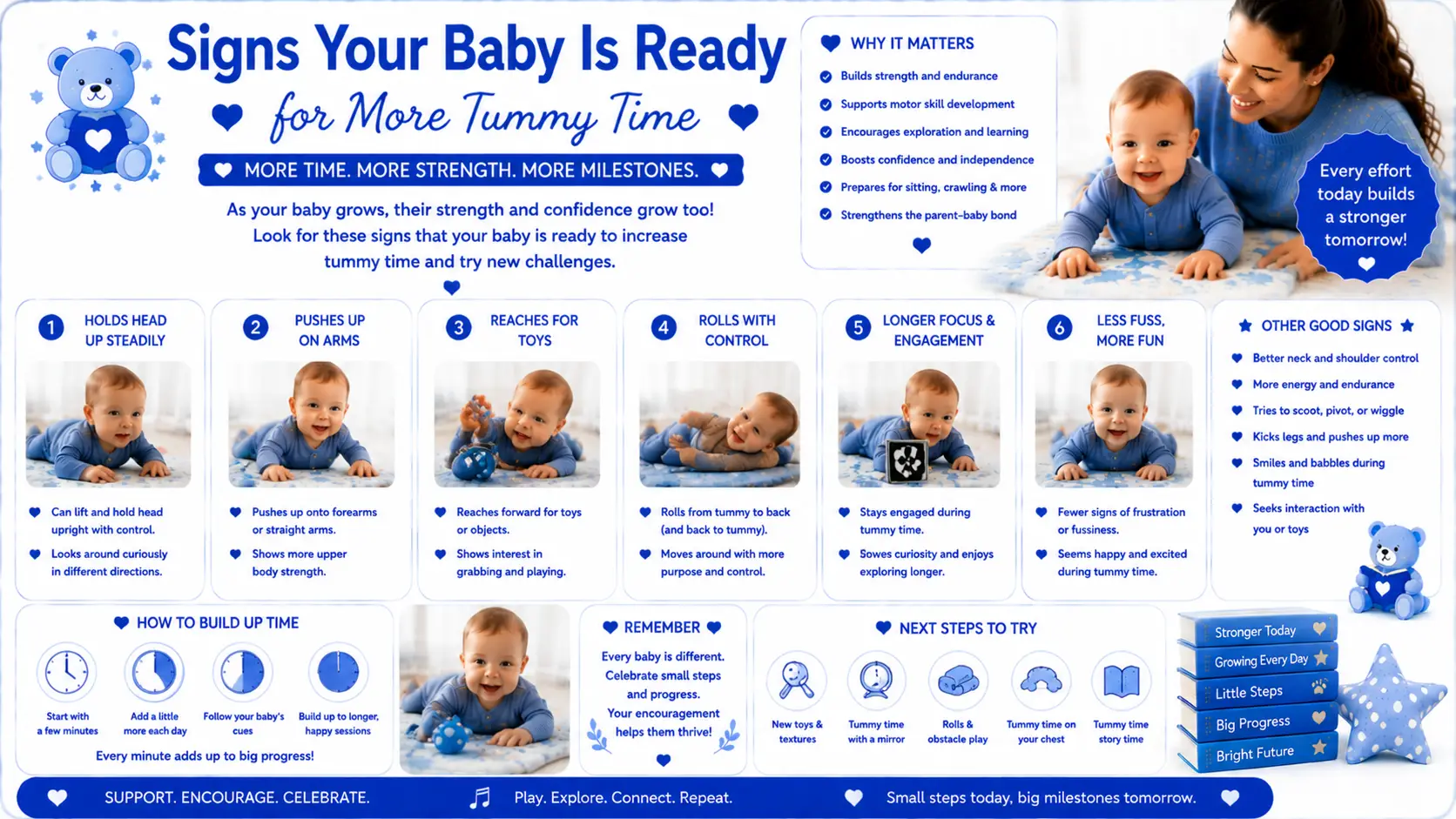
They lift their head steadily, with less effort. In the early weeks, most babies can only turn their head to the side. Once your baby starts lifting their head up and holding it there — even briefly, without immediately face-planting — that’s a strong sign they’re ready for longer or more frequent sessions.
They’re pushing up on their forearms. Around 2 to 3 months, many babies begin propping themselves up on their forearms, elbows tucked under their shoulders, to get a better view of the room. This is a clear readiness cue for increasing session length.
They’re pushing up onto extended arms. By around 4 to 5 months, some babies start pushing all the way up onto flat, extended hands, lifting their chest well off the ground. This “mini push-up” is a sign your baby has outgrown their current tummy time routine and can handle more.
They seem curious instead of distressed. If your baby is tracking toys, reaching for objects, or looking around with interest rather than immediately fussing, that engagement is a good sign they can tolerate a longer stretch on their belly.
They tolerate the position longer before getting upset. If sessions that used to end in tears at the two-minute mark now stretch to five or six minutes before your baby gets frustrated, that’s a direct, practical signal to start extending tummy time gradually.
They’re starting to reach, grasp, or explore with their hands. Once a baby begins reaching for toys or exploring textures with their hands while on their belly, tummy time naturally becomes more interactive — a good moment to add more engaging toys and a bit more time.
They show early signs of rolling or scooting. Rocking on their belly, pivoting in a circle, or attempting to roll from tummy to back are all signs your baby’s core and shoulder strength has progressed and more floor time will support that next step.
A Rough Guide by Age
Every baby develops at their own pace, but these general benchmarks can help you gauge where your baby is:
Newborn–6 weeks: A few minutes at a time, several times a day, often starting on your chest or lap.
2 months: Several 5–10 minute sessions, building toward around 15–30 minutes total per day.
3–4 months: Sessions of 10–15 minutes, working toward a total of about 60 minutes daily.
4–6 months: Longer, more interactive sessions as your baby starts pushing up, reaching, and rolling.
6 months and beyond: Even once babies can sit or roll independently, continued belly time still supports strength for crawling.
How to Safely Increase Tummy Time
Follow your baby’s cues, not just the clock. Add a minute or two at a time rather than jumping straight to a much longer session.
Keep it engaging. Toys, mirrors, and singing hold your baby’s interest longer as sessions get longer.
Break it up. Several shorter sessions across the day are just as effective as one long one, and often better tolerated.
Watch for genuine frustration versus normal effort. A little grunting or fussing is normal; if your baby is inconsolable, it’s fine to stop and try again later.
When to Check In With Your Pediatrician
If your baby isn’t showing any of these readiness signs — for example, minimal head control by 3 months, a strong preference for turning their head to only one side, or no interest in pushing up by 4–5 months — it’s worth mentioning at your next well-child visit. These can sometimes point to something worth a closer look, like torticollis, and early support tends to make the biggest difference.
FAQ
How do I know if my baby is ready for longer tummy time sessions?
Look for steadier head lifting, pushing up on the forearms or hands, and genuine curiosity rather than immediate distress. These are the clearest signs your baby can handle more time on their belly.
What age should babies be doing an hour of tummy time a day?
Most experts suggest working toward a cumulative total of about 60 minutes daily by around 3 months old, spread across multiple sessions rather than done all at once.
My baby pushes up on their arms but still cries after a minute — should I stop?
Yes, it’s fine to pause when your baby is genuinely upset. Physical readiness (like pushing up) and emotional tolerance don’t always develop at exactly the same pace, so keep sessions short and build up gradually.
Is it normal for tummy time tolerance to change day to day?
Yes. Tiredness, hunger, and growth spurts can all affect how long your baby tolerates tummy time on a given day, even after they’ve shown clear readiness signs.
What if my baby shows no readiness signs by 4 months?
It’s worth mentioning to your pediatrician, especially if paired with limited head control or a strong head turning preference. These can sometimes indicate an underlying issue that benefits from early support.