
Skip to content
DidYouSearch DidYouSearch
  • did you search?
  • Baby Plus+
    • Baby Activities
      • Arts & Crafts
      • Indoor Activities
      • Montessori
      • Music
      • Outdoor Activities
      • Reading
      • Sensory Play
      • Tummy Time
    • Baby Development
      • Brain Development
      • Cognitive Development
      • Emotional Development
      • Fine Motor Skills
      • Growth Milestones
      • Monthly Milestones
      • Motor Skills
      • Physical Development
      • Social Development
      • Speech Development
    • Baby Feeding
      • Allergies
      • Baby Led Weaning
      • Bottle Feeding
      • Breast feeding
        • Breastfeeding Diet
        • Breastfeeding Positions
        • Latch Problems
        • Low Milk Supply
        • Mastitis
        • Pumping Schedule
        • Weaning
      • Burping
      • Cluster Feeding
      • Feeding Schedule
      • Formula Feeding
        • Formula Amount
        • Formula Brands
        • Formula Comparison
        • Formula Preparation
        • Formula Storage
      • Hydration
      • Pumping
      • Solid Foods
    • Baby Gear Reviews
      • Best Baby Carrier
      • Best Baby Monitor
      • Best Baby Strollers
      • Best Bottles
      • Best Breast Pump
      • Best Car Seat
      • Best Cribs
      • Best Diapers
      • Best Formula
      • Best Toys
    • Baby Growth
      • Growth Spurts
      • Height Charts
      • Monthly Growth
      • Percentiles
      • Weight Charts
    • Baby Health
      • Allergies
      • Cold
      • Constipation
      • Cough
      • Diarrhea
      • Ear Infection
      • Fever
      • Flu
      • Pediatric Visits
      • Rashes
      • Teething
      • Vaccines
      • Vomiting
    • Baby Nutrition
      • Dairy
      • Drinks
      • Eggs
      • Fish
      • Fruits
      • Healthy Recipes
      • Meat
      • Snacks
      • Vegetables
      • Vitamins
    • Baby Products
      • Baby Carriers
      • Bassinets
      • Bottles
      • Breast Pumps
      • Car Seats
      • Cribs
      • Diaper Bags
      • High Chairs
      • Monitors
      • Strollers
      • Swings
      • Toys
      • Walkers
    • Baby Recipes
      • BLW Recipes
      • Breakfast
      • Dinner
      • Finger Foods
      • Lunch
      • Purees
      • Snacks
    • Baby Safety
      • Baby Proofing
      • Car Seats
      • Choking Hazards
      • CPR
      • Home Safety
      • Poison Prevention
      • Safe Sleep
      • Sun Protection
      • Water Safety
  • Baby Names
    • Boy Names
    • Girl Names
    • American baby boy names
    • American baby girl names
    • Biblical Names
    • Middle Names
    • Modern Names
    • Short Names
    • Unique Names
    • Unisex Names
  • Recommended
    • Baby Shopping
      • Baby Registry
      • Budget Baby Shopping
      • Hospital Bag
      • Must Have Products
      • Newborn Checklist
      • Nursery Ideas
    • Baby Sleep
      • Bedtime Routine
      • Co Sleeping
      • Crib Safety
      • Nap Schedules
      • Night Wakings
      • Sleep Environment
      • Sleep Products
      • Sleep Regression
      • Sleep Training
      • Wake Windows
      • White Noise
    • Childcare
      • Daycare
      • Babysitters
      • Kindergarten
      • Nannies
      • Preschool
    • Newborn Care
      • Nail Care
      • Baby Hygiene
      • Bathing
      • Crying
      • Diapering
      • Ear Care
      • Eye Care
      • Skin Care
      • Soothing Techniques
      • Temperature
      • Umbilical Cord
    • Special Needs
      • Premature Babies
      • Autism Signs
      • Developmental Delays
      • Down Syndrome
      • NICU
      • Twins
    • Seasonal Baby Care
      • Spring
      • Summer
      • Travel
      • Fall
      • Holidays
      • Winter
  • Parenting
    • Bonding
    • Discipline
    • Emotional Intelligence
    • First Time Parents
    • Gentle Parenting
    • Positive Parenting
    • Routines
    • Single Parents
    • Working Parents
  • Pregnancy
    • Pregnancy Complications
    • Labor & Delivery
    • Postpartum Recovery
    • Pregnancy Exercises
    • Pregnancy Medications
    • Pregnancy Nutrition
    • Pregnancy Sleep
    • Pregnancy Symptoms
    • Pregnancy Tests
    • Pregnancy Vitamins
    • Pregnancy Weeks
  • Toddler
    • Preschool
    • Speech
    • Tantrums
    • Toddler Food
    • Toddler Sleep
    • Behavior
    • Independence
    • Learning
    • Potty Training
  • Traveling with Baby
    • Road Trips
    • Beach
    • Camping
    • Flying
    • Hotels
    • Packing Lists
  • did you search?
  • Baby Plus+
    • Baby Activities
      • Arts & Crafts
      • Indoor Activities
      • Montessori
      • Music
      • Outdoor Activities
      • Reading
      • Sensory Play
      • Tummy Time
    • Baby Development
      • Brain Development
      • Cognitive Development
      • Emotional Development
      • Fine Motor Skills
      • Growth Milestones
      • Monthly Milestones
      • Motor Skills
      • Physical Development
      • Social Development
      • Speech Development
    • Baby Feeding
      • Allergies
      • Baby Led Weaning
      • Bottle Feeding
      • Breast feeding
        • Breastfeeding Diet
        • Breastfeeding Positions
        • Latch Problems
        • Low Milk Supply
        • Mastitis
        • Pumping Schedule
        • Weaning
      • Burping
      • Cluster Feeding
      • Feeding Schedule
      • Formula Feeding
        • Formula Amount
        • Formula Brands
        • Formula Comparison
        • Formula Preparation
        • Formula Storage
      • Hydration
      • Pumping
      • Solid Foods
    • Baby Gear Reviews
      • Best Baby Carrier
      • Best Baby Monitor
      • Best Baby Strollers
      • Best Bottles
      • Best Breast Pump
      • Best Car Seat
      • Best Cribs
      • Best Diapers
      • Best Formula
      • Best Toys
    • Baby Growth
      • Growth Spurts
      • Height Charts
      • Monthly Growth
      • Percentiles
      • Weight Charts
    • Baby Health
      • Allergies
      • Cold
      • Constipation
      • Cough
      • Diarrhea
      • Ear Infection
      • Fever
      • Flu
      • Pediatric Visits
      • Rashes
      • Teething
      • Vaccines
      • Vomiting
    • Baby Nutrition
      • Dairy
      • Drinks
      • Eggs
      • Fish
      • Fruits
      • Healthy Recipes
      • Meat
      • Snacks
      • Vegetables
      • Vitamins
    • Baby Products
      • Baby Carriers
      • Bassinets
      • Bottles
      • Breast Pumps
      • Car Seats
      • Cribs
      • Diaper Bags
      • High Chairs
      • Monitors
      • Strollers
      • Swings
      • Toys
      • Walkers
    • Baby Recipes
      • BLW Recipes
      • Breakfast
      • Dinner
      • Finger Foods
      • Lunch
      • Purees
      • Snacks
    • Baby Safety
      • Baby Proofing
      • Car Seats
      • Choking Hazards
      • CPR
      • Home Safety
      • Poison Prevention
      • Safe Sleep
      • Sun Protection
      • Water Safety
  • Baby Names
    • Boy Names
    • Girl Names
    • American baby boy names
    • American baby girl names
    • Biblical Names
    • Middle Names
    • Modern Names
    • Short Names
    • Unique Names
    • Unisex Names
  • Recommended
    • Baby Shopping
      • Baby Registry
      • Budget Baby Shopping
      • Hospital Bag
      • Must Have Products
      • Newborn Checklist
      • Nursery Ideas
    • Baby Sleep
      • Bedtime Routine
      • Co Sleeping
      • Crib Safety
      • Nap Schedules
      • Night Wakings
      • Sleep Environment
      • Sleep Products
      • Sleep Regression
      • Sleep Training
      • Wake Windows
      • White Noise
    • Childcare
      • Daycare
      • Babysitters
      • Kindergarten
      • Nannies
      • Preschool
    • Newborn Care
      • Nail Care
      • Baby Hygiene
      • Bathing
      • Crying
      • Diapering
      • Ear Care
      • Eye Care
      • Skin Care
      • Soothing Techniques
      • Temperature
      • Umbilical Cord
    • Special Needs
      • Premature Babies
      • Autism Signs
      • Developmental Delays
      • Down Syndrome
      • NICU
      • Twins
    • Seasonal Baby Care
      • Spring
      • Summer
      • Travel
      • Fall
      • Holidays
      • Winter
  • Parenting
    • Bonding
    • Discipline
    • Emotional Intelligence
    • First Time Parents
    • Gentle Parenting
    • Positive Parenting
    • Routines
    • Single Parents
    • Working Parents
  • Pregnancy
    • Pregnancy Complications
    • Labor & Delivery
    • Postpartum Recovery
    • Pregnancy Exercises
    • Pregnancy Medications
    • Pregnancy Nutrition
    • Pregnancy Sleep
    • Pregnancy Symptoms
    • Pregnancy Tests
    • Pregnancy Vitamins
    • Pregnancy Weeks
  • Toddler
    • Preschool
    • Speech
    • Tantrums
    • Toddler Food
    • Toddler Sleep
    • Behavior
    • Independence
    • Learning
    • Potty Training
  • Traveling with Baby
    • Road Trips
    • Beach
    • Camping
    • Flying
    • Hotels
    • Packing Lists
Close

Search

Home/Baby Activities/Tummy Time/Tummy Time Benefits
Tummy Time

Tummy Time Benefits

By DrAdam
August 15, 2026 4 Min Read
0

If you’ve spent any time in a pediatrician’s office, a baby class, or a parenting forum, you’ve heard the phrase “tummy time” more times than you can count. It’s one of the most recommended activities for infants — and for good reason. Tummy time is simple, doesn’t require any special equipment, and delivers a surprising number of developmental benefits packed into just a few minutes a day.

Here’s what tummy time actually does for your baby, when to start, and how much of it your baby really needs.

What Is Tummy Time?

Contents hide
1 What Is Tummy Time?
2 Top Benefits of Tummy Time
3 When Should You Start Tummy Time?
4 How Much Tummy Time Does a Baby Need?
5 Tips to Get the Most Out of Tummy Time
6 The Bottom Line
7 FAQ
7.1 What are the main benefits of tummy time?
7.2 When should I start tummy time with my newborn?
7.3 How much tummy time does my baby need each day?
7.4 Does tummy time help prevent flat head syndrome?
7.5 Is it normal for my baby to cry during tummy time?

Tummy time is exactly what it sounds like: placing your baby on their stomach while they’re awake and supervised. It sounds simple, but for a newborn, it’s genuinely hard work. Babies spend most of their day on their backs — in the crib, the car seat, the stroller, or your arms — which is a passive position that doesn’t ask much of their muscles. Tummy time flips that, giving your baby a chance to actively push, lift, and explore.

Top Benefits of Tummy Time

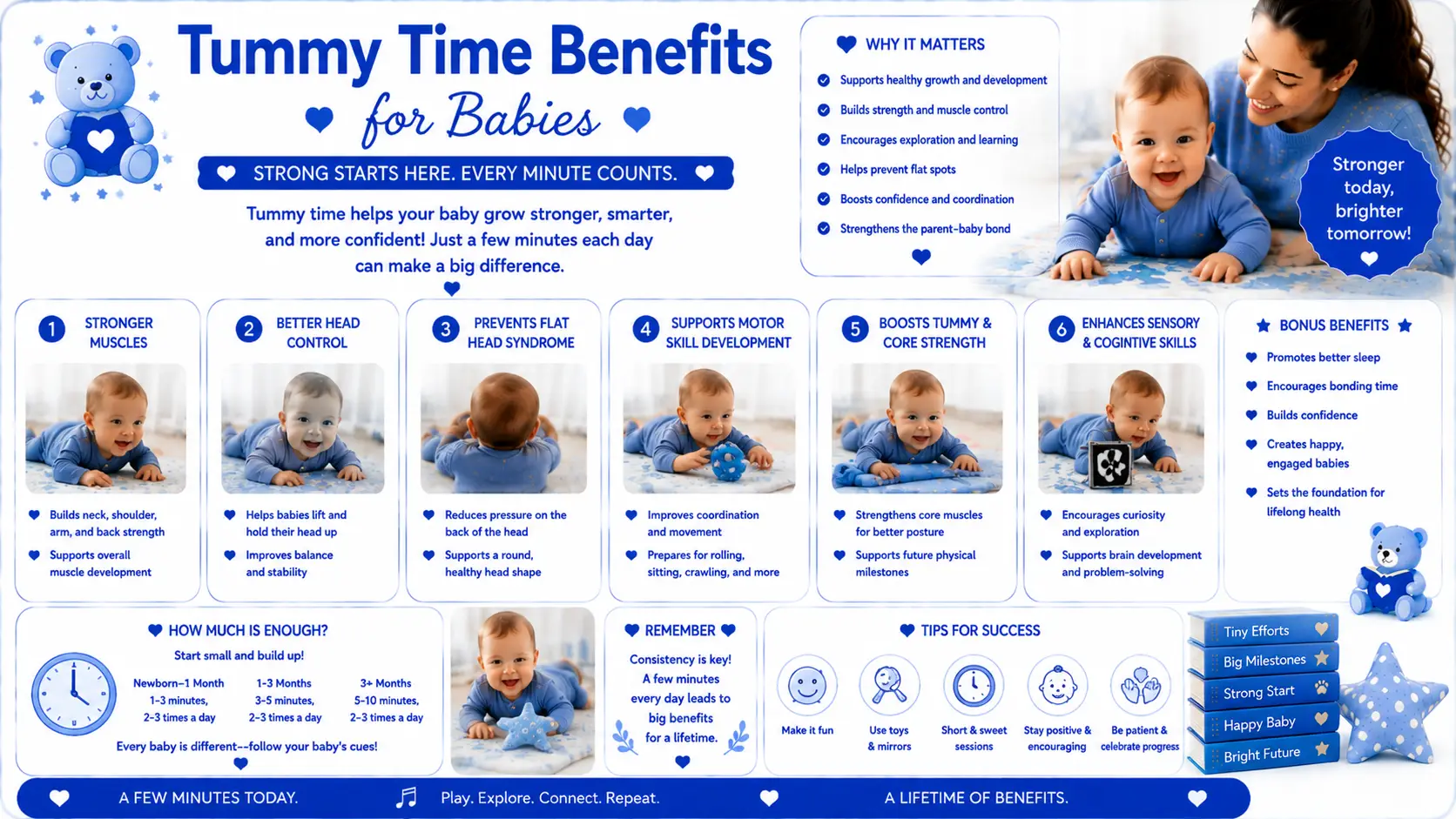
Builds neck, shoulder, and back strength. Every time your baby lifts and turns their head during tummy time, they’re working the muscles they’ll need to hold their head steady, roll over, and eventually sit up unsupported.

Supports core strength and coordination. Pushing up on the forearms and later on the hands strengthens the trunk and arms, which lays the groundwork for crawling, pulling to stand, and walking.

Helps prevent flat spots on the head. Because babies spend so much time on their backs — for safe sleep, in car seats, in swings — the back of the skull can develop a flat spot, known as positional plagiocephaly. Regular tummy time relieves that pressure and gives the head a break from lying flat.

Encourages visual and sensory development. From the belly-down position, babies practice tracking objects, shifting their gaze, and noticing their own hands — skills that support hand-eye coordination down the line.

Introduces new sensory experiences. A change in surface, texture, or view gives your baby fresh sensory input compared to lying on their back, which supports overall development and keeps things interesting for a curious baby.

Builds tolerance and comfort over time. Babies who get regular, early exposure to tummy time tend to accept the position more easily and for longer stretches as they grow, compared to babies who start later or do it inconsistently.

When Should You Start Tummy Time?

Most pediatricians recommend starting tummy time within the first few days after coming home from the hospital. Newborns won’t do much more than turn their heads to the side at first, and that’s completely normal — even a minute or two counts.

How Much Tummy Time Does a Baby Need?

Recommendations vary slightly, but a common guideline looks like this:

Newborns: Two to three short sessions a day, around 3–5 minutes each, building up gradually.

By 2 months: Around 15–30 minutes total per day, spread across multiple sessions.

By 3–4 months: Working toward roughly 10–15 minutes at a time, several times a day.

By 6 months: At least 30 minutes total daily, with some research suggesting babies getting closer to an hour or more show more advanced motor development.

The total adds up across the day — it doesn’t need to happen in one long stretch, and shorter, more frequent sessions are usually easier for both of you.

Tips to Get the Most Out of Tummy Time

Time it well. Try sessions after a diaper change or a nap, when your baby is alert and not immediately after a feed.

Use a firm, flat surface. A blanket or play mat on the floor works best — avoid soft surfaces like a couch or bed.

Add a prop if needed. A small rolled towel under the chest and arms can offer extra support for younger babies.

Bring in toys or a mirror. Visual interest encourages your baby to lift their head and reach.

Get on the floor with them. Being face-to-face makes tummy time feel like connection time, not a solo task.

Always supervise. Tummy time should only happen while your baby is awake and someone is watching.

The Bottom Line

Tummy time is a small daily habit with an outsized payoff: stronger muscles, a well-rounded head shape, and a head start on major motor milestones like rolling, sitting, and crawling. It’s normal for babies to fuss about it at first — that’s a sign the muscles are working, not a sign something is wrong. Starting early, staying consistent, and keeping sessions short and positive is the simplest path to a baby who eventually tolerates, and even enjoys, their time on their belly.

FAQ

What are the main benefits of tummy time?

Tummy time builds neck, shoulder, back, and core strength, supports visual and sensory development, and helps prevent flat spots on the back of the head from too much time spent lying on the back.

When should I start tummy time with my newborn?

Most pediatricians recommend starting within the first few days after birth, with short one- to two-minute sessions that gradually get longer as your baby builds strength.

How much tummy time does my baby need each day?

It depends on age — newborns benefit from a few short sessions daily, while babies around 6 months old should be getting at least 30 total minutes a day, spread across multiple sessions.

Does tummy time help prevent flat head syndrome?

Yes. Because babies spend so much time on their backs for safe sleep and in car seats or swings, tummy time gives the back of the head a break from constant pressure, which helps maintain a rounder head shape.

Is it normal for my baby to cry during tummy time?

Yes, especially at first. Tummy time is physically demanding for young babies, and some fussing is expected. Short, frequent sessions and staying engaged with your baby usually help increase their tolerance over time.


Author

DrAdam

Dr. Adam. Obstetrician and Gynecologist

Follow Me
Other Articles
Previous

Alternatives to Tummy Time

Next

Signs Your Baby Is Ready for More Tummy Time

No Comment! Be the first one.

Leave a Reply Cancel reply

Your email address will not be published. Required fields are marked *

What is Did You Search?

The “Did You Search” website was created for all mothers and families. Just search to find all your needs about your children.

Links

  • about
  • contact
  • privacy policy
  • medical disclaimer
  • sitemap
Copyright 2026 — DidYouSearch. All rights reserved.