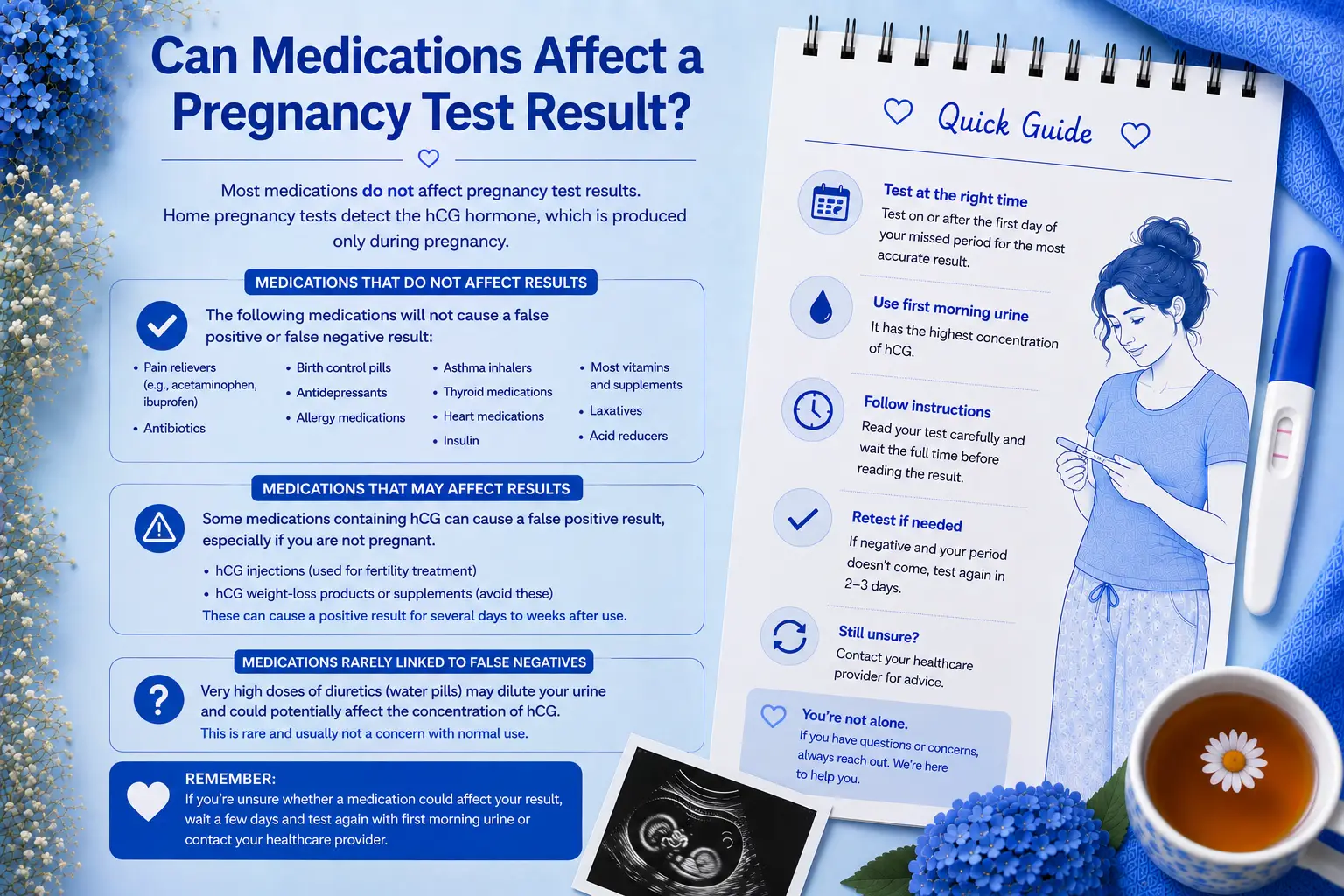

In most cases, the answer is no. Everyday medicines like antibiotics, painkillers, birth control pills, and antihistamines do not interfere with home pregnancy tests. The main exception involves fertility treatments that contain the pregnancy hormone hCG itself.
How Pregnancy Tests Detect hCG
Home pregnancy tests work by identifying human chorionic gonadotropin (hCG) in urine. This hormone is produced after a fertilized egg implants in the uterus. The test uses antibodies that specifically bind to hCG, triggering a visible line, plus sign, or digital “pregnant” result. Because modern tests are highly specific to hCG, most unrelated medications do not cross-react or change the outcome.
Medications That Can Cause a False Positive
The clearest and most common cause of a medication-related false positive is fertility drugs that contain hCG. These are often given as “trigger shots” to stimulate ovulation during treatments such as IUI or IVF. Brand names include:
- Pregnyl
- Profasi
- Novarel
- Ovidrel
The injected hCG can remain detectable in urine for several days to up to two weeks, depending on the dose and individual metabolism. Testing too soon after the injection may produce a positive result even if pregnancy has not occurred. Fertility specialists usually recommend waiting at least 10–14 days after the trigger shot before taking a home test, or following the clinic’s specific timing guidance.
A few older sources and less rigorous lists mention other drugs—such as certain antipsychotics, anti-anxiety medications (benzodiazepines), diuretics, methadone, or some antihistamines—as possible interferents. However, major manufacturers and clinical references emphasize that these are rare or more relevant to outdated test technology. Current antibody-based tests are designed to minimize such interference. Always check with a doctor or pharmacist if you take specialized medications and receive an unexpected result.
Medications That Do Not Affect Results
Reliable sources confirm that the following do not interfere with home pregnancy test accuracy:
- Antibiotics
- Common painkillers (acetaminophen, ibuprofen, aspirin)
- Hormonal birth control (the pill, patch, ring, or IUD)
- Clomiphene citrate (a common fertility drug that does not contain hCG)
- Most over-the-counter cold, allergy, or stomach remedies
Birth control hormones work differently from hCG, so they neither raise nor lower the hormone the test measures. Antibiotics likewise have no direct effect on hCG detection. Drinking alcohol or caffeine also does not change the chemical reaction, though excess fluids of any kind can dilute urine and potentially contribute to a false negative if testing very early.
Other Factors That Influence Results More Than Medication
While medications rarely cause problems, these issues are far more common:
- Testing too early, before hCG has risen enough
- Reading the result outside the recommended time window (evaporation lines can look like faint positives)
- Using an expired test
- Recent pregnancy loss, miscarriage, or abortion (hCG can linger for weeks)
- Rare medical conditions such as certain ovarian cysts, kidney disease, or tumors that produce hCG
If you receive a positive result while on fertility medication containing hCG, contact your clinic for a blood test, which can measure exact hCG levels and track whether they are rising appropriately.
Practical Tips When Taking Medications
- Tell your doctor or pharmacist about any fertility treatments or specialty drugs before testing.
- Follow the waiting period recommended after an hCG trigger shot.
- Use first-morning urine for the highest concentration of hCG, especially if testing early.
- Confirm unexpected results with a healthcare provider. Blood tests and ultrasound provide clearer answers.
- Read the package insert of both your medication and the pregnancy test for any specific warnings.
Most people taking ordinary medications can trust their home pregnancy test results just as they would without those medicines. The science behind the tests is specific enough that only compounds containing actual hCG reliably create false positives.
Understanding this distinction reduces unnecessary worry. If you are undergoing fertility treatment, work closely with your care team on the best testing timeline. For everyone else, standard medications are unlikely to change the outcome—so focus instead on proper timing and technique for the most accurate result.
FAQ
Do antibiotics affect a pregnancy test?
No. Antibiotics do not interfere with the antibodies that detect hCG. A negative or positive result while taking antibiotics is just as reliable as one without them.
Can birth control pills cause a false positive or negative pregnancy test?
No. The hormones in contraceptive pills, patches, or rings do not contain or mimic hCG, so they do not affect test results.
How long after an hCG trigger shot should I wait to take a pregnancy test?
Most clinics recommend waiting 10–14 days. Testing earlier often produces a false positive from residual medication. Follow your fertility specialist’s instructions for the most accurate timing.
Can painkillers or antihistamines mess up a pregnancy test?
Common over-the-counter painkillers and most antihistamines do not affect modern home pregnancy tests. Older literature sometimes listed them, but current tests are highly specific to hCG.
What should I do if I’m on medication and get an unexpected pregnancy test result?
Contact your healthcare provider. They can order a quantitative blood hCG test, review your medications, and determine whether further evaluation is needed.