
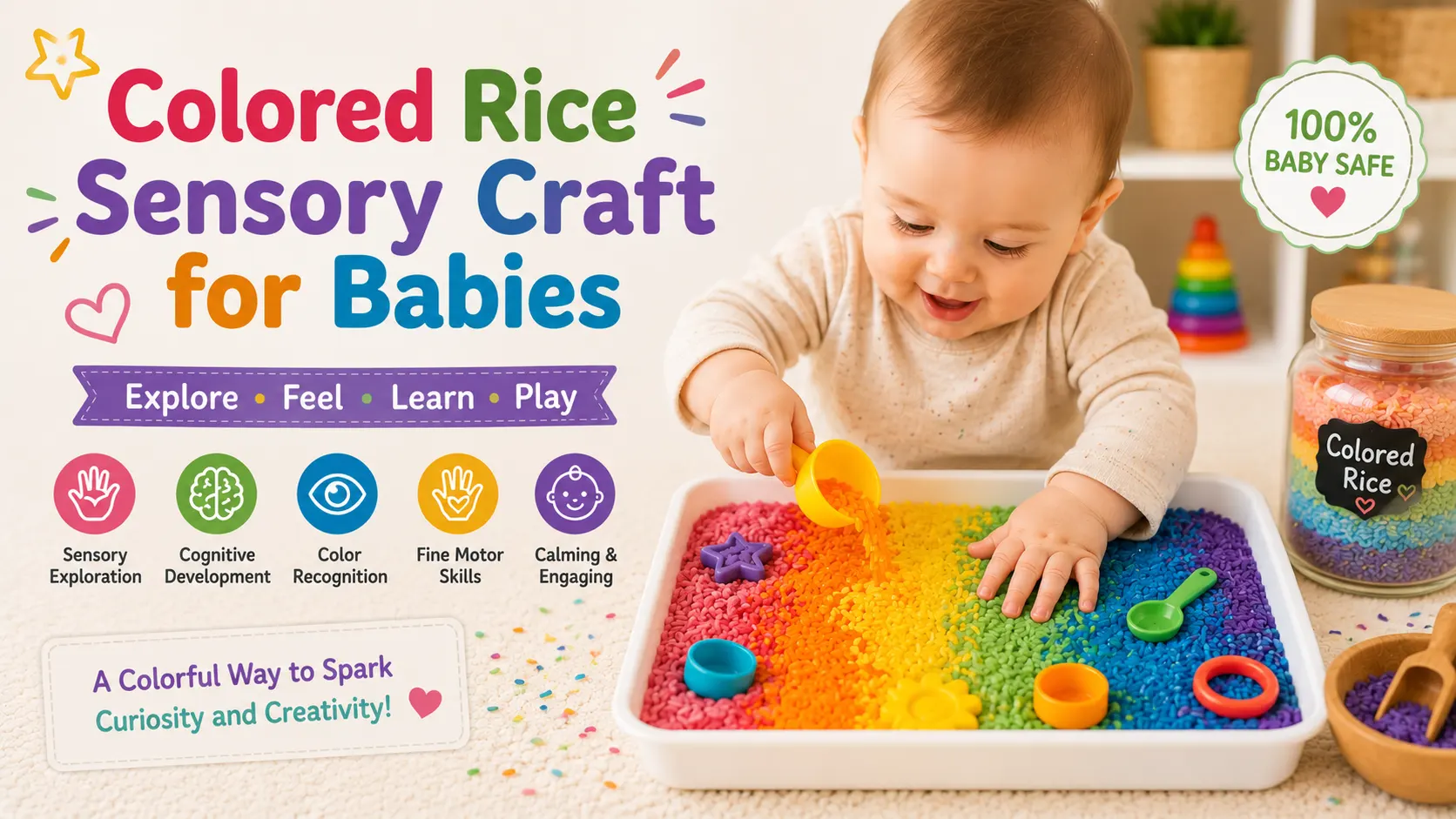

Most “rainbow rice” tutorials are written for toddlers and preschoolers, and several of the most popular ones say so directly — recommending the activity for ages 3 and up, past the stage when a child still puts everything in their mouth. Loose, dry, colored rice is a real choking and inhalation hazard for a baby who mouths objects, so this guide gives you the honest safety picture first, then 8 ways to get the same sensory benefits — color, texture, scooping, pouring — without loose dry grains anywhere near a baby’s mouth or nose.
Is Colored Rice Safe for Babies? The Honest Answer
Loose, dry, colored rice is not recommended for babies who still mouth objects, which includes most babies under about 12–18 months and many toddlers beyond that. The concerns are specific:
- Choking: a single grain is small, but a fistful pressed into the mouth or a handful thrown and inhaled is a genuine risk.
- Nasal insertion: babies and young toddlers sometimes push small objects into their nose during exploratory play, and rice is a classic culprit for ER visits for exactly this reason.
- Aspiration: rice inhaled into the airway can cause more serious complications than most parents expect from something that looks like a “soft,” harmless material.
This isn’t a minor caveat — it’s the reason several sensory-play sites explicitly mark dry rice bins as unsuitable for babies and recommend cooked rice or other fillers instead. If your baby still mouths toys, treat any dry, loose rice activity as off-limits for direct, unsealed play, and use one of the adaptations below instead.
Who Can Safely Do Traditional Loose Rainbow Rice?
Traditional open-bin rainbow rice is generally appropriate once a child has reliably stopped putting non-food objects in their mouth — for many toddlers, this is somewhere around 2.5–3 years old, not the infant stage, and always with full-time supervision even then. If you’re preparing this activity for an older sibling while a baby is also in the room, keep the baby in a separate space or seated far enough away that they can’t reach in.
8 Baby-Safe Ways to Get the Same Sensory Experience
Sealed & No-Contact (Safe From Early Infancy)
1. Sealed rice sensory bottle Fill a clear plastic bottle with colored rice and a few small trinkets, hot-glue the lid shut, and let your baby shake, roll, and watch. Zero risk of loose grains since nothing ever comes out.
2. Rice sensory bag Pour colored rice into a heavy-duty zip-top bag, seal it, and tape the edges shut (or double-bag it) so your baby can press and move the rice around without any direct contact.
3. Rice-filled fabric sensory pillow Sew colored rice into a small fabric pouch for a squishable, sound-making sensory toy your baby can hold and squeeze with no exposure to loose grains at all.
Cooked Rice Alternatives (Safe for Direct Touch and Even Tasting)
4. Colored cooked rice sensory bin Cook plain rice, then mix in a few drops of food coloring while it’s still warm and let it cool. This gives the same color-and-texture sensory experience as dry rice, but it’s soft, easy to mash, and safe even if a baby mouths or eats a bite.
5. Colored cooked rice on a highchair tray Skip the bin altogether and spread a small portion of colored cooked rice directly on a highchair tray for squishing and scooping — easy cleanup, and appropriate for babies who are already eating solids.
6. Colored oatmeal sensory play Cooked, colored oatmeal offers a similar tactile experience to rice with an even softer, lower-choking-risk texture, and it’s genuinely edible if your baby decides to taste it.
Supervised Direct Contact for Older, Non-Mouthing Toddlers
7. Rice bin with oversized scoops only For a toddler who has reliably stopped mouthing objects, a loose rice bin can work if you remove small cups or containers that encourage handfuls near the face, and provide only large scoops, funnels, and containers that keep play at “pouring” rather than “grabbing fistfuls.”
8. Rice bin with constant one-on-one supervision If you do use loose dry rice with an older toddler, treat it the way you’d treat any small-parts activity: full-time, arm’s-length adult attention, not a “check in every few minutes” activity, and end the session immediately if handfuls start going toward the face.
How to Make Colored Cooked Rice (Step-by-Step)
- Cook plain white rice according to package instructions and let it cool slightly so it’s warm, not hot.
- Divide the warm rice into separate bowls, one per color.
- Add a few drops of food coloring to each bowl and stir until evenly coated — warm rice absorbs color faster than cold rice.
- Spread each color on a tray to cool fully before handing it to your baby.
- Store any unused portion in the refrigerator and discard after 1–2 days, since it’s food and spoils like food.
Safety Notes Even for the Baby-Safe Versions
- Sealed bottles and bags still need supervision — check seals before every use, and stop immediately if a seam starts to open.
- Cooked rice and oatmeal are food, not toys — refrigerate leftovers, discard after a day or two, and never leave a portion out at room temperature for a return play session later.
- Check food coloring for allergens or sensitivities, especially if your baby has reacted to dyes in foods before.
- A rice-filled fabric pillow should be sewn shut with reinforced stitching and checked regularly for wear, since a baby who mouths the fabric could eventually work grains loose.
Frequently Asked Questions
Is colored rice safe for babies to play with? Loose, dry colored rice is not recommended for babies who still mouth objects, due to choking, nasal insertion, and inhalation risks. Sealed sensory bottles or bags, or colored cooked rice, give a similar sensory experience without those risks.
What age can babies do traditional rainbow rice sensory bins? Most guidance points to around 2.5–3 years old, once a child has reliably stopped putting non-food objects in their mouth, and only with full-time supervision even then.
Can I use colored rice if my baby is already eating solid foods? If your baby is eating solids, colored cooked rice (rather than dry, raw rice) is a safer option, since it’s genuinely edible and soft rather than a hard, swallowable grain.
How do I color rice without vinegar or rubbing alcohol, since my baby might get into it? For a baby-safe version, color rice after cooking it rather than using the dry-rice-plus-alcohol-or-vinegar method — food coloring mixed into warm cooked rice needs no alcohol or vinegar at all.
Is a sealed rice sensory bottle actually safe, or can a baby still choke on it? A properly sealed bottle (glued shut, checked before each use) removes the choking risk since the rice never comes out. The main ongoing safety step is periodically checking that the seal hasn’t loosened with repeated handling.
The Bottom Line
Traditional loose colored rice is a toddler-and-up activity, not a baby one, and the honest move is treating it that way rather than adding a small print warning to an otherwise unsafe setup. For a baby who still mouths things, a sealed sensory bottle, a fabric rice pillow, or colored cooked rice deliver the same color-and-texture play value without the choking and inhalation risks of loose, dry grains.
Continue exploring: browse the full Baby Activities hub.
Frequently Asked
Common Questions