
Making your own baby books is one of the most rewarding (and budget-friendly) projects for new parents. A homemade book can be tailored exactly to your child’s interests, filled with family photos, favorite animals, or high-contrast patterns that newborns love. Whether you want a sturdy board book, a soft sensory cloth book, or a simple photo memory book, these DIY baby books turn everyday materials into something your little one will explore for months.
Homemade books encourage early literacy, language development, and bonding. Babies respond to familiar faces and objects, and creating the book yourself means you control the size, texture, and content. Best of all, most projects use items you already have at home.
Why Make DIY Baby Books?
Store-bought board books and cloth books are great, but custom ones feel personal. You can feature your baby’s name, family members, pets, or daily routines. Sensory versions with different textures support fine-motor skills and curiosity. Photo books become keepsakes that grow with your child. Experts note that books about a child’s own life boost engagement and conversation skills from the earliest months.
Easy DIY Board Books for Babies
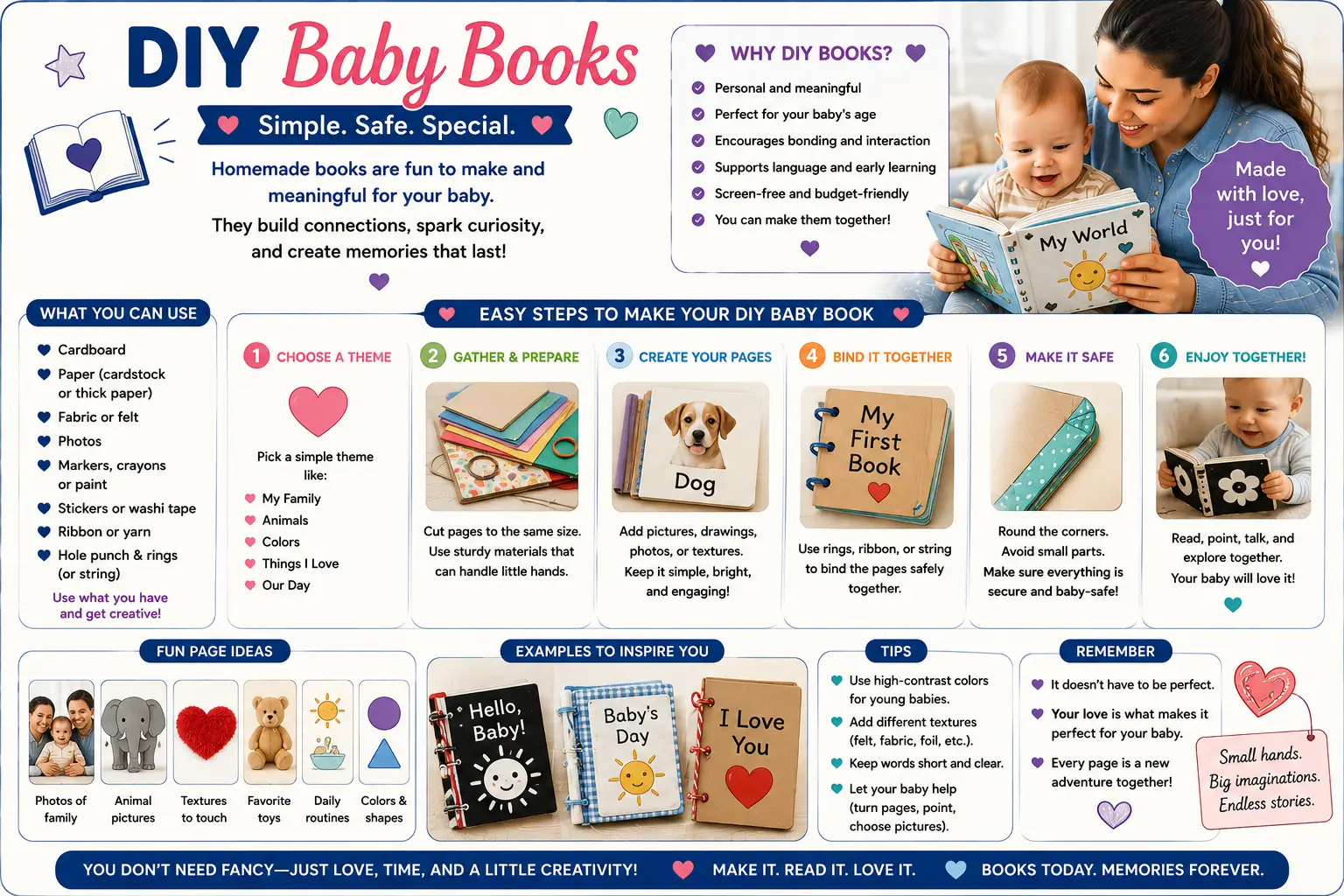
Board books are durable and perfect for little hands. Here’s a simple way to make one:
Materials: Heavyweight cardstock or clean cereal-box cardboard, scissors or craft knife, glue stick, non-toxic markers or printed photos, clear contact paper or laminate sheets (optional), book rings or strong tape for binding.
Steps:
Cut pages into 5–6 inch squares (standard baby-board-book size). Make 8–12 pages.
Decorate each page with one or two large images—family photos, simple drawings of animals, shapes, or body parts. Keep text minimal or none at all for the youngest babies.
Cover both sides with clear contact paper for durability and wipe-clean surfaces.
Punch holes along one edge and bind with book rings, or stack and tape the spine firmly.
Pro tip: Use high-contrast black-and-white images for newborns (0–4 months). As baby grows, switch to colorful photos of familiar people and objects. These homemade board books cost just a dollar or two each once you have supplies on hand.
Soft Sensory Cloth Books
Cloth or fabric books are ideal for babies who mouth everything. They’re washable, chewable, and full of sensory interest.
Materials: Cotton fabric scraps, felt, batting or interfacing, ribbon, yarn, crinkle material (from packaging or foil), baby-safe mirror, sewing machine or fabric glue, Velcro dots.
Basic construction: Cut fabric squares (about 7–9 inches). Sew or glue two layers together for each page, leaving a small opening to turn right-side out and stuff lightly if desired. Add sensory elements:
Crinkle paper inside one page
Different textures (smooth satin, fuzzy felt, bumpy ribbon)
A small safe mirror
Yarn “hair” or animal faces that can be touched
Velcro-attached shapes or photos
Sew the pages together along one edge or bind with a fabric spine. For a no-sew version, use fabric glue and strong ribbon ties. High-contrast black-and-white fabric books work especially well for very young infants.
Simple Photo and Printable Baby Books
For a quick project, try these beginner-friendly methods:
Ziploc bag book: Print high-contrast or family photos on cardstock. Slip two pages back-to-back into a resealable plastic bag. Stack several bags and tape the closed ends together to form a spine. Perfect for tummy time.
Contact-paper or laminated book: Glue photos or drawings onto cardstock, cover with clear contact paper, punch holes, and bind with rings or yarn.
Personalized memory book: Collect milestone photos (first smile, first solid food, first steps). Arrange in a scrapbook-style album or simple binder with page protectors. Add short captions in your own handwriting.
Many parents also design pages on free tools like Canva, print them, and assemble the same way.
Design Ideas That Babies Love
Family faces and names
Everyday routines (“bath time,” “goodnight”)
Animals with simple sounds
Shapes, colors, and counting
High-contrast patterns for newborns
Textures and lift-the-flap or Velcro elements for older babies
Keep pages uncluttered—one clear image per page works best for infants under 12 months.
Safety and Practical Tips
Always use non-toxic, acid-free materials. Avoid small parts that could become choking hazards. Sew or glue elements securely so nothing comes loose. For cloth books, wash before first use and choose fabrics that hold up to chewing. Supervised play is ideal until you’re sure the book is fully baby-proof.
Start small. A four-page book is enough to begin. Involve older siblings by letting them draw pictures or choose photos. The process itself becomes a bonding activity.
FAQ
What materials do I need to make DIY baby books at home?
Common supplies include cardstock or cardboard, fabric scraps, glue, contact paper or laminate sheets, photos, scissors, and binding materials like book rings or strong tape. Most projects use items already in the house.
Are homemade board books safe for babies?
Yes, when made carefully. Use non-toxic materials, round the corners, secure all elements firmly, and cover pages with clear contact paper for durability. Always supervise young babies with any book.
How do I make a soft sensory book for babies?
Cut fabric pages, add textures (ribbon, felt, crinkle paper), sew or glue them together, and bind along one edge. Include a small mirror or simple appliqué shapes. Keep the finished size comfortable for little hands.
Can I make a DIY baby memory book with photos?
Absolutely. Print favorite photos, arrange them on sturdy pages or in a scrapbook album, add short captions, and protect the pages. Focus on milestones and everyday moments for a meaningful keepsake.
What age are DIY baby books suitable for?
You can start with high-contrast books from birth. Soft cloth books and simple photo books work well from 3–4 months onward. As your baby grows, add more interactive and detailed pages.