Skip to content
DidYouSearch DidYouSearch
  • did you search?
  • Baby Plus+
    • Baby Activities
      • Arts & Crafts
      • Indoor Activities
      • Montessori
      • Music
      • Outdoor Activities
      • Reading
      • Sensory Play
      • Tummy Time
    • Baby Development
      • Brain Development
      • Cognitive Development
      • Emotional Development
      • Fine Motor Skills
      • Growth Milestones
      • Monthly Milestones
      • Motor Skills
      • Physical Development
      • Social Development
      • Speech Development
    • Baby Feeding
      • Allergies
      • Baby Led Weaning
      • Bottle Feeding
      • Breast feeding
        • Breastfeeding Diet
        • Breastfeeding Positions
        • Latch Problems
        • Low Milk Supply
        • Mastitis
        • Pumping Schedule
        • Weaning
      • Burping
      • Cluster Feeding
      • Feeding Schedule
      • Formula Feeding
        • Formula Amount
        • Formula Brands
        • Formula Comparison
        • Formula Preparation
        • Formula Storage
      • Hydration
      • Pumping
      • Solid Foods
    • Baby Gear Reviews
      • Best Baby Carrier
      • Best Baby Monitor
      • Best Baby Strollers
      • Best Bottles
      • Best Breast Pump
      • Best Car Seat
      • Best Cribs
      • Best Diapers
      • Best Formula
      • Best Toys
    • Baby Growth
      • Growth Spurts
      • Height Charts
      • Monthly Growth
      • Percentiles
      • Weight Charts
    • Baby Health
      • Allergies
      • Cold
      • Constipation
      • Cough
      • Diarrhea
      • Ear Infection
      • Fever
      • Flu
      • Pediatric Visits
      • Rashes
      • Teething
      • Vaccines
      • Vomiting
    • Baby Nutrition
      • Dairy
      • Drinks
      • Eggs
      • Fish
      • Fruits
      • Healthy Recipes
      • Meat
      • Snacks
      • Vegetables
      • Vitamins
    • Baby Products
      • Baby Carriers
      • Bassinets
      • Bottles
      • Breast Pumps
      • Car Seats
      • Cribs
      • Diaper Bags
      • High Chairs
      • Monitors
      • Strollers
      • Swings
      • Toys
      • Walkers
    • Baby Recipes
      • BLW Recipes
      • Breakfast
      • Dinner
      • Finger Foods
      • Lunch
      • Purees
      • Snacks
    • Baby Safety
      • Baby Proofing
      • Car Seats
      • Choking Hazards
      • CPR
      • Home Safety
      • Poison Prevention
      • Safe Sleep
      • Sun Protection
      • Water Safety
  • Baby Names
    • Boy Names
    • Girl Names
    • American baby boy names
    • American baby girl names
    • Biblical Names
    • Middle Names
    • Modern Names
    • Short Names
    • Unique Names
    • Unisex Names
  • Recommended
    • Baby Shopping
      • Baby Registry
      • Budget Baby Shopping
      • Hospital Bag
      • Must Have Products
      • Newborn Checklist
      • Nursery Ideas
    • Baby Sleep
      • Bedtime Routine
      • Co Sleeping
      • Crib Safety
      • Nap Schedules
      • Night Wakings
      • Sleep Environment
      • Sleep Products
      • Sleep Regression
      • Sleep Training
      • Wake Windows
      • White Noise
    • Childcare
      • Daycare
      • Babysitters
      • Kindergarten
      • Nannies
      • Preschool
    • Newborn Care
      • Nail Care
      • Baby Hygiene
      • Bathing
      • Crying
      • Diapering
      • Ear Care
      • Eye Care
      • Skin Care
      • Soothing Techniques
      • Temperature
      • Umbilical Cord
    • Special Needs
      • Premature Babies
      • Autism Signs
      • Developmental Delays
      • Down Syndrome
      • NICU
      • Twins
    • Seasonal Baby Care
      • Spring
      • Summer
      • Travel
      • Fall
      • Holidays
      • Winter
  • Parenting
    • Bonding
    • Discipline
    • Emotional Intelligence
    • First Time Parents
    • Gentle Parenting
    • Positive Parenting
    • Routines
    • Single Parents
    • Working Parents
  • Pregnancy
    • Pregnancy Complications
    • Labor & Delivery
    • Postpartum Recovery
    • Pregnancy Exercises
    • Pregnancy Medications
    • Pregnancy Nutrition
    • Pregnancy Sleep
    • Pregnancy Symptoms
    • Pregnancy Tests
    • Pregnancy Vitamins
    • Pregnancy Weeks
  • Toddler
    • Preschool
    • Speech
    • Tantrums
    • Toddler Food
    • Toddler Sleep
    • Behavior
    • Independence
    • Learning
    • Potty Training
  • Traveling with Baby
    • Road Trips
    • Beach
    • Camping
    • Flying
    • Hotels
    • Packing Lists
  • did you search?
  • Baby Plus+
    • Baby Activities
      • Arts & Crafts
      • Indoor Activities
      • Montessori
      • Music
      • Outdoor Activities
      • Reading
      • Sensory Play
      • Tummy Time
    • Baby Development
      • Brain Development
      • Cognitive Development
      • Emotional Development
      • Fine Motor Skills
      • Growth Milestones
      • Monthly Milestones
      • Motor Skills
      • Physical Development
      • Social Development
      • Speech Development
    • Baby Feeding
      • Allergies
      • Baby Led Weaning
      • Bottle Feeding
      • Breast feeding
        • Breastfeeding Diet
        • Breastfeeding Positions
        • Latch Problems
        • Low Milk Supply
        • Mastitis
        • Pumping Schedule
        • Weaning
      • Burping
      • Cluster Feeding
      • Feeding Schedule
      • Formula Feeding
        • Formula Amount
        • Formula Brands
        • Formula Comparison
        • Formula Preparation
        • Formula Storage
      • Hydration
      • Pumping
      • Solid Foods
    • Baby Gear Reviews
      • Best Baby Carrier
      • Best Baby Monitor
      • Best Baby Strollers
      • Best Bottles
      • Best Breast Pump
      • Best Car Seat
      • Best Cribs
      • Best Diapers
      • Best Formula
      • Best Toys
    • Baby Growth
      • Growth Spurts
      • Height Charts
      • Monthly Growth
      • Percentiles
      • Weight Charts
    • Baby Health
      • Allergies
      • Cold
      • Constipation
      • Cough
      • Diarrhea
      • Ear Infection
      • Fever
      • Flu
      • Pediatric Visits
      • Rashes
      • Teething
      • Vaccines
      • Vomiting
    • Baby Nutrition
      • Dairy
      • Drinks
      • Eggs
      • Fish
      • Fruits
      • Healthy Recipes
      • Meat
      • Snacks
      • Vegetables
      • Vitamins
    • Baby Products
      • Baby Carriers
      • Bassinets
      • Bottles
      • Breast Pumps
      • Car Seats
      • Cribs
      • Diaper Bags
      • High Chairs
      • Monitors
      • Strollers
      • Swings
      • Toys
      • Walkers
    • Baby Recipes
      • BLW Recipes
      • Breakfast
      • Dinner
      • Finger Foods
      • Lunch
      • Purees
      • Snacks
    • Baby Safety
      • Baby Proofing
      • Car Seats
      • Choking Hazards
      • CPR
      • Home Safety
      • Poison Prevention
      • Safe Sleep
      • Sun Protection
      • Water Safety
  • Baby Names
    • Boy Names
    • Girl Names
    • American baby boy names
    • American baby girl names
    • Biblical Names
    • Middle Names
    • Modern Names
    • Short Names
    • Unique Names
    • Unisex Names
  • Recommended
    • Baby Shopping
      • Baby Registry
      • Budget Baby Shopping
      • Hospital Bag
      • Must Have Products
      • Newborn Checklist
      • Nursery Ideas
    • Baby Sleep
      • Bedtime Routine
      • Co Sleeping
      • Crib Safety
      • Nap Schedules
      • Night Wakings
      • Sleep Environment
      • Sleep Products
      • Sleep Regression
      • Sleep Training
      • Wake Windows
      • White Noise
    • Childcare
      • Daycare
      • Babysitters
      • Kindergarten
      • Nannies
      • Preschool
    • Newborn Care
      • Nail Care
      • Baby Hygiene
      • Bathing
      • Crying
      • Diapering
      • Ear Care
      • Eye Care
      • Skin Care
      • Soothing Techniques
      • Temperature
      • Umbilical Cord
    • Special Needs
      • Premature Babies
      • Autism Signs
      • Developmental Delays
      • Down Syndrome
      • NICU
      • Twins
    • Seasonal Baby Care
      • Spring
      • Summer
      • Travel
      • Fall
      • Holidays
      • Winter
  • Parenting
    • Bonding
    • Discipline
    • Emotional Intelligence
    • First Time Parents
    • Gentle Parenting
    • Positive Parenting
    • Routines
    • Single Parents
    • Working Parents
  • Pregnancy
    • Pregnancy Complications
    • Labor & Delivery
    • Postpartum Recovery
    • Pregnancy Exercises
    • Pregnancy Medications
    • Pregnancy Nutrition
    • Pregnancy Sleep
    • Pregnancy Symptoms
    • Pregnancy Tests
    • Pregnancy Vitamins
    • Pregnancy Weeks
  • Toddler
    • Preschool
    • Speech
    • Tantrums
    • Toddler Food
    • Toddler Sleep
    • Behavior
    • Independence
    • Learning
    • Potty Training
  • Traveling with Baby
    • Road Trips
    • Beach
    • Camping
    • Flying
    • Hotels
    • Packing Lists
Close

Search

Home/Baby Activities/Sensory Play/Sensory Play for Babies
Sensory Play

Sensory Play for Babies

By DrAdam
August 14, 2026 4 Min Read
0

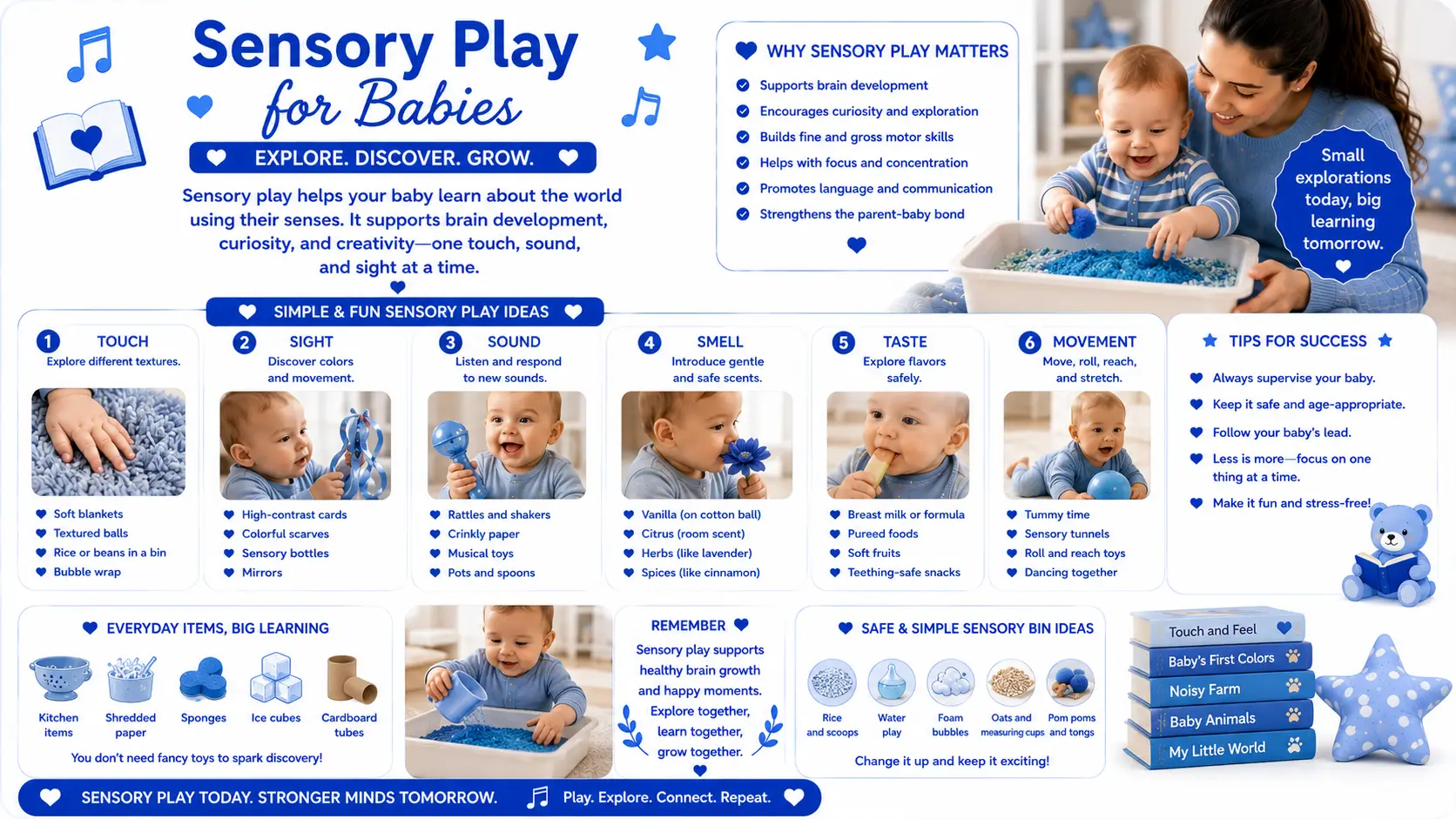
From the moment they’re born, babies are gathering information about the world through their senses — touch, sight, sound, smell, and taste. Sensory play for babies simply means giving them safe, hands-on experiences that stimulate those senses, and it’s one of the easiest ways to support brain development, motor skills, and bonding in the first year of life.

You don’t need fancy toys or a Pinterest-worthy setup. Some of the best sensory activities for babies use things you already have at home. Below, we’ll cover the benefits of sensory play, age-appropriate ideas, and safety tips to keep in mind.

What Is Sensory Play and Why Does It Matter?

Contents hide
1 What Is Sensory Play and Why Does It Matter?
2 Sensory Play Ideas by Age
2.1 Newborn to 3 Months
2.2 4 to 6 Months
2.3 7 to 9 Months
2.4 10 to 12 Months
3 Easy DIY Sensory Activities for Babies
4 Sensory Play Safety Tips
5 Final Thoughts
6 FAQ
6.1 What age can babies start sensory play?
6.2 How often should babies do sensory play?
6.3 Is sensory play messy?
6.4 What household items are good for baby sensory play?
6.5 Can sensory play help with baby development delays?

Sensory play is any activity that engages a baby’s senses — touching different textures, watching colors and movement, listening to new sounds, or exploring safe smells and tastes. Every time a baby squishes, taps, watches, or reaches for something, tiny connections are forming in the brain.

Regular sensory play supports:

Cognitive development — babies begin to understand cause and effect (“if I shake this, it rattles”)

Fine and gross motor skills — reaching, grasping, and pushing build hand-eye coordination and strength

Language development — narrating what your baby is touching or seeing introduces new vocabulary

Object permanence — hiding and finding objects teaches babies that things exist even when out of sight

Emotional regulation and bonding — calm, repetitive sensory experiences (like water play) can be soothing for both baby and parent

Because a baby’s senses are their main tool for learning at this age, sensory play isn’t just entertainment — it’s genuinely part of early development.

Sensory Play Ideas by Age

Newborn to 3 Months

At this stage, keep it simple. Babies respond best to high-contrast images, gentle sounds, and skin-to-skin contact.

Black-and-white contrast cards or books

Soft rattles and gentle music

Tummy time on different textured blankets

A baby-safe mirror propped nearby during tummy time

4 to 6 Months

As babies gain head and neck control, they start reaching for and grasping objects.

Textured balls and fabric books

Water play in a shallow tub with supervision

Sensory bags (a sealed zip-top bag with hair gel or water, taped down for baby to press)

Bubbles floating in the air to watch and reach for

7 to 9 Months

Sitting up opens the door to more hands-on exploration and early self-feeding.

Taste-safe sensory bins (oats, rice, or cereal in a tray)

Edible finger paints made from yogurt or purée

Crinkly materials like tissue paper or foil

Stacking cups filled with different textures

10 to 12 Months

Mobile babies are ready for activities that combine movement with sensory input.

Sensory boards with buttons, zippers, and Velcro

Water beads or ice cubes in a bowl (with close supervision)

Sand or rice bins with scoops and cups

Music and movement play with simple instruments like shakers

Easy DIY Sensory Activities for Babies

If you’re looking for low-cost, no-prep ideas, these are some of the most popular sensory activities for babies at home:

Sensory bottles — fill a clear bottle with water, glitter, or beads and seal it tightly for baby to shake and watch.

Texture basket — gather a few household items with different textures (a soft sponge, a wooden spoon, a silicone spatula) for baby to explore.

Frozen fruit play — freeze soft fruits like banana slices in a mesh feeder for a cool, taste-safe sensory experience.

Cardboard box exploration — a plain box can offer new textures, sounds, and a sense of space to crawl in and out of.

Rainmaker tube — fill a cardboard tube with rice or beans, seal both ends, and let baby shake it to hear the sound.

Sensory Play Safety Tips

Sensory play should always be supervised, especially for younger babies who explore everything with their mouths.

Avoid small parts or choking hazards (anything smaller than a toilet paper roll)

Use taste-safe materials for babies who mouth objects

Check food-based sensory play for allergies

Never leave a baby unattended near water, even in shallow trays

Choose non-toxic, baby-safe paints and materials

Final Thoughts

Sensory play for babies doesn’t need to be elaborate or expensive — a bowl of water, a crinkly piece of paper, or a few minutes of tummy time on a new texture can be just as valuable as a store-bought kit. The key is consistency: a few minutes of sensory exploration each day gives your baby’s brain and body plenty to work with as they grow.

FAQ

What age can babies start sensory play?

Babies can begin sensory play from birth. Newborns benefit from gentle activities like high-contrast cards, soft textures, and calm sounds, while more hands-on sensory play (like textured bins or water play) is better suited once a baby has head control, usually around 4 to 6 months.

How often should babies do sensory play?

There’s no strict rule, but short sessions of 10 to 15 minutes a few times a week are plenty. Babies tire quickly, so it’s better to keep sessions brief and follow their cues rather than aiming for a set schedule.

Is sensory play messy?

It can be, but it doesn’t have to be. Many sensory activities — like sealed sensory bags, textured books, or sound-based play — involve little to no mess, while others, like taste-safe bins, are easier to manage with a mat or high chair tray underneath.

What household items are good for baby sensory play?

Everyday items like wooden spoons, fabric scraps, cardboard tubes, empty containers, and kitchen utensils make great sensory toys. You don’t need to buy specialized sensory kits to give your baby a rich variety of textures and sounds.

Can sensory play help with baby development delays?

Sensory play supports typical development and can be a helpful part of early intervention for babies with developmental delays, but it isn’t a substitute for professional guidance. If you have concerns about your baby’s development, it’s best to speak with your pediatrician or an early intervention specialist.

Author

DrAdam

Dr. Adam. Obstetrician and Gynecologist

Follow Me
Other Articles
Previous

DIY Baby Books

Next

Sensory Activities by Age

No Comment! Be the first one.

Leave a Reply Cancel reply

Your email address will not be published. Required fields are marked *

What is Did You Search?

The “Did You Search” website was created for all mothers and families. Just search to find all your needs about your children.

Links

  • about
  • contact
  • privacy policy
  • medical disclaimer
  • sitemap
Copyright 2026 — DidYouSearch. All rights reserved.