
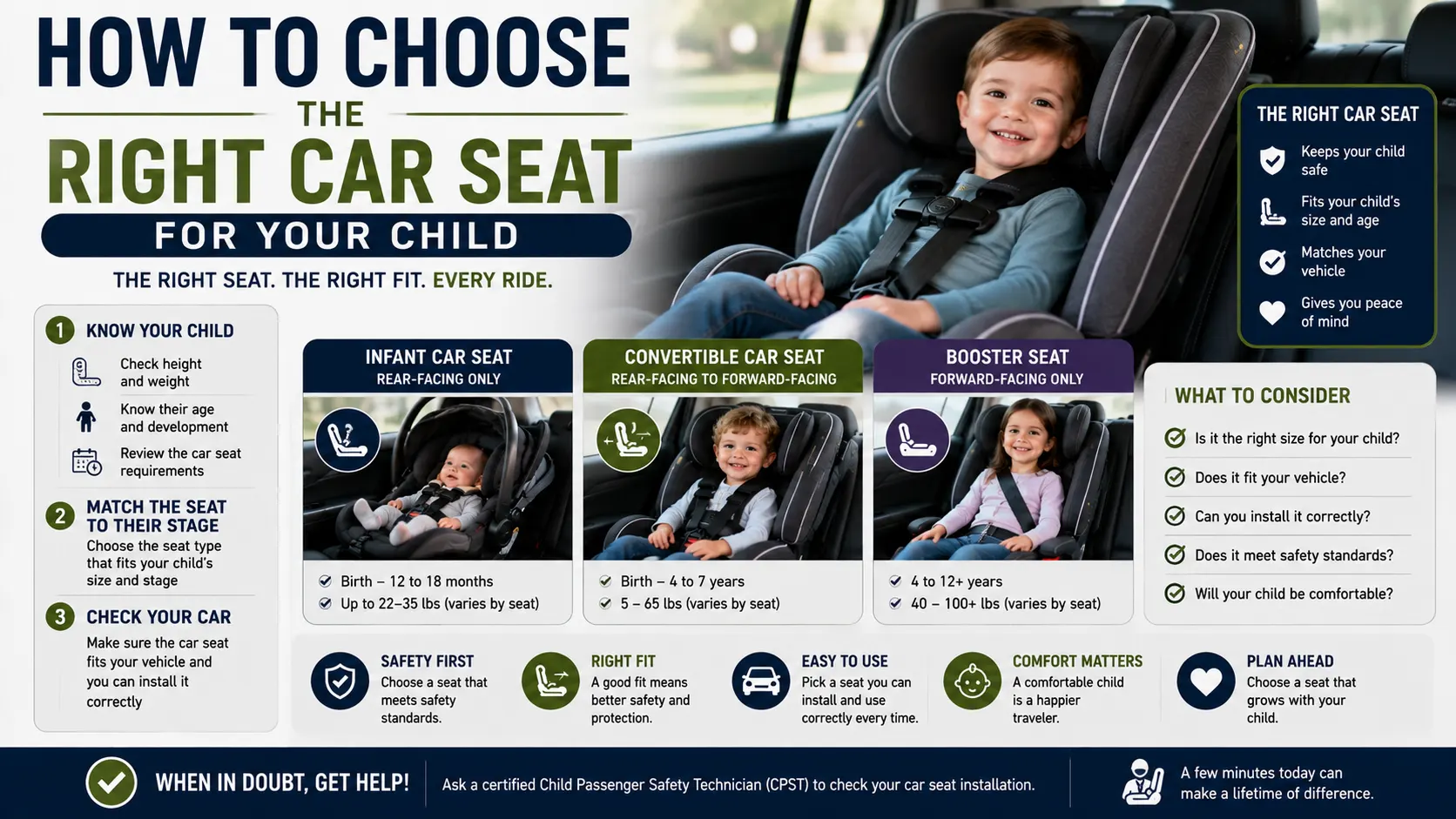

Choosing a car seat is one of the most important safety decisions you’ll make as a parent. With so many options available—from infant and convertible seats to booster models—it can be difficult to know which one is truly right for your child.
The best car seat isn’t necessarily the most expensive or the one with the most features. It’s the one that fits your child, your vehicle, and your family’s daily needs, while being installed and used correctly every time.
In this guide, you’ll learn how to evaluate car seats step by step, avoid common buying mistakes, and choose a seat that provides the right protection at every stage of your child’s growth.
Why Choosing the Right Car Seat Matters
A properly selected and correctly installed car seat significantly reduces the risk of serious injury in a crash. Children grow quickly, and their safety needs change with age, height, and weight, which is why choosing the correct seat—and keeping your child in each stage as long as allowed—is essential.
Step 1: Start With Your Child’s Age, Height, and Weight
Never choose a seat based on age alone.
Always check:
- Current weight
- Standing height
- Shoulder height
- Manufacturer limits
- Developmental readiness
Your child’s measurements—not birthdays—determine the safest option.
Step 2: Identify the Correct Car Seat Type
Provide a concise comparison table of:
- Infant
- Convertible
- All-in-One
- Booster
With:
- Best age
- Rear-facing?
- Forward-facing?
- Approximate lifespan
- Main advantages
(Then internally link to your “Types of Car Seats Explained” article.)
Step 3: Make Sure It Fits Your Vehicle
Many parents overlook vehicle compatibility.
Explain factors such as:
- Compact cars
- SUVs
- Pickup trucks
- Three-across installations
- Seat angle
- LATCH availability
- Seat belt installation
- Front-to-back space
Step 4: Consider Your Lifestyle
This is where your article can outperform competitors.
Discuss scenarios like:
- Daily daycare drop-offs
- Frequent travel
- Rideshare or taxi use
- Grandparents transporting the child
- Multiple children
- Air travel
- City driving
- Long road trips
Recommend features based on each situation rather than one-size-fits-all advice.
Step 5: Choose Safety Features That Actually Matter
Highlight features that provide practical value:
- Side-impact protection
- Easy-to-adjust harness
- Clear installation indicators
- Recline options
- Energy-absorbing materials
- Anti-rebound bar (where available)
Clarify that all certified seats must meet required safety standards, so convenience features should be weighed against actual family needs.
Step 6: Decide Between Budget and Long-Term Value
Include a comparison table showing:
| Option | Upfront Cost | Long-Term Value | Best For |
|---|---|---|---|
| Infant + Convertible | Higher | Excellent | Most families |
| Convertible from Birth | Moderate | Excellent | Budget-conscious parents |
| All-in-One | Highest | Very Good | Long-term single-seat solution |
Step 7: Check Ease of Installation
Explain why a seat that’s difficult to install correctly may not be the best choice for every family.
Cover:
- LATCH vs seat belt installation
- Installation indicators
- Harness adjustment
- Cleaning
- Everyday usability
Common Buying Mistakes
Include a section such as:
- Buying based on price alone
- Switching stages too early
- Ignoring vehicle fit
- Not reading manufacturer limits
- Buying a used seat with unknown history
- Prioritizing aesthetics over safety
- Assuming one seat fits every car
Car Seat Buying Checklist
Create a practical checklist readers can use before purchasing:
- Child fits weight range
- Child fits height range
- Fits vehicle dimensions
- Easy to install
- Easy to clean
- FAA approval if needed
- Adjustable harness
- Clear instruction manual
- Warranty available
Decision Guide
A simple flow can improve engagement:
Is your baby a newborn?
→ Yes → Infant or newborn-compatible convertible seat.
Has your child outgrown the infant seat?
→ Convertible.
Has your child outgrown the forward-facing harness?
→ Booster.
This kind of decision aid is rare among competitors and improves user experience.
Continue exploring: browse the full Baby Safety hub.