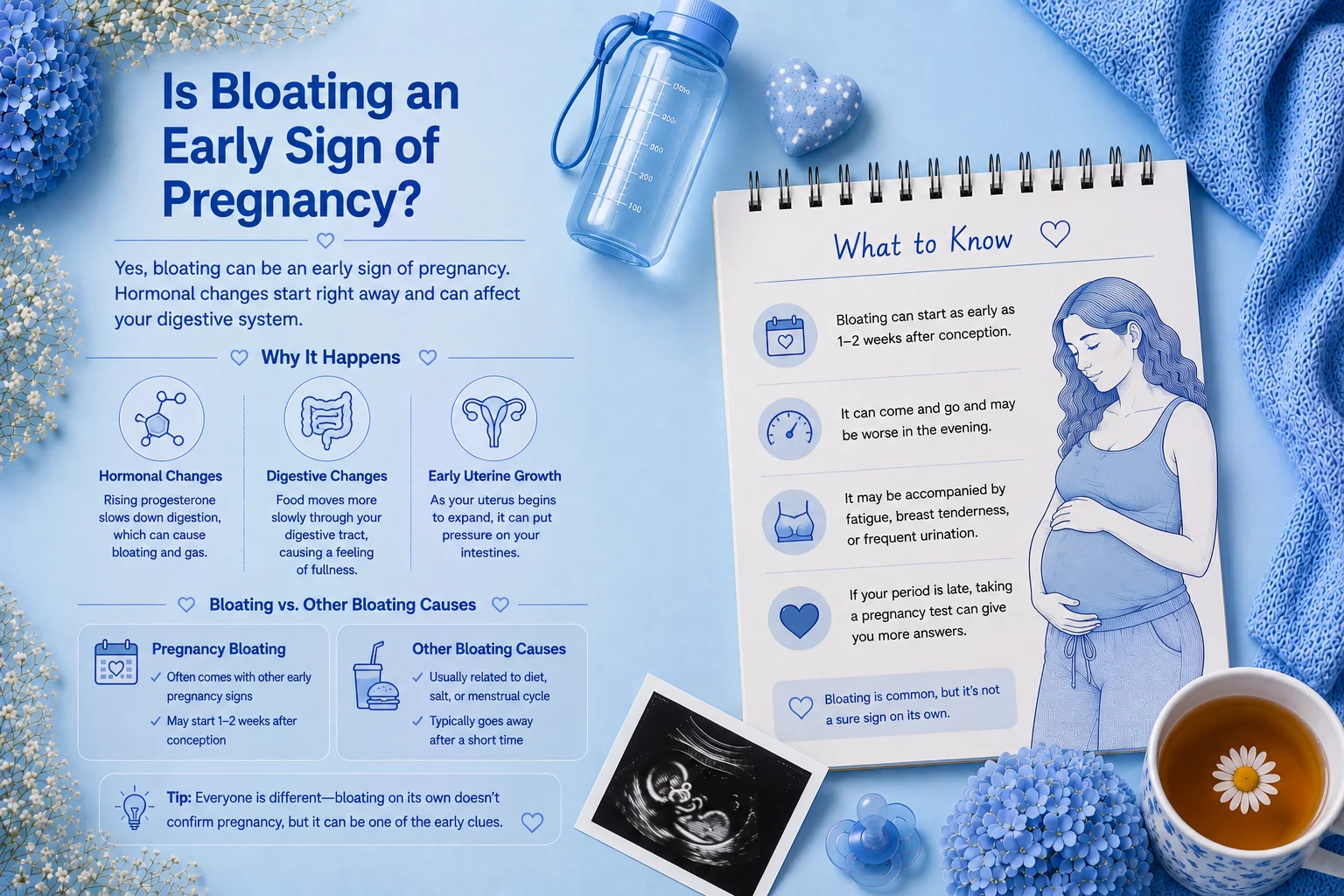

Yes, bloating can be an early sign of pregnancy, and it’s one of the more common ones. In fact, research suggests around two-thirds of pregnant people experience bloating during the first trimester. The tricky part is that bloating is also a classic PMS symptom, so feeling puffy or swollen in your midsection right before your period is due doesn’t automatically mean you’re pregnant. Here’s what’s actually causing it, how it compares to period bloating, and what to expect if you’re pregnant.
Why Bloating Happens in Early Pregnancy
The main culprit is progesterone. This hormone rises quickly after conception to help thicken and maintain the uterine lining, but it also has a relaxing effect on smooth muscle throughout the body, including in your digestive tract. That relaxation slows digestion down, which allows gas to build up and food to move through your system more slowly, both of which contribute to that swollen, “inflated balloon” feeling in your abdomen. Progesterone can also encourage your body to retain extra water and fluid, adding to the bloated sensation.
On top of the hormonal shift, increased blood flow to the uterus in early pregnancy can contribute to a feeling of fullness or tightness, even though the uterus itself is still far too small at this stage to be responsible for any visible “bump.”
Why It’s So Easy to Confuse With Period Bloating
Here’s the frustrating overlap: progesterone rises in the second half of every menstrual cycle, not just when you’re pregnant. That means bloating shows up as a normal part of PMS too, driven by the exact same hormone. Since progesterone peaks around a week before your expected period regardless of whether you’ve conceived, there’s no way to tell pregnancy bloating from period bloating by sensation alone in those early days.
A few subtle differences can offer some clues, though none are foolproof:
Duration. Period-related bloating typically resolves once your period starts or shortly after. Pregnancy bloating tends to persist and often continues well beyond when your period was expected.
Accompanying symptoms. PMS bloating is more likely to show up alongside acne, headaches, and fatigue. Pregnancy bloating is more likely to appear with nausea, food cravings or aversions, frequent urination, or implantation bleeding.
Timing relative to your missed period. If bloating and other symptoms continue past the point your period was due, pregnancy becomes the more likely explanation.
Even with these clues, symptoms alone aren’t a reliable way to confirm anything. A pregnancy test remains the only definitive answer.
When Bloating Tends to Show Up and How Long It Lasts
Bloating can begin quite early, sometimes even before a missed period, as progesterone starts climbing right after implantation. For many people, it continues through the first trimester alongside other symptoms like nausea and fatigue. As the second trimester progresses and your growing uterus starts to account for more of the abdominal fullness, the sensation often shifts from hormonal bloating to actual physical growth, though some digestive bloating can persist throughout pregnancy as the uterus continues to put pressure on your stomach and intestines.
Managing Bloating in Early Pregnancy
Bloating in early pregnancy is usually just uncomfortable rather than concerning, and a few habits can help ease it:
Eat smaller, more frequent meals instead of large ones, which puts less strain on digestion at once
Stay hydrated, since adequate water intake actually helps reduce water retention rather than worsen it
Limit gas-producing foods like carbonated drinks, beans, and cruciferous vegetables if they seem to make things worse
Get light physical activity, such as walking, which can help keep digestion moving
Eat slowly and avoid overly salty or processed foods, which can contribute to water retention
Wear comfortable, non-restrictive clothing around the waist as bloating fluctuates
When Bloating Might Need Medical Attention
Most bloating in early pregnancy is harmless and doesn’t require treatment beyond simple lifestyle adjustments. That said, it’s worth contacting your healthcare provider if bloating is accompanied by:
- Severe or worsening abdominal pain
- Unexplained weight loss
- Persistent vomiting or an inability to keep down food
- Fever or signs of infection
- Significant changes in bowel habits that don’t improve
These combinations could point to something other than typical pregnancy-related bloating and are worth having evaluated.
The Bottom Line
Bloating is a genuinely common early pregnancy symptom, driven largely by rising progesterone slowing digestion and encouraging fluid retention. But because the same hormone causes bloating before a period too, it’s not something you can use on its own to confirm pregnancy. If bloating shows up alongside a missed period, nausea, or other early signs and continues rather than resolving, it’s a good moment to take a pregnancy test.
FAQ
How early can pregnancy bloating start?
Bloating can begin within the first couple of weeks after conception, sometimes even before a missed period, as progesterone starts to rise.
How do I tell if bloating is from my period or pregnancy?
Period bloating typically eases once your period starts, while pregnancy bloating tends to persist and often appears alongside nausea, fatigue, or a missed period. A pregnancy test is the only way to know for sure.
Is bloating a common symptom in early pregnancy?
Yes, it’s one of the most frequently reported first-trimester symptoms, with a majority of pregnant people experiencing it at some point.
Does pregnancy bloating feel different from regular bloating?
Not necessarily. Many people describe it the same way, a feeling of fullness, tightness, or swelling in the abdomen, though it may last longer and coincide with other pregnancy symptoms.
When should I be concerned about bloating during pregnancy?
If bloating comes with severe pain, unexplained weight loss, persistent vomiting, or fever, it’s worth contacting your healthcare provider to rule out other causes.