Skip to content
DidYouSearch DidYouSearch
  • did you search?
  • Baby Plus+
    • Baby Activities
      • Arts & Crafts
      • Indoor Activities
      • Montessori
      • Music
      • Outdoor Activities
      • Reading
      • Sensory Play
      • Tummy Time
    • Baby Development
      • Brain Development
      • Cognitive Development
      • Emotional Development
      • Fine Motor Skills
      • Growth Milestones
      • Monthly Milestones
      • Motor Skills
      • Physical Development
      • Social Development
      • Speech Development
    • Baby Feeding
      • Allergies
      • Baby Led Weaning
      • Bottle Feeding
      • Breast feeding
        • Breastfeeding Diet
        • Breastfeeding Positions
        • Latch Problems
        • Low Milk Supply
        • Mastitis
        • Pumping Schedule
        • Weaning
      • Burping
      • Cluster Feeding
      • Feeding Schedule
      • Formula Feeding
        • Formula Amount
        • Formula Brands
        • Formula Comparison
        • Formula Preparation
        • Formula Storage
      • Hydration
      • Pumping
      • Solid Foods
    • Baby Gear Reviews
      • Best Baby Carrier
      • Best Baby Monitor
      • Best Baby Strollers
      • Best Bottles
      • Best Breast Pump
      • Best Car Seat
      • Best Cribs
      • Best Diapers
      • Best Formula
      • Best Toys
    • Baby Growth
      • Growth Spurts
      • Height Charts
      • Monthly Growth
      • Percentiles
      • Weight Charts
    • Baby Health
      • Allergies
      • Cold
      • Constipation
      • Cough
      • Diarrhea
      • Ear Infection
      • Fever
      • Flu
      • Pediatric Visits
      • Rashes
      • Teething
      • Vaccines
      • Vomiting
    • Baby Nutrition
      • Dairy
      • Drinks
      • Eggs
      • Fish
      • Fruits
      • Healthy Recipes
      • Meat
      • Snacks
      • Vegetables
      • Vitamins
    • Baby Products
      • Baby Carriers
      • Bassinets
      • Bottles
      • Breast Pumps
      • Car Seats
      • Cribs
      • Diaper Bags
      • High Chairs
      • Monitors
      • Strollers
      • Swings
      • Toys
      • Walkers
    • Baby Recipes
      • BLW Recipes
      • Breakfast
      • Dinner
      • Finger Foods
      • Lunch
      • Purees
      • Snacks
    • Baby Safety
      • Baby Proofing
      • Car Seats
      • Choking Hazards
      • CPR
      • Home Safety
      • Poison Prevention
      • Safe Sleep
      • Sun Protection
      • Water Safety
  • Baby Names
    • Boy Names
    • Girl Names
    • American baby boy names
    • American baby girl names
    • Biblical Names
    • Middle Names
    • Modern Names
    • Short Names
    • Unique Names
    • Unisex Names
  • Recommended
    • Baby Shopping
      • Baby Registry
      • Budget Baby Shopping
      • Hospital Bag
      • Must Have Products
      • Newborn Checklist
      • Nursery Ideas
    • Baby Sleep
      • Bedtime Routine
      • Co Sleeping
      • Crib Safety
      • Nap Schedules
      • Night Wakings
      • Sleep Environment
      • Sleep Products
      • Sleep Regression
      • Sleep Training
      • Wake Windows
      • White Noise
    • Childcare
      • Daycare
      • Babysitters
      • Kindergarten
      • Nannies
      • Preschool
    • Newborn Care
      • Nail Care
      • Baby Hygiene
      • Bathing
      • Crying
      • Diapering
      • Ear Care
      • Eye Care
      • Skin Care
      • Soothing Techniques
      • Temperature
      • Umbilical Cord
    • Special Needs
      • Premature Babies
      • Autism Signs
      • Developmental Delays
      • Down Syndrome
      • NICU
      • Twins
    • Seasonal Baby Care
      • Spring
      • Summer
      • Travel
      • Fall
      • Holidays
      • Winter
  • Parenting
    • Bonding
    • Discipline
    • Emotional Intelligence
    • First Time Parents
    • Gentle Parenting
    • Positive Parenting
    • Routines
    • Single Parents
    • Working Parents
  • Pregnancy
    • Pregnancy Complications
    • Labor & Delivery
    • Postpartum Recovery
    • Pregnancy Exercises
    • Pregnancy Medications
    • Pregnancy Nutrition
    • Pregnancy Sleep
    • Pregnancy Symptoms
    • Pregnancy Tests
    • Pregnancy Vitamins
    • Pregnancy Weeks
  • Toddler
    • Preschool
    • Speech
    • Tantrums
    • Toddler Food
    • Toddler Sleep
    • Behavior
    • Independence
    • Learning
    • Potty Training
  • Traveling with Baby
    • Road Trips
    • Beach
    • Camping
    • Flying
    • Hotels
    • Packing Lists
  • did you search?
  • Baby Plus+
    • Baby Activities
      • Arts & Crafts
      • Indoor Activities
      • Montessori
      • Music
      • Outdoor Activities
      • Reading
      • Sensory Play
      • Tummy Time
    • Baby Development
      • Brain Development
      • Cognitive Development
      • Emotional Development
      • Fine Motor Skills
      • Growth Milestones
      • Monthly Milestones
      • Motor Skills
      • Physical Development
      • Social Development
      • Speech Development
    • Baby Feeding
      • Allergies
      • Baby Led Weaning
      • Bottle Feeding
      • Breast feeding
        • Breastfeeding Diet
        • Breastfeeding Positions
        • Latch Problems
        • Low Milk Supply
        • Mastitis
        • Pumping Schedule
        • Weaning
      • Burping
      • Cluster Feeding
      • Feeding Schedule
      • Formula Feeding
        • Formula Amount
        • Formula Brands
        • Formula Comparison
        • Formula Preparation
        • Formula Storage
      • Hydration
      • Pumping
      • Solid Foods
    • Baby Gear Reviews
      • Best Baby Carrier
      • Best Baby Monitor
      • Best Baby Strollers
      • Best Bottles
      • Best Breast Pump
      • Best Car Seat
      • Best Cribs
      • Best Diapers
      • Best Formula
      • Best Toys
    • Baby Growth
      • Growth Spurts
      • Height Charts
      • Monthly Growth
      • Percentiles
      • Weight Charts
    • Baby Health
      • Allergies
      • Cold
      • Constipation
      • Cough
      • Diarrhea
      • Ear Infection
      • Fever
      • Flu
      • Pediatric Visits
      • Rashes
      • Teething
      • Vaccines
      • Vomiting
    • Baby Nutrition
      • Dairy
      • Drinks
      • Eggs
      • Fish
      • Fruits
      • Healthy Recipes
      • Meat
      • Snacks
      • Vegetables
      • Vitamins
    • Baby Products
      • Baby Carriers
      • Bassinets
      • Bottles
      • Breast Pumps
      • Car Seats
      • Cribs
      • Diaper Bags
      • High Chairs
      • Monitors
      • Strollers
      • Swings
      • Toys
      • Walkers
    • Baby Recipes
      • BLW Recipes
      • Breakfast
      • Dinner
      • Finger Foods
      • Lunch
      • Purees
      • Snacks
    • Baby Safety
      • Baby Proofing
      • Car Seats
      • Choking Hazards
      • CPR
      • Home Safety
      • Poison Prevention
      • Safe Sleep
      • Sun Protection
      • Water Safety
  • Baby Names
    • Boy Names
    • Girl Names
    • American baby boy names
    • American baby girl names
    • Biblical Names
    • Middle Names
    • Modern Names
    • Short Names
    • Unique Names
    • Unisex Names
  • Recommended
    • Baby Shopping
      • Baby Registry
      • Budget Baby Shopping
      • Hospital Bag
      • Must Have Products
      • Newborn Checklist
      • Nursery Ideas
    • Baby Sleep
      • Bedtime Routine
      • Co Sleeping
      • Crib Safety
      • Nap Schedules
      • Night Wakings
      • Sleep Environment
      • Sleep Products
      • Sleep Regression
      • Sleep Training
      • Wake Windows
      • White Noise
    • Childcare
      • Daycare
      • Babysitters
      • Kindergarten
      • Nannies
      • Preschool
    • Newborn Care
      • Nail Care
      • Baby Hygiene
      • Bathing
      • Crying
      • Diapering
      • Ear Care
      • Eye Care
      • Skin Care
      • Soothing Techniques
      • Temperature
      • Umbilical Cord
    • Special Needs
      • Premature Babies
      • Autism Signs
      • Developmental Delays
      • Down Syndrome
      • NICU
      • Twins
    • Seasonal Baby Care
      • Spring
      • Summer
      • Travel
      • Fall
      • Holidays
      • Winter
  • Parenting
    • Bonding
    • Discipline
    • Emotional Intelligence
    • First Time Parents
    • Gentle Parenting
    • Positive Parenting
    • Routines
    • Single Parents
    • Working Parents
  • Pregnancy
    • Pregnancy Complications
    • Labor & Delivery
    • Postpartum Recovery
    • Pregnancy Exercises
    • Pregnancy Medications
    • Pregnancy Nutrition
    • Pregnancy Sleep
    • Pregnancy Symptoms
    • Pregnancy Tests
    • Pregnancy Vitamins
    • Pregnancy Weeks
  • Toddler
    • Preschool
    • Speech
    • Tantrums
    • Toddler Food
    • Toddler Sleep
    • Behavior
    • Independence
    • Learning
    • Potty Training
  • Traveling with Baby
    • Road Trips
    • Beach
    • Camping
    • Flying
    • Hotels
    • Packing Lists
Close

Search

Home/Baby Safety/Baby Proofing/Nursery Safety Checklist for Newborns
Baby ProofingBaby Safety

Nursery Safety Checklist for Newborns

By Ali
August 3, 2026 4 Min Read
0

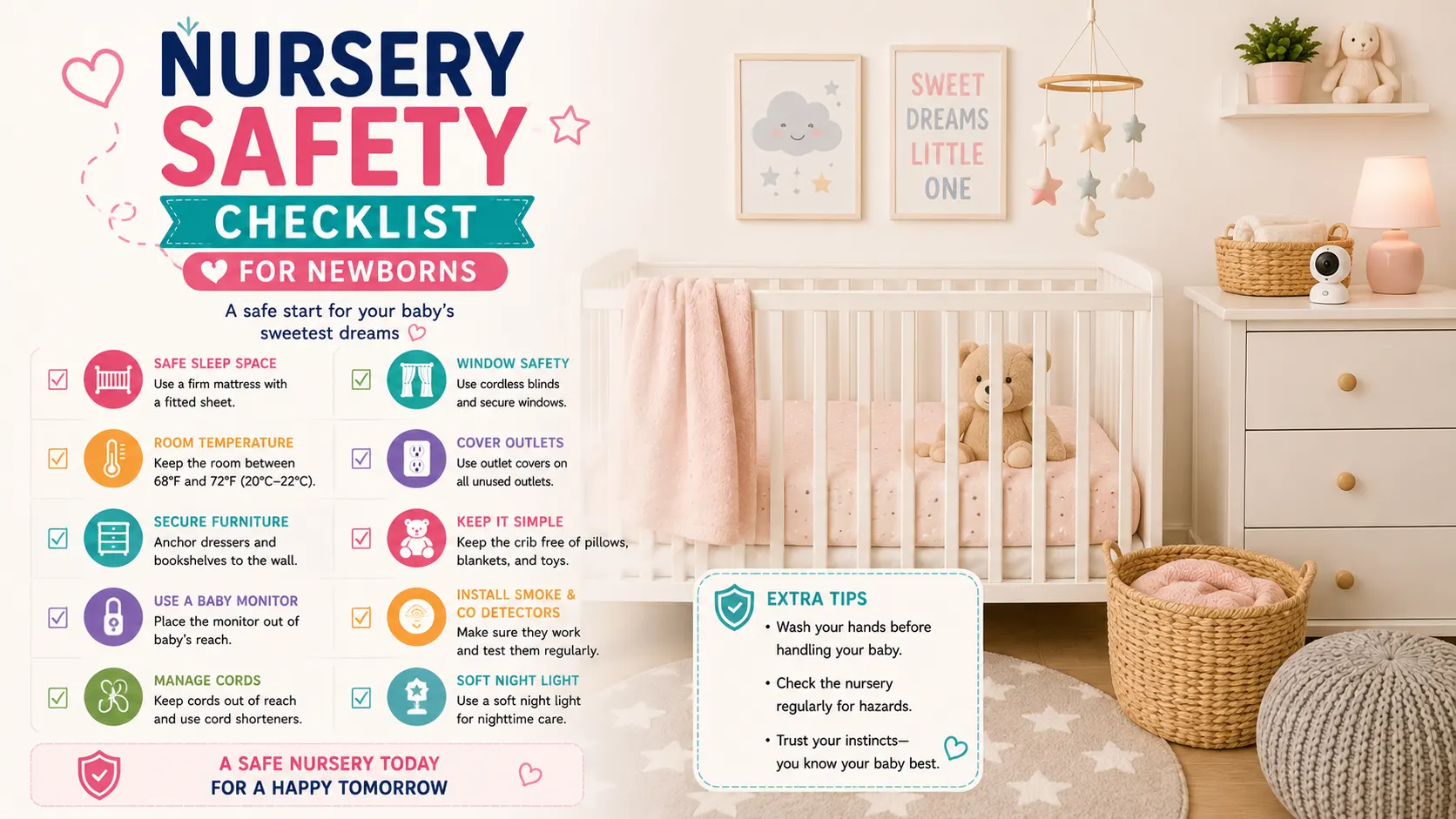
A newborn isn’t rolling, crawling, or reaching yet — so nursery safety for this stage looks different from typical baby proofing. The priority isn’t locking cabinets; it’s sleep safety, since sleep-related incidents are a leading cause of death in the first year. This checklist is built around the American Academy of Pediatrics’ safe sleep guidelines, plus the handful of non-sleep hazards worth addressing before your baby arrives.

Quick answer: Follow the ABCs of safe sleep — Alone, on their Back, in a bare Crib or bassinet — keep the room between 68–72°F, and room-share (same room, separate sleep surface) for at least the first 6 months, ideally the first year.

The ABCs of Safe Sleep

Contents hide
1 The ABCs of Safe Sleep
2 The Firm Mattress Test
3 What Should (and Shouldn’t) Be in the Crib
4 Room Temperature and Overheating
5 Room-Sharing: What It Means in Practice
6 Non-Sleep Nursery Hazards
7 Common Myths Worth Addressing
8 Frequently Asked
9 Common Questions

This is the foundation of every AAP-aligned safe sleep guideline, and it’s worth memorizing exactly as written:

  • A — Alone. Your baby sleeps in their own separate space, not in your bed, not on a couch or armchair with you.
  • B — Back. Always place your baby on their back to sleep, for every nap and every night, even if they seem to sleep better on their side or stomach.
  • C — Crib (or bassinet). A firm, flat sleep surface designed for infant sleep — not a swing, car seat, lounger, or inclined product of any kind.

Some versions add a fourth letter, D — Don’t smoke, referring to avoiding smoke exposure both during pregnancy and in the baby’s environment after birth, since this is also linked to sleep-related death risk.

The Firm Mattress Test

“Firm” isn’t a marketing description — it’s a testable standard. Press your hand down on the mattress and lift it: if your hand leaves a visible indentation, the mattress is too soft for infant sleep. A safe mattress should:

  • Fit tightly in the crib or bassinet with no gaps around the edges
  • Be designed specifically for that crib or bassinet model, not a generic or hand-me-down substitute
  • Show no indentation when pressed
  • Be covered only with a fitted sheet made for that exact mattress size

Avoid memory foam and any “extra soft” or plush infant mattress marketed for comfort — softer surfaces increase suffocation and rebreathing risk specifically because of how they interact with an infant’s limited ability to reposition themselves.

What Should (and Shouldn’t) Be in the Crib

Should be in the crib: the mattress and a fitted sheet. That’s the complete list.

Should not be in the crib:

  • Pillows, of any kind, including “infant pillows”
  • Blankets, quilts, or comforters — use a wearable sleep sack instead if your baby needs more warmth
  • Crib bumpers, including “breathable mesh” versions — these are not recommended by the AAP regardless of marketing claims, since they increase suffocation and entrapment risk without proven safety benefit
  • Stuffed animals, toys, or sleep positioners/wedges of any kind
  • Weighted blankets, weighted swaddles, or weighted sleepers — these are specifically advised against due to suffocation and overheating risk

If your baby seems cold, the correct fix is a sleep sack rated for your room’s temperature (a 1.0 TOG rating generally suits a standard 68–72°F room), not additional loose bedding.

Room Temperature and Overheating

  • Keep the nursery between 68–72°F (20–22°C)
  • Dress your baby in one layer more than you’d personally be comfortable wearing, and skip a hat indoors — overheating is a recognized risk factor, and a hat during sleep specifically is not recommended
  • A fan can help with air circulation and has been associated with a modest reduction in SIDS risk in some research, though it isn’t a substitute for the other guidelines
  • Avoid swaddling once your baby shows signs of trying to roll, since a swaddled baby who rolls onto their stomach faces significantly higher suffocation risk — this is typically the cue to transition to a sleep sack instead

Room-Sharing: What It Means in Practice

Room-sharing — not bed-sharing — is a specific, evidence-backed recommendation:

  • Your baby’s crib, bassinet, or portable play yard goes in your bedroom, positioned near your bed
  • Your baby sleeps in this separate space, not in your bed with you
  • This arrangement is recommended for at least the first 6 months, ideally the first year
  • Room-sharing without bed-sharing has been associated with meaningfully reduced SIDS risk compared to a baby sleeping in a separate room
  • If you bring your baby into bed to feed or comfort them, the guidance is to return them to their own sleep space before you go back to sleep yourself, rather than risking falling asleep together

Non-Sleep Nursery Hazards

Once sleep safety is set up, a few remaining nursery-specific items are worth addressing before your baby is mobile:

  • Anchor any dresser, bookshelf, or tall furniture to the wall, the same as anywhere else in the house
  • Position the crib away from windows, blinds, and any dangling cords, to reduce strangulation risk even though your newborn isn’t mobile yet
  • Use a changing table with raised edges and a safety strap, and never step away even briefly once your baby is on it
  • If using a baby monitor, keep the cord and unit well outside the crib and at least a few feet from where your baby sleeps
  • Choose cordless window coverings for the nursery specifically, since this is the room your baby spends the most unsupervised time in

Common Myths Worth Addressing

  • “A slightly softer mattress is more comfortable.” Comfort isn’t the standard for infant sleep surfaces — firmness is specifically about reducing suffocation and rebreathing risk, not preference.
  • “Breathable bumpers are safe because they’re not solid.” The AAP does not recommend any crib bumper, including mesh or “breathable” versions, regardless of marketing language.
  • “A home monitor that tracks breathing means I don’t need to follow the other guidelines as closely.” Cardiorespiratory monitors sold for home use have not been shown to reduce SIDS risk and are not a substitute for safe sleep practices.
  • “Propping the mattress at an incline helps with reflux.” Sleep surfaces with an incline greater than about 10 degrees are considered unsafe for infant sleep; reflux concerns should be discussed with a pediatrician instead of addressed with elevation.

Continue exploring: browse the full Baby Safety hub.

Frequently Asked

Common Questions

Between 68–72°F (20–22°C) is the generally recommended range, paired with dressing your baby in appropriate layers rather than relying on a hat or extra blankets.
No — the AAP does not recommend crib bumpers of any kind, including breathable or mesh versions, since they haven't been shown to prevent injury and do increase suffocation and entrapment risk.
At least the first 6 months, and ideally up to the first year, according to AAP guidance — in a separate sleep space in your room, not in your bed.
No — these are not considered safe sleep surfaces for regular use. A baby should sleep only on a firm, flat surface designed and approved for infant sleep, such as a crib or bassinet.
Author

Ali

Digital Marketing enthusiast with a passion for SEO, web design, analytics, and creative problem-solving.

Follow Me
Other Articles
Previous

Living Room Baby Proofing Tips

Next

Baby Proofing a Staircase (Gates & Alternatives)

No Comment! Be the first one.

Leave a Reply Cancel reply

Your email address will not be published. Required fields are marked *

What is Did You Search?

The “Did You Search” website was created for all mothers and families. Just search to find all your needs about your children.

Links

  • about
  • contact
  • privacy policy
  • medical disclaimer
  • sitemap
Copyright 2026 — DidYouSearch. All rights reserved.