Skip to content
DidYouSearch DidYouSearch
  • did you search?
  • Baby Plus+
    • Baby Activities
      • Arts & Crafts
      • Indoor Activities
      • Montessori
      • Music
      • Outdoor Activities
      • Reading
      • Sensory Play
      • Tummy Time
    • Baby Development
      • Brain Development
      • Cognitive Development
      • Emotional Development
      • Fine Motor Skills
      • Growth Milestones
      • Monthly Milestones
      • Motor Skills
      • Physical Development
      • Social Development
      • Speech Development
    • Baby Feeding
      • Allergies
      • Baby Led Weaning
      • Bottle Feeding
      • Breast feeding
        • Breastfeeding Diet
        • Breastfeeding Positions
        • Latch Problems
        • Low Milk Supply
        • Mastitis
        • Pumping Schedule
        • Weaning
      • Burping
      • Cluster Feeding
      • Feeding Schedule
      • Formula Feeding
        • Formula Amount
        • Formula Brands
        • Formula Comparison
        • Formula Preparation
        • Formula Storage
      • Hydration
      • Pumping
      • Solid Foods
    • Baby Gear Reviews
      • Best Baby Carrier
      • Best Baby Monitor
      • Best Baby Strollers
      • Best Bottles
      • Best Breast Pump
      • Best Car Seat
      • Best Cribs
      • Best Diapers
      • Best Formula
      • Best Toys
    • Baby Growth
      • Growth Spurts
      • Height Charts
      • Monthly Growth
      • Percentiles
      • Weight Charts
    • Baby Health
      • Allergies
      • Cold
      • Constipation
      • Cough
      • Diarrhea
      • Ear Infection
      • Fever
      • Flu
      • Pediatric Visits
      • Rashes
      • Teething
      • Vaccines
      • Vomiting
    • Baby Nutrition
      • Dairy
      • Drinks
      • Eggs
      • Fish
      • Fruits
      • Healthy Recipes
      • Meat
      • Snacks
      • Vegetables
      • Vitamins
    • Baby Products
      • Baby Carriers
      • Bassinets
      • Bottles
      • Breast Pumps
      • Car Seats
      • Cribs
      • Diaper Bags
      • High Chairs
      • Monitors
      • Strollers
      • Swings
      • Toys
      • Walkers
    • Baby Recipes
      • BLW Recipes
      • Breakfast
      • Dinner
      • Finger Foods
      • Lunch
      • Purees
      • Snacks
    • Baby Safety
      • Baby Proofing
      • Car Seats
      • Choking Hazards
      • CPR
      • Home Safety
      • Poison Prevention
      • Safe Sleep
      • Sun Protection
      • Water Safety
  • Baby Names
    • Boy Names
    • Girl Names
    • American baby boy names
    • American baby girl names
    • Biblical Names
    • Middle Names
    • Modern Names
    • Short Names
    • Unique Names
    • Unisex Names
  • Recommended
    • Baby Shopping
      • Baby Registry
      • Budget Baby Shopping
      • Hospital Bag
      • Must Have Products
      • Newborn Checklist
      • Nursery Ideas
    • Baby Sleep
      • Bedtime Routine
      • Co Sleeping
      • Crib Safety
      • Nap Schedules
      • Night Wakings
      • Sleep Environment
      • Sleep Products
      • Sleep Regression
      • Sleep Training
      • Wake Windows
      • White Noise
    • Childcare
      • Daycare
      • Babysitters
      • Kindergarten
      • Nannies
      • Preschool
    • Newborn Care
      • Nail Care
      • Baby Hygiene
      • Bathing
      • Crying
      • Diapering
      • Ear Care
      • Eye Care
      • Skin Care
      • Soothing Techniques
      • Temperature
      • Umbilical Cord
    • Special Needs
      • Premature Babies
      • Autism Signs
      • Developmental Delays
      • Down Syndrome
      • NICU
      • Twins
    • Seasonal Baby Care
      • Spring
      • Summer
      • Travel
      • Fall
      • Holidays
      • Winter
  • Parenting
    • Bonding
    • Discipline
    • Emotional Intelligence
    • First Time Parents
    • Gentle Parenting
    • Positive Parenting
    • Routines
    • Single Parents
    • Working Parents
  • Pregnancy
    • Pregnancy Complications
    • Labor & Delivery
    • Postpartum Recovery
    • Pregnancy Exercises
    • Pregnancy Medications
    • Pregnancy Nutrition
    • Pregnancy Sleep
    • Pregnancy Symptoms
    • Pregnancy Tests
    • Pregnancy Vitamins
    • Pregnancy Weeks
  • Toddler
    • Preschool
    • Speech
    • Tantrums
    • Toddler Food
    • Toddler Sleep
    • Behavior
    • Independence
    • Learning
    • Potty Training
  • Traveling with Baby
    • Road Trips
    • Beach
    • Camping
    • Flying
    • Hotels
    • Packing Lists
  • did you search?
  • Baby Plus+
    • Baby Activities
      • Arts & Crafts
      • Indoor Activities
      • Montessori
      • Music
      • Outdoor Activities
      • Reading
      • Sensory Play
      • Tummy Time
    • Baby Development
      • Brain Development
      • Cognitive Development
      • Emotional Development
      • Fine Motor Skills
      • Growth Milestones
      • Monthly Milestones
      • Motor Skills
      • Physical Development
      • Social Development
      • Speech Development
    • Baby Feeding
      • Allergies
      • Baby Led Weaning
      • Bottle Feeding
      • Breast feeding
        • Breastfeeding Diet
        • Breastfeeding Positions
        • Latch Problems
        • Low Milk Supply
        • Mastitis
        • Pumping Schedule
        • Weaning
      • Burping
      • Cluster Feeding
      • Feeding Schedule
      • Formula Feeding
        • Formula Amount
        • Formula Brands
        • Formula Comparison
        • Formula Preparation
        • Formula Storage
      • Hydration
      • Pumping
      • Solid Foods
    • Baby Gear Reviews
      • Best Baby Carrier
      • Best Baby Monitor
      • Best Baby Strollers
      • Best Bottles
      • Best Breast Pump
      • Best Car Seat
      • Best Cribs
      • Best Diapers
      • Best Formula
      • Best Toys
    • Baby Growth
      • Growth Spurts
      • Height Charts
      • Monthly Growth
      • Percentiles
      • Weight Charts
    • Baby Health
      • Allergies
      • Cold
      • Constipation
      • Cough
      • Diarrhea
      • Ear Infection
      • Fever
      • Flu
      • Pediatric Visits
      • Rashes
      • Teething
      • Vaccines
      • Vomiting
    • Baby Nutrition
      • Dairy
      • Drinks
      • Eggs
      • Fish
      • Fruits
      • Healthy Recipes
      • Meat
      • Snacks
      • Vegetables
      • Vitamins
    • Baby Products
      • Baby Carriers
      • Bassinets
      • Bottles
      • Breast Pumps
      • Car Seats
      • Cribs
      • Diaper Bags
      • High Chairs
      • Monitors
      • Strollers
      • Swings
      • Toys
      • Walkers
    • Baby Recipes
      • BLW Recipes
      • Breakfast
      • Dinner
      • Finger Foods
      • Lunch
      • Purees
      • Snacks
    • Baby Safety
      • Baby Proofing
      • Car Seats
      • Choking Hazards
      • CPR
      • Home Safety
      • Poison Prevention
      • Safe Sleep
      • Sun Protection
      • Water Safety
  • Baby Names
    • Boy Names
    • Girl Names
    • American baby boy names
    • American baby girl names
    • Biblical Names
    • Middle Names
    • Modern Names
    • Short Names
    • Unique Names
    • Unisex Names
  • Recommended
    • Baby Shopping
      • Baby Registry
      • Budget Baby Shopping
      • Hospital Bag
      • Must Have Products
      • Newborn Checklist
      • Nursery Ideas
    • Baby Sleep
      • Bedtime Routine
      • Co Sleeping
      • Crib Safety
      • Nap Schedules
      • Night Wakings
      • Sleep Environment
      • Sleep Products
      • Sleep Regression
      • Sleep Training
      • Wake Windows
      • White Noise
    • Childcare
      • Daycare
      • Babysitters
      • Kindergarten
      • Nannies
      • Preschool
    • Newborn Care
      • Nail Care
      • Baby Hygiene
      • Bathing
      • Crying
      • Diapering
      • Ear Care
      • Eye Care
      • Skin Care
      • Soothing Techniques
      • Temperature
      • Umbilical Cord
    • Special Needs
      • Premature Babies
      • Autism Signs
      • Developmental Delays
      • Down Syndrome
      • NICU
      • Twins
    • Seasonal Baby Care
      • Spring
      • Summer
      • Travel
      • Fall
      • Holidays
      • Winter
  • Parenting
    • Bonding
    • Discipline
    • Emotional Intelligence
    • First Time Parents
    • Gentle Parenting
    • Positive Parenting
    • Routines
    • Single Parents
    • Working Parents
  • Pregnancy
    • Pregnancy Complications
    • Labor & Delivery
    • Postpartum Recovery
    • Pregnancy Exercises
    • Pregnancy Medications
    • Pregnancy Nutrition
    • Pregnancy Sleep
    • Pregnancy Symptoms
    • Pregnancy Tests
    • Pregnancy Vitamins
    • Pregnancy Weeks
  • Toddler
    • Preschool
    • Speech
    • Tantrums
    • Toddler Food
    • Toddler Sleep
    • Behavior
    • Independence
    • Learning
    • Potty Training
  • Traveling with Baby
    • Road Trips
    • Beach
    • Camping
    • Flying
    • Hotels
    • Packing Lists
Close

Search

Home/Pregnancy/Pregnancy Vitamins/During pregnancy what nutrients need to be included and at what amounts?
Pregnancy Vitamins

During pregnancy what nutrients need to be included and at what amounts?

By DrAdam
August 7, 2026 5 Min Read
0

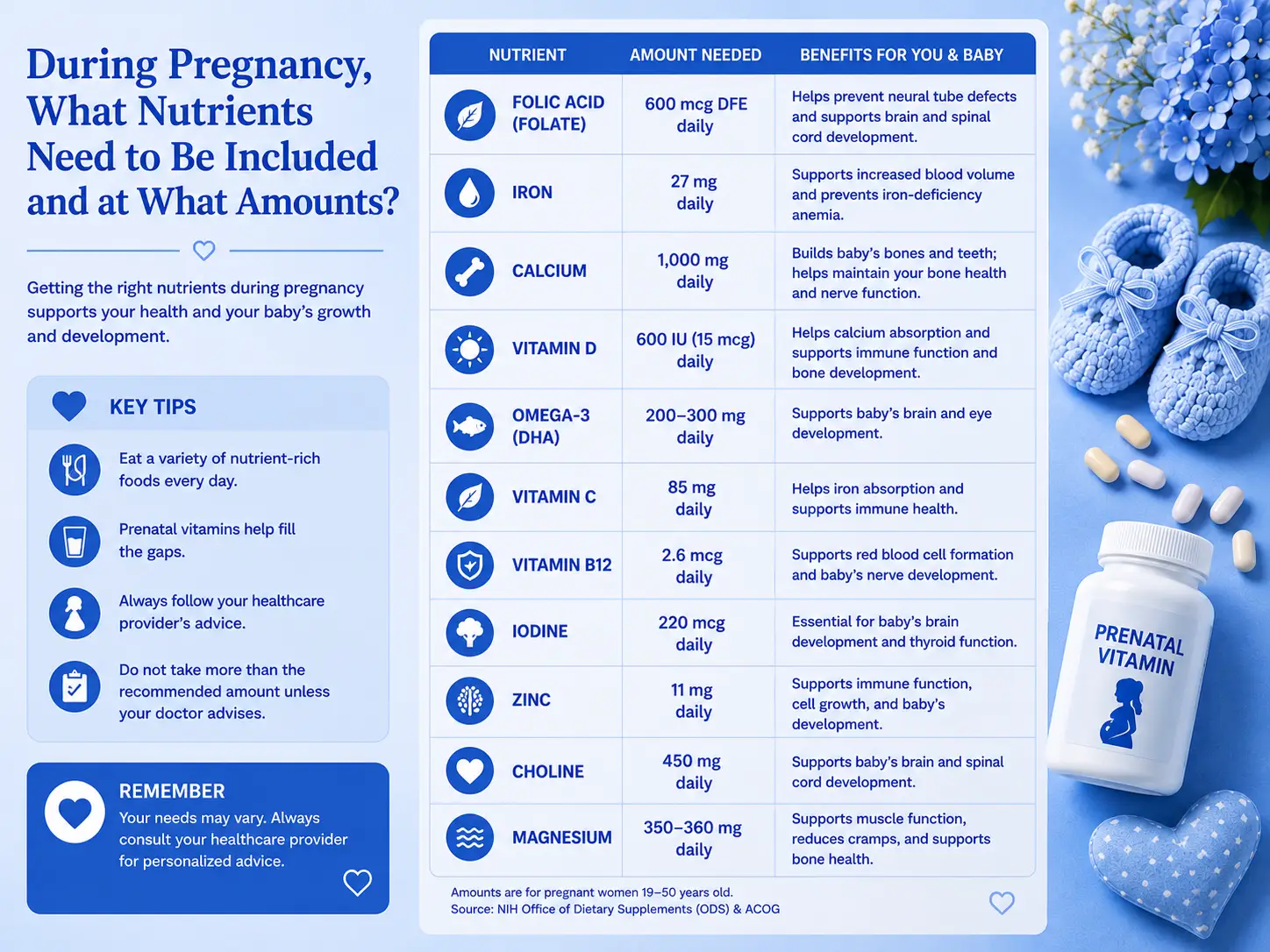
During pregnancy, your body needs higher amounts of several key nutrients to support your baby’s growth and your own health. A balanced diet plus a prenatal vitamin usually covers most needs, but knowing the specific targets helps you focus on the right foods and supplements.

Here are the most important nutrients, the recommended daily amounts for most adult pregnant women (based on U.S. guidelines from sources like the National Institutes of Health and Mayo Clinic), why they matter, and practical ways to get them.

Folate / Folic Acid – 600 mcg Dietary Folate Equivalents (DFE)

Contents hide
1 Folate / Folic Acid – 600 mcg Dietary Folate Equivalents (DFE)
2 Iron – 27 mg
3 Calcium – 1,000 mg (1,300 mg if you’re a teenager)
4 Vitamin D – 600 IU (15 mcg)
5 Choline – 450 mg
6 Iodine – 220 mcg
7 Protein – Approximately 71 grams (or about 1.1 g per kg of pre-pregnancy body weight in the second and third trimesters)
8 Omega-3 Fatty Acids (especially DHA) – Often 200–300 mg DHA
9 Other Important Nutrients
10 Practical Tips for Meeting Your Needs
11 FAQ
11.1 Do I still need a prenatal vitamin if I eat a healthy diet?
11.2 How much folic acid should I take before and during pregnancy?
11.3 Can I get enough iron from food alone during pregnancy?
11.4 Are the amounts different if I’m carrying twins or have special circumstances?
11.5 What happens if I don’t meet these nutrient targets?

This B vitamin is critical in the first weeks of pregnancy to help prevent neural tube defects such as spina bifida. Needs rise from 400 mcg before pregnancy to 600 mcg once you’re pregnant. Many prenatal vitamins provide 400–800 mcg of folic acid (the synthetic form). Food sources include leafy greens, fortified cereals, beans, citrus fruits, and avocados. Some women benefit from the methylfolate form if they have certain genetic variations.

Iron – 27 mg

Your blood volume expands significantly, so iron needs nearly double. Adequate iron prevents anemia and supports oxygen delivery to your baby. Prenatal vitamins typically supply most or all of this amount. Pair iron-rich foods (red meat, poultry, beans, spinach, fortified cereals) with vitamin C sources for better absorption. Note that iron can contribute to constipation or nausea for some women.

Calcium – 1,000 mg (1,300 mg if you’re a teenager)

Calcium builds your baby’s bones and teeth while protecting your own bone density. Dairy products (milk, yogurt, cheese), fortified plant milks, leafy greens, and tofu are excellent sources. If dairy is limited, a supplement may be needed, but take calcium separately from iron for better absorption.

Vitamin D – 600 IU (15 mcg)

Vitamin D works with calcium for bone development and supports immune function. Many people start pregnancy low in vitamin D, especially those with limited sun exposure or darker skin. Fatty fish, fortified milk, and egg yolks provide some, but a prenatal or separate vitamin D3 supplement is often required to reach the target. Higher amounts are sometimes recommended if blood levels are low.

Choline – 450 mg

Choline supports brain and spinal cord development and may influence lifelong cognitive health. Eggs (especially the yolk), meat, fish, dairy, and some beans and cruciferous vegetables are top sources. Many prenatals contain little or no choline, so focusing on food or choosing a choline-containing prenatal is wise.

Iodine – 220 mcg

Iodine is essential for thyroid function and your baby’s brain development. Iodized salt, dairy, seafood, and eggs help meet needs. Most prenatals include iodine, but check the label if you use sea salt exclusively or follow a restrictive diet.

Protein – Approximately 71 grams (or about 1.1 g per kg of pre-pregnancy body weight in the second and third trimesters)

Protein builds your baby’s tissues and supports increased blood volume. Needs rise notably after the first trimester. Lean meats, poultry, fish, eggs, dairy, beans, lentils, nuts, and tofu are excellent sources. Aim to include protein at most meals and snacks.

Omega-3 Fatty Acids (especially DHA) – Often 200–300 mg DHA

DHA supports your baby’s brain and eye development. While there is no strict RDA, many experts and organizations recommend at least 200 mg of DHA daily from low-mercury fish (salmon, sardines) or an algae- or fish-oil supplement. Two to three servings of low-mercury seafood per week are also encouraged.

Other Important Nutrients

Vitamin B12 – Especially critical for vegetarians and vegans; found in animal products and fortified foods.

Zinc, vitamin C, and vitamin B6 – Support immunity, collagen formation, and may help with nausea.

Vitamin A – Needed in moderate amounts (around 770 mcg RAE); avoid high-dose supplements of preformed vitamin A (retinol) from sources like liver or high-potency supplements.

Most people get these through a varied diet plus a standard prenatal vitamin. A prenatal typically supplies folic acid, iron, iodine, and several other micronutrients but may fall short on choline, calcium, vitamin D, or DHA—check the label and fill gaps with food or targeted supplements.

Practical Tips for Meeting Your Needs

Focus on nutrient-dense foods rather than empty calories. Include colorful fruits and vegetables, whole grains, lean proteins, dairy or fortified alternatives, and healthy fats. Stay hydrated and aim for consistent meals even if nausea limits intake early on. Discuss any dietary restrictions (vegetarian, vegan, food aversions) with your healthcare provider or a registered dietitian so they can recommend appropriate testing or adjustments. Bloodwork for iron and vitamin D is common and helpful.

Calorie needs rise by about 300 extra calories per day in the second and third trimesters, but the quality of those calories matters more than the number. A prenatal vitamin is a safety net, not a substitute for good food.

Individual needs can vary based on age, starting weight, diet, and lab results. Always review amounts and supplements with your prenatal care provider rather than self-prescribing high doses.

FAQ

Do I still need a prenatal vitamin if I eat a healthy diet?

Yes, for most women. Even well-planned diets can fall short on folic acid, iron, iodine, or vitamin D. A prenatal provides reliable amounts of the nutrients most critical in early pregnancy.

How much folic acid should I take before and during pregnancy?

Aim for 400 mcg daily before conception and 600 mcg once pregnant. Higher doses may be recommended if you have a history of neural tube defects or certain medical conditions—follow your provider’s guidance.

Can I get enough iron from food alone during pregnancy?

It is possible but challenging for many women because needs jump to 27 mg. Most rely on a combination of iron-rich foods and the iron in their prenatal vitamin. Your provider may order blood tests to check levels.

Are the amounts different if I’m carrying twins or have special circumstances?

Yes. Multiples, certain medical conditions, or restrictive diets may increase needs for calories, protein, iron, and other nutrients. Personalized advice from your healthcare team is essential.

What happens if I don’t meet these nutrient targets?

Mild shortfalls are common and often corrected with a prenatal and diet changes. More significant deficiencies (especially of folate, iron, iodine, or vitamin D) can raise risks of complications for mother and baby, which is why early attention to nutrition matters.


Author

DrAdam

Dr. Adam. Obstetrician and Gynecologist

Follow Me
Other Articles
Previous

Do prenatal vitamins make you nauseous? What to do about it

Next

When to start taking prenatal vitamins before pregnancy

No Comment! Be the first one.

Leave a Reply Cancel reply

Your email address will not be published. Required fields are marked *

What is Did You Search?

The “Did You Search” website was created for all mothers and families. Just search to find all your needs about your children.

Links

  • about
  • contact
  • privacy policy
  • medical disclaimer
  • sitemap
Copyright 2026 — DidYouSearch. All rights reserved.