
If you’re thinking about trying to conceive, one of the simplest and most impactful things you can do is start taking a prenatal vitamin before you even see a positive pregnancy test. It sounds like a small step, but the timing actually matters a lot more than most people realize.
The Short Answer: At Least One to Three Months Before Trying to Conceive
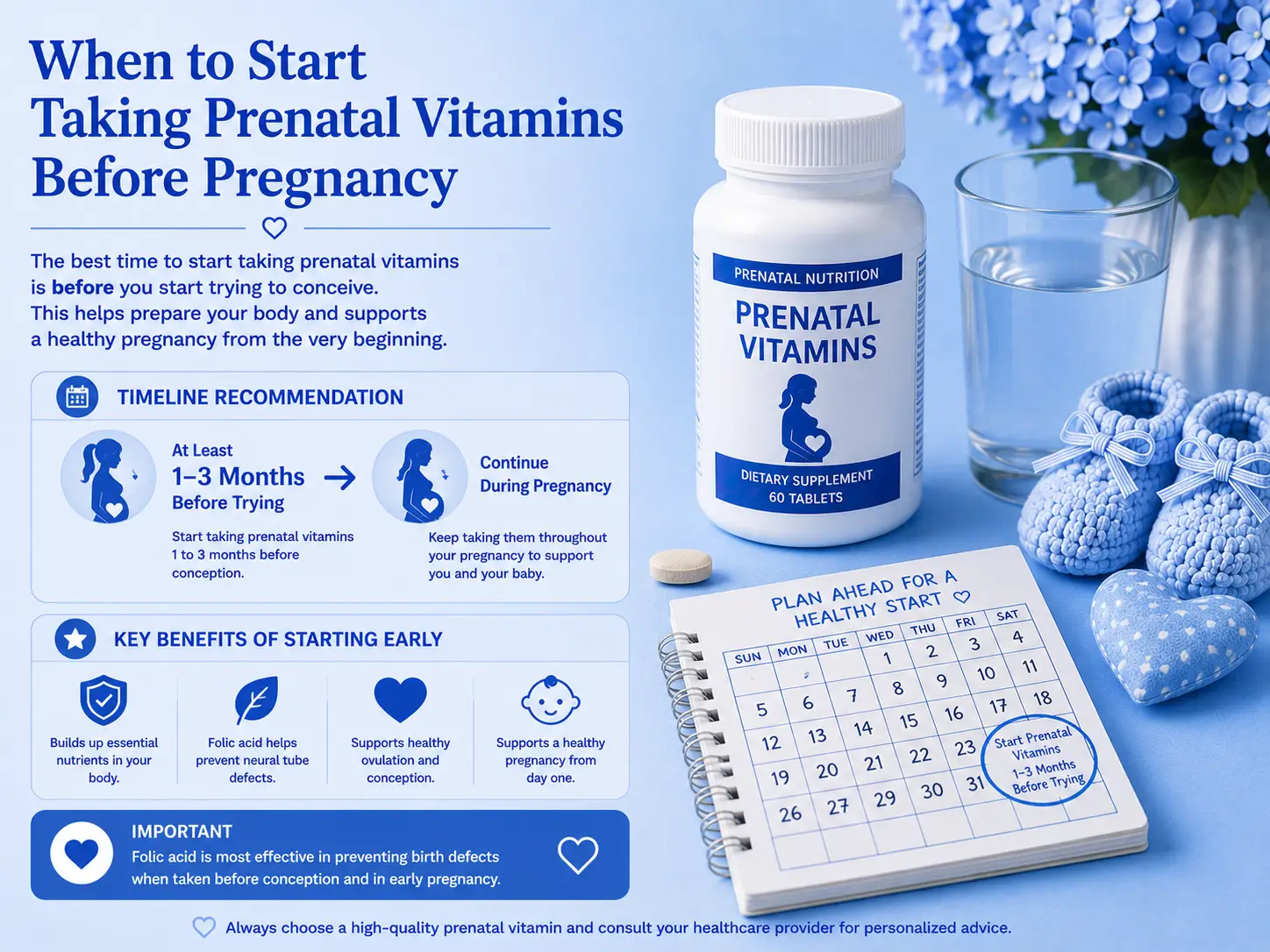
Most OB/GYNs and health organizations, including the American College of Obstetricians and Gynecologists (ACOG), recommend starting a prenatal vitamin at least one month before pregnancy and continuing through the first 12 weeks. Many fertility specialists and clinicians push that window even further, suggesting three months — or in some cases, up to six months — of preparation before conception for optimal nutrient buildup.
Here’s why the timeline is longer than you might expect: pregnancy is typically dated from the first day of your last menstrual period, not the moment of conception. That means by the time you get a positive test, you could already be four to six weeks along. Some of the most critical developmental milestones — like the formation of the neural tube, which becomes your baby’s brain and spinal cord — happen in those very first weeks, often before you even know you’re pregnant. Waiting until you see two lines on a test can mean missing a crucial window.
Why Folic Acid Timing Is the Big Deal
If there’s one nutrient that gets the most attention in this conversation, it’s folic acid (or its natural form, folate). The CDC recommends 400 to 800 micrograms of folic acid daily for anyone who could become pregnant, because it plays a direct role in preventing neural tube defects such as spina bifida. Since the neural tube closes within the first 28 days of pregnancy, folic acid needs to already be in your system by the time conception happens — not added in afterward.
This is exactly why so many doctors frame prenatal vitamins as a “before pregnancy” habit rather than a “once pregnant” one. Building up your folate stores takes time, and your body can’t do it overnight.
What Else Prenatal Vitamins Are Doing for You Early On
Folic acid gets the spotlight, but a good prenatal covers several other bases that matter before conception:
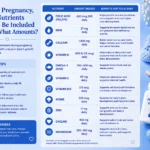
Iron – Supports the increase in blood volume that begins early in pregnancy and helps reduce the risk of anemia and preterm birth. Look for at least 27 mg daily.
DHA (Omega-3) – Important for early brain and eye development; aim for roughly 200–300 mg daily, either through the supplement or DHA-rich foods like salmon.
Vitamin D and Calcium – Lay the groundwork for your baby’s bone development later in pregnancy.
Iodine and B12 – Support thyroid function and cellular development, both of which are relevant from the earliest weeks.
Taking these in advance means your body already has reserves built up, rather than trying to catch up after conception.
Does Starting Early Help You Get Pregnant?
This is one of the most searched questions on the topic, and the honest answer is: prenatal vitamins aren’t a fertility treatment, but they do support the kind of overall nutritional health that makes conception and a healthy pregnancy more likely. Correcting nutrient gaps, supporting egg quality, and regulating processes like ovulation all benefit from a body that isn’t running low on key vitamins and minerals. Some women also report that starting a prenatal early helps ease first-trimester nausea once they do conceive, since their system is already adjusted to the supplement.
What If You Weren’t Taking One Before You Got Pregnant?
Not every pregnancy is planned, and that’s completely normal — plenty of healthy pregnancies start without months of prep. If you find out you’re pregnant and haven’t been taking a prenatal, the best move is simply to start as soon as possible and mention it at your first prenatal appointment. Major organ and neural development continues through the first 12 weeks, so starting now still matters.
How to Choose the Right One
With so many prenatal vitamins on the market, it helps to keep the checklist simple:
At least 400 mcg of folic acid (or folate)
Iron (around 27 mg)
DHA, vitamin D, calcium, and iodine
Third-party tested for quality, if possible
If a prenatal upsets your stomach, ask your doctor about a different formulation — gummies, capsules, and food-based options all deliver nutrients differently, and there’s no single “best” brand that works for everyone.
The Bottom Line
If you’re actively trying to conceive or even just thinking about it, starting a prenatal vitamin now — rather than waiting for a positive test — gives your body a head start on the nutrients your baby will need from day one. Aim for at least one month ahead, though three months is a commonly recommended sweet spot. And if pregnancy happens sooner or later than planned, starting whenever you find out is still worthwhile.
FAQ
How many months before pregnancy should I start taking prenatal vitamins?
Most experts recommend starting at least one month before trying to conceive, with three months being an especially common and well-supported target. This gives your body time to build up folic acid, iron, and other key nutrient stores.
What happens if I don’t take prenatal vitamins before getting pregnant?
Nothing is guaranteed to go wrong, but you may miss out on having optimal folic acid levels during the critical early weeks of neural tube development. If you’re already pregnant and haven’t started, begin as soon as possible and talk to your doctor.
Can prenatal vitamins help me get pregnant faster?
They aren’t a fertility treatment, but correcting nutrient deficiencies and supporting overall health can create better conditions for conception and a healthy early pregnancy.
What’s the most important nutrient to look for before pregnancy?
Folic acid is typically considered the top priority, since it directly helps prevent neural tube defects that form very early in pregnancy — often before a woman knows she has conceived.
Is it safe to take prenatal vitamins if I’m not pregnant yet?
Yes. Prenatal vitamins are safe and often recommended for anyone of reproductive age who could become pregnant, even if conception isn’t imminent.