
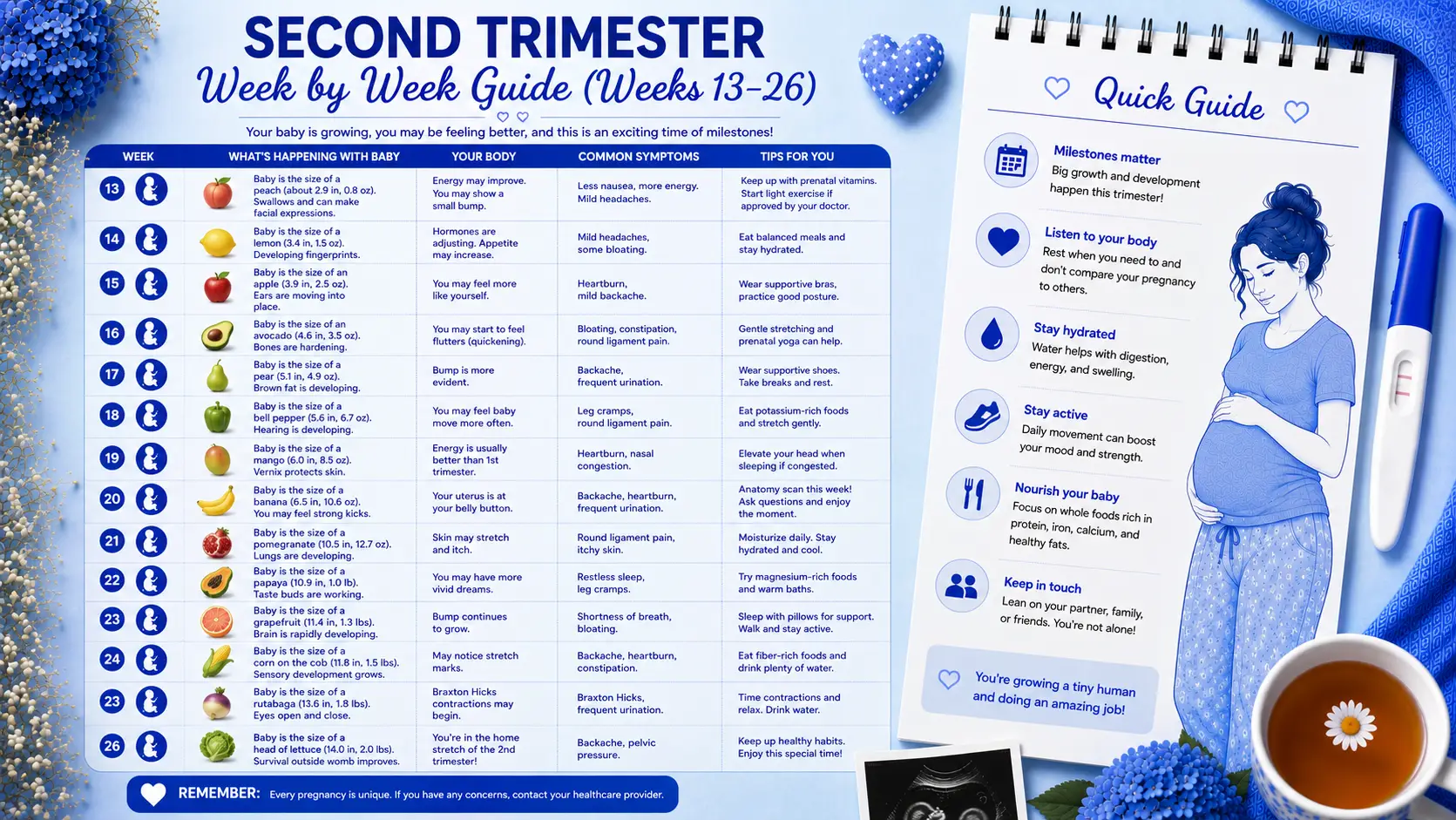

The second trimester runs from week 13 through week 27, and it’s often called the “honeymoon phase” of pregnancy for good reason: morning sickness typically fades, energy comes back, and your bump starts to become visible. Here’s what happens week by week, along with the milestones and appointments that define this stretch.
Weeks 13–16: Entering the Second Trimester
Week 13: You officially cross into the second trimester. Your baby is about the size of a peach, roughly 2.9 inches from head to bottom. The intestines, which had been developing outside the abdomen, move into their permanent position.
Week 14: Your baby’s organs have largely formed, and the face becomes more recognizable. Many people notice their energy starting to return.
Week 15: Your baby may begin sensing light, even with eyes still fused shut.
Week 16: Comparable in size to an avocado, your baby’s arm and leg movements are becoming more coordinated, and hearing may begin developing. This is also around when a growing bump may start becoming visible.
Weeks 17–20: Building Toward the Anatomy Scan
Week 17: Your baby is gaining fat stores, and reflexes continue developing.
Week 18: The bones — including the tiny ones in the ears — are hardening, and some people start feeling first movements around now.
Week 19: A protective coating called vernix caseosa begins covering the skin.
Week 20: The official halfway point of pregnancy. Your baby is about the size of a banana, and this is when most people have their anatomy scan (typically between 18–20 weeks) — the detailed ultrasound that checks organ development and can reveal the baby’s sex, if you want to know.
Weeks 21–24: Movement and Viability
Week 21: Limb movements become more frequent and coordinated, and bone marrow starts producing blood cells.
Week 22: Your baby’s grasp strengthens enough to touch the umbilical cord, and hearing continues developing — your heartbeat, stomach rumbles, and voice are all becoming familiar sounds.
Week 23: Rapid fat accumulation begins, and many people feel stronger, more consistent kicks.
Week 24: A major milestone — the point of fetal viability, meaning a baby born now has a chance of survival with specialized neonatal care, though the lungs are still maturing. This is also when the glucose screening test for gestational diabetes typically begins, running through week 28.
Weeks 25–27: Approaching the Third Trimester
Week 25: Your baby is developing a more regular pattern of sleeping and waking, along with early hand and grasp reflexes.
Week 26: The eyes, which have been fused shut, begin to open. Hair continues growing, and the baby reacts more noticeably to sound.
Week 27: The final week of the second trimester — your baby is refining reflexes and continuing to gain weight, setting the stage for the third trimester’s growth spurt.
Common Second Trimester Symptoms
Increased energy, as nausea typically eases
A visibly growing bump
Round ligament pain
Skin changes, including a possible “pregnancy glow” and sometimes stretch marks
Back pain, as your center of gravity shifts
Leg cramps
Nasal congestion
Increased appetite
Most people find the second trimester more comfortable than the first, though every pregnancy is different, and some symptoms from earlier weeks can linger.
Key Second Trimester Appointments
The anatomy scan (18–22 weeks): the most detailed ultrasound of the pregnancy, checking your baby’s organs, limbs, spine, and growth
Glucose screening (24–28 weeks): a routine test for gestational diabetes
Regular prenatal visits, typically monthly during this stretch, monitoring weight, blood pressure, and fetal heart rate
Tips for the Second Trimester
Schedule your anatomy scan in advance — it’s one of the most anticipated appointments of pregnancy
Start shopping for maternity clothes as your bump grows
Try Kegel exercises to support your pelvic floor
Keep up gentle exercise, which many people find easier now that energy has returned
Start thinking about a birth plan and any classes you want to take before the third trimester gets busy
FAQ
How many weeks is the second trimester?
The second trimester spans weeks 13 through 27 — roughly months 4, 5, and 6 of pregnancy.
When do you feel the baby move in the second trimester?
Most people feel first movements, or quickening, sometime between 16 and 20 weeks, though it can take a bit longer with a first pregnancy.
What happens at the anatomy scan?
It’s a detailed ultrasound, typically performed between 18 and 22 weeks, that checks your baby’s organs, limbs, spine, and overall growth — and can usually reveal the baby’s sex if you want to know.
When is the glucose test done in the second trimester?
Most providers schedule gestational diabetes screening between 24 and 28 weeks.
Why does the second trimester feel easier than the first?
For many people, hCG levels — a major driver of nausea and fatigue — begin declining after the first trimester, which is why energy often returns and morning sickness typically eases during this stretch.