Skip to content
DidYouSearch DidYouSearch
  • did you search?
  • Baby Plus+
    • Baby Activities
      • Arts & Crafts
      • Indoor Activities
      • Montessori
      • Music
      • Outdoor Activities
      • Reading
      • Sensory Play
      • Tummy Time
    • Baby Development
      • Brain Development
      • Cognitive Development
      • Emotional Development
      • Fine Motor Skills
      • Growth Milestones
      • Monthly Milestones
      • Motor Skills
      • Physical Development
      • Social Development
      • Speech Development
    • Baby Feeding
      • Allergies
      • Baby Led Weaning
      • Bottle Feeding
      • Breast feeding
        • Breastfeeding Diet
        • Breastfeeding Positions
        • Latch Problems
        • Low Milk Supply
        • Mastitis
        • Pumping Schedule
        • Weaning
      • Burping
      • Cluster Feeding
      • Feeding Schedule
      • Formula Feeding
        • Formula Amount
        • Formula Brands
        • Formula Comparison
        • Formula Preparation
        • Formula Storage
      • Hydration
      • Pumping
      • Solid Foods
    • Baby Gear Reviews
      • Best Baby Carrier
      • Best Baby Monitor
      • Best Baby Strollers
      • Best Bottles
      • Best Breast Pump
      • Best Car Seat
      • Best Cribs
      • Best Diapers
      • Best Formula
      • Best Toys
    • Baby Growth
      • Growth Spurts
      • Height Charts
      • Monthly Growth
      • Percentiles
      • Weight Charts
    • Baby Health
      • Allergies
      • Cold
      • Constipation
      • Cough
      • Diarrhea
      • Ear Infection
      • Fever
      • Flu
      • Pediatric Visits
      • Rashes
      • Teething
      • Vaccines
      • Vomiting
    • Baby Nutrition
      • Dairy
      • Drinks
      • Eggs
      • Fish
      • Fruits
      • Healthy Recipes
      • Meat
      • Snacks
      • Vegetables
      • Vitamins
    • Baby Products
      • Baby Carriers
      • Bassinets
      • Bottles
      • Breast Pumps
      • Car Seats
      • Cribs
      • Diaper Bags
      • High Chairs
      • Monitors
      • Strollers
      • Swings
      • Toys
      • Walkers
    • Baby Recipes
      • BLW Recipes
      • Breakfast
      • Dinner
      • Finger Foods
      • Lunch
      • Purees
      • Snacks
    • Baby Safety
      • Baby Proofing
      • Car Seats
      • Choking Hazards
      • CPR
      • Home Safety
      • Poison Prevention
      • Safe Sleep
      • Sun Protection
      • Water Safety
  • Baby Names
    • Boy Names
    • Girl Names
    • American baby boy names
    • American baby girl names
    • Biblical Names
    • Middle Names
    • Modern Names
    • Short Names
    • Unique Names
    • Unisex Names
  • Recommended
    • Baby Shopping
      • Baby Registry
      • Budget Baby Shopping
      • Hospital Bag
      • Must Have Products
      • Newborn Checklist
      • Nursery Ideas
    • Baby Sleep
      • Bedtime Routine
      • Co Sleeping
      • Crib Safety
      • Nap Schedules
      • Night Wakings
      • Sleep Environment
      • Sleep Products
      • Sleep Regression
      • Sleep Training
      • Wake Windows
      • White Noise
    • Childcare
      • Daycare
      • Babysitters
      • Kindergarten
      • Nannies
      • Preschool
    • Newborn Care
      • Nail Care
      • Baby Hygiene
      • Bathing
      • Crying
      • Diapering
      • Ear Care
      • Eye Care
      • Skin Care
      • Soothing Techniques
      • Temperature
      • Umbilical Cord
    • Special Needs
      • Premature Babies
      • Autism Signs
      • Developmental Delays
      • Down Syndrome
      • NICU
      • Twins
    • Seasonal Baby Care
      • Spring
      • Summer
      • Travel
      • Fall
      • Holidays
      • Winter
  • Parenting
    • Bonding
    • Discipline
    • Emotional Intelligence
    • First Time Parents
    • Gentle Parenting
    • Positive Parenting
    • Routines
    • Single Parents
    • Working Parents
  • Pregnancy
    • Pregnancy Complications
    • Labor & Delivery
    • Postpartum Recovery
    • Pregnancy Exercises
    • Pregnancy Medications
    • Pregnancy Nutrition
    • Pregnancy Sleep
    • Pregnancy Symptoms
    • Pregnancy Tests
    • Pregnancy Vitamins
    • Pregnancy Weeks
  • Toddler
    • Preschool
    • Speech
    • Tantrums
    • Toddler Food
    • Toddler Sleep
    • Behavior
    • Independence
    • Learning
    • Potty Training
  • Traveling with Baby
    • Road Trips
    • Beach
    • Camping
    • Flying
    • Hotels
    • Packing Lists
  • did you search?
  • Baby Plus+
    • Baby Activities
      • Arts & Crafts
      • Indoor Activities
      • Montessori
      • Music
      • Outdoor Activities
      • Reading
      • Sensory Play
      • Tummy Time
    • Baby Development
      • Brain Development
      • Cognitive Development
      • Emotional Development
      • Fine Motor Skills
      • Growth Milestones
      • Monthly Milestones
      • Motor Skills
      • Physical Development
      • Social Development
      • Speech Development
    • Baby Feeding
      • Allergies
      • Baby Led Weaning
      • Bottle Feeding
      • Breast feeding
        • Breastfeeding Diet
        • Breastfeeding Positions
        • Latch Problems
        • Low Milk Supply
        • Mastitis
        • Pumping Schedule
        • Weaning
      • Burping
      • Cluster Feeding
      • Feeding Schedule
      • Formula Feeding
        • Formula Amount
        • Formula Brands
        • Formula Comparison
        • Formula Preparation
        • Formula Storage
      • Hydration
      • Pumping
      • Solid Foods
    • Baby Gear Reviews
      • Best Baby Carrier
      • Best Baby Monitor
      • Best Baby Strollers
      • Best Bottles
      • Best Breast Pump
      • Best Car Seat
      • Best Cribs
      • Best Diapers
      • Best Formula
      • Best Toys
    • Baby Growth
      • Growth Spurts
      • Height Charts
      • Monthly Growth
      • Percentiles
      • Weight Charts
    • Baby Health
      • Allergies
      • Cold
      • Constipation
      • Cough
      • Diarrhea
      • Ear Infection
      • Fever
      • Flu
      • Pediatric Visits
      • Rashes
      • Teething
      • Vaccines
      • Vomiting
    • Baby Nutrition
      • Dairy
      • Drinks
      • Eggs
      • Fish
      • Fruits
      • Healthy Recipes
      • Meat
      • Snacks
      • Vegetables
      • Vitamins
    • Baby Products
      • Baby Carriers
      • Bassinets
      • Bottles
      • Breast Pumps
      • Car Seats
      • Cribs
      • Diaper Bags
      • High Chairs
      • Monitors
      • Strollers
      • Swings
      • Toys
      • Walkers
    • Baby Recipes
      • BLW Recipes
      • Breakfast
      • Dinner
      • Finger Foods
      • Lunch
      • Purees
      • Snacks
    • Baby Safety
      • Baby Proofing
      • Car Seats
      • Choking Hazards
      • CPR
      • Home Safety
      • Poison Prevention
      • Safe Sleep
      • Sun Protection
      • Water Safety
  • Baby Names
    • Boy Names
    • Girl Names
    • American baby boy names
    • American baby girl names
    • Biblical Names
    • Middle Names
    • Modern Names
    • Short Names
    • Unique Names
    • Unisex Names
  • Recommended
    • Baby Shopping
      • Baby Registry
      • Budget Baby Shopping
      • Hospital Bag
      • Must Have Products
      • Newborn Checklist
      • Nursery Ideas
    • Baby Sleep
      • Bedtime Routine
      • Co Sleeping
      • Crib Safety
      • Nap Schedules
      • Night Wakings
      • Sleep Environment
      • Sleep Products
      • Sleep Regression
      • Sleep Training
      • Wake Windows
      • White Noise
    • Childcare
      • Daycare
      • Babysitters
      • Kindergarten
      • Nannies
      • Preschool
    • Newborn Care
      • Nail Care
      • Baby Hygiene
      • Bathing
      • Crying
      • Diapering
      • Ear Care
      • Eye Care
      • Skin Care
      • Soothing Techniques
      • Temperature
      • Umbilical Cord
    • Special Needs
      • Premature Babies
      • Autism Signs
      • Developmental Delays
      • Down Syndrome
      • NICU
      • Twins
    • Seasonal Baby Care
      • Spring
      • Summer
      • Travel
      • Fall
      • Holidays
      • Winter
  • Parenting
    • Bonding
    • Discipline
    • Emotional Intelligence
    • First Time Parents
    • Gentle Parenting
    • Positive Parenting
    • Routines
    • Single Parents
    • Working Parents
  • Pregnancy
    • Pregnancy Complications
    • Labor & Delivery
    • Postpartum Recovery
    • Pregnancy Exercises
    • Pregnancy Medications
    • Pregnancy Nutrition
    • Pregnancy Sleep
    • Pregnancy Symptoms
    • Pregnancy Tests
    • Pregnancy Vitamins
    • Pregnancy Weeks
  • Toddler
    • Preschool
    • Speech
    • Tantrums
    • Toddler Food
    • Toddler Sleep
    • Behavior
    • Independence
    • Learning
    • Potty Training
  • Traveling with Baby
    • Road Trips
    • Beach
    • Camping
    • Flying
    • Hotels
    • Packing Lists
Close

Search

Home/Pregnancy/Pregnancy Weeks/What happens at 20 weeks pregnant (halfway)?
Pregnancy Weeks

What happens at 20 weeks pregnant (halfway)?

By DrAdam
August 8, 2026 4 Min Read
0

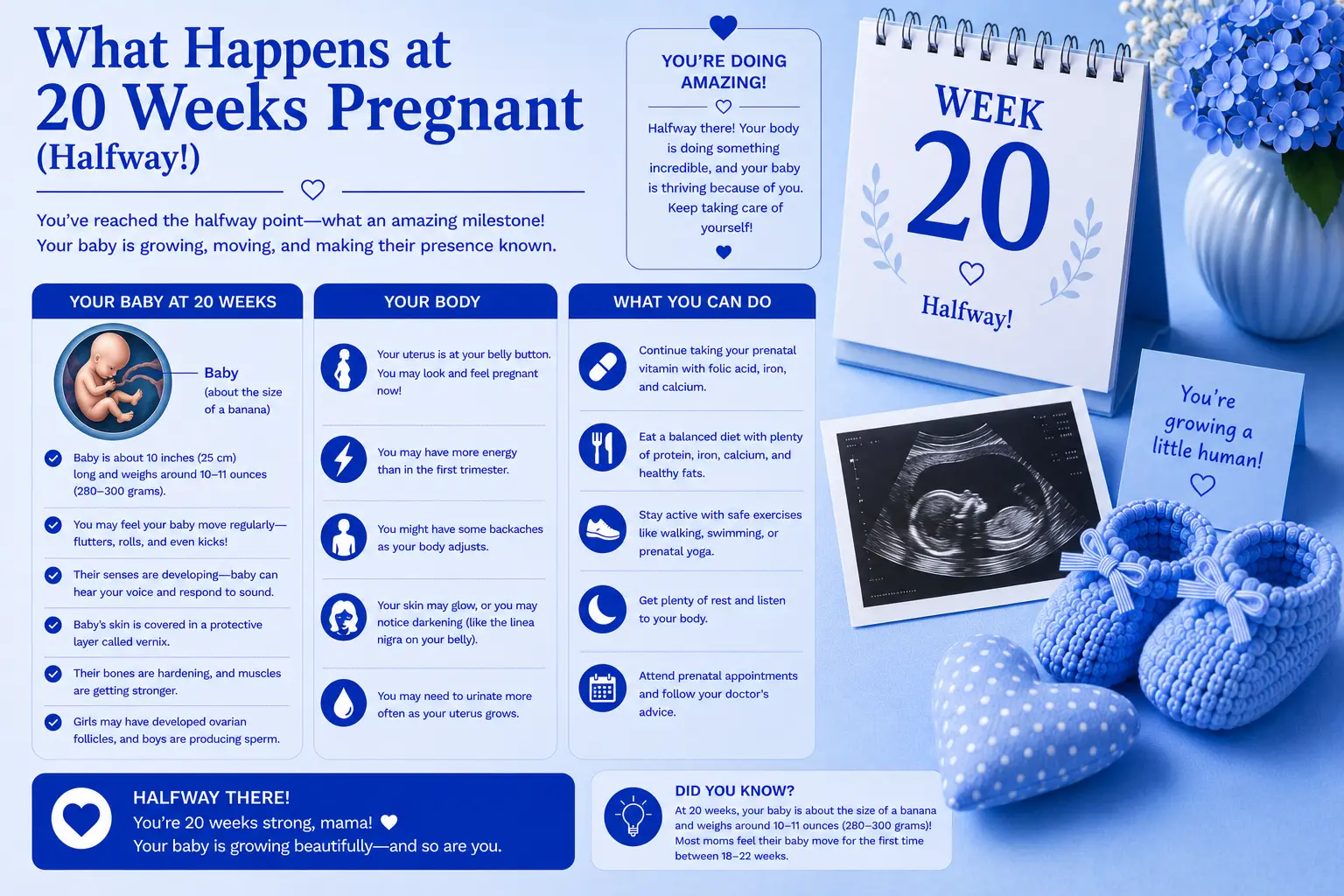
Congratulations — 20 weeks marks the official halfway point of pregnancy. You’ve made it through the first trimester’s toughest symptoms, and you’re not yet into the physical demands of the third. This week is best known for one big event: the anatomy scan. Here’s what’s happening for you and your baby.

Your Baby at 20 Weeks

Contents hide
1 Your Baby at 20 Weeks
2 The 20-Week Anatomy Scan
3 Common Symptoms at 20 Weeks Pregnant
4 Your Body at 20 Weeks Pregnant
5 Feeling Your Baby Move
6 When to Call Your Doctor
7 Tips for Week 20
8 FAQ
8.1 How big is a baby at 20 weeks pregnant?
8.2 What happens at the 20-week anatomy scan?
8.3 Is 20 weeks really halfway through pregnancy?
8.4 Why do I have heartburn at 20 weeks pregnant?
8.5 Should I feel the baby moving every day at 20 weeks?

Your baby is about the size of a banana, roughly 6.5 inches from head to bottom and weighing around 10 ounces. Development is accelerating in some fascinating ways:

Hearing is developing — your baby can hear your voice, and may respond to sounds and music

Taste buds and a sucking reflex are functioning — thumb-sucking is sometimes caught on ultrasound

Swallowing practice — your baby swallows small amounts of amniotic fluid daily, helping the digestive system prepare for life outside the womb

Vernix caseosa, a creamy white coating, forms on the skin to protect it from prolonged exposure to amniotic fluid

Bone marrow is beginning to produce red blood cells

Reproductive organs are forming — in female fetuses, the uterus and ovaries (already containing millions of eggs) are in place; in male fetuses, the testicles have started descending

Despite all this progress, your baby still has a lot of developing left to do — 20 weeks is the midpoint, not the finish line.

The 20-Week Anatomy Scan

This week’s headline event is the detailed anatomy ultrasound, sometimes called the anomaly scan or Level 2 ultrasound, typically performed between 18 and 22 weeks. It’s one of the most comprehensive scans of the entire pregnancy. The technician will examine:

The brain, heart, kidneys, bladder, and stomach

The spine, arms, and legs

Fingers and toes

Placenta position and amniotic fluid levels

Overall growth measurements

This scan can also detect signs of certain congenital conditions, including heart defects. In most cases, it’s also when you can find out your baby’s sex, if you want to know — just be sure to tell the technician your preference ahead of time.

Common Symptoms at 20 Weeks Pregnant

Many people describe this stage as a “sweet spot,” with energy returning and morning sickness largely behind them. Still, new symptoms tend to appear as the belly grows:

Stronger, clearer fetal movement — kicks and rolls become easier to feel and recognize

Back pain and round ligament pain, as the growing uterus stretches its supporting ligaments

Heartburn and indigestion, since pregnancy hormones relax the muscles that normally keep stomach acid down

Constipation

Leg cramps

Increased appetite

The “pregnancy glow” many people notice by this stage, thanks to increased blood volume and hormonal shifts

Your Body at 20 Weeks Pregnant

Your bump is likely visibly rounder now, and your provider will probably start measuring fundal height (the distance from your pubic bone to the top of your uterus) at appointments from here on. Average weight gain by 20 weeks is often around 10 pounds, though this varies — the number itself matters less than eating a balanced diet and staying active.

Feeling Your Baby Move

If you haven’t felt quickening yet, 20 weeks is a common time for those first flutters to become more distinct and recognizable as actual baby movements rather than gas or digestion. Some people, especially those who’ve been pregnant before, may have felt movement a few weeks earlier.

When to Call Your Doctor

Reach out to your provider if you notice heavy bleeding, severe abdominal pain, a significant decrease in fetal movement (once you’re regularly feeling it), fluid leakage, or signs of preterm labor like regular contractions before 37 weeks.

Tips for Week 20

Snap a halfway bump photo if you’re into documenting the journey

Start thinking about the basics — sleep setup, feeding plans, car seat — there’s still plenty of time

Keep up with iron and other prenatal nutrients as your blood volume continues expanding

Eat smaller, more frequent meals if heartburn is an issue

FAQ

How big is a baby at 20 weeks pregnant?

About the size of a banana — roughly 6.5 inches long and 10 ounces, measured head to bottom (crown to rump).

What happens at the 20-week anatomy scan?

It’s a detailed ultrasound checking your baby’s brain, heart, spine, organs, and limbs, along with placenta position and amniotic fluid levels. It can also often reveal the baby’s sex.

Is 20 weeks really halfway through pregnancy?

Yes — a full-term pregnancy is about 40 weeks, so 20 weeks marks the midpoint, even though it falls near the end of the fifth month.

Why do I have heartburn at 20 weeks pregnant?

Pregnancy hormones relax the muscles that normally keep stomach acid in place, which can lead to reflux. Eating smaller meals and avoiding spicy or greasy food can help.

Should I feel the baby moving every day at 20 weeks?

Movement is often still irregular at 20 weeks and tends to become more consistent over the following weeks. If you’ve been feeling regular movement and it suddenly changes, contact your provider.

Author

DrAdam

Dr. Adam. Obstetrician and Gynecologist

Follow Me
Other Articles
Previous

What happens at 12 weeks pregnant (end of first trimester)?

Next

What happens at 24 weeks pregnant?

No Comment! Be the first one.

Leave a Reply Cancel reply

Your email address will not be published. Required fields are marked *

What is Did You Search?

The “Did You Search” website was created for all mothers and families. Just search to find all your needs about your children.

Links

  • about
  • contact
  • privacy policy
  • medical disclaimer
  • sitemap
Copyright 2026 — DidYouSearch. All rights reserved.