
Twenty-four weeks is a meaningful milestone: this is the point of fetal viability, when a baby born prematurely has a chance of survival with intensive medical care. It’s also when routine gestational diabetes screening typically begins. Here’s what’s happening for you and your baby this week.
Your Baby at 24 Weeks
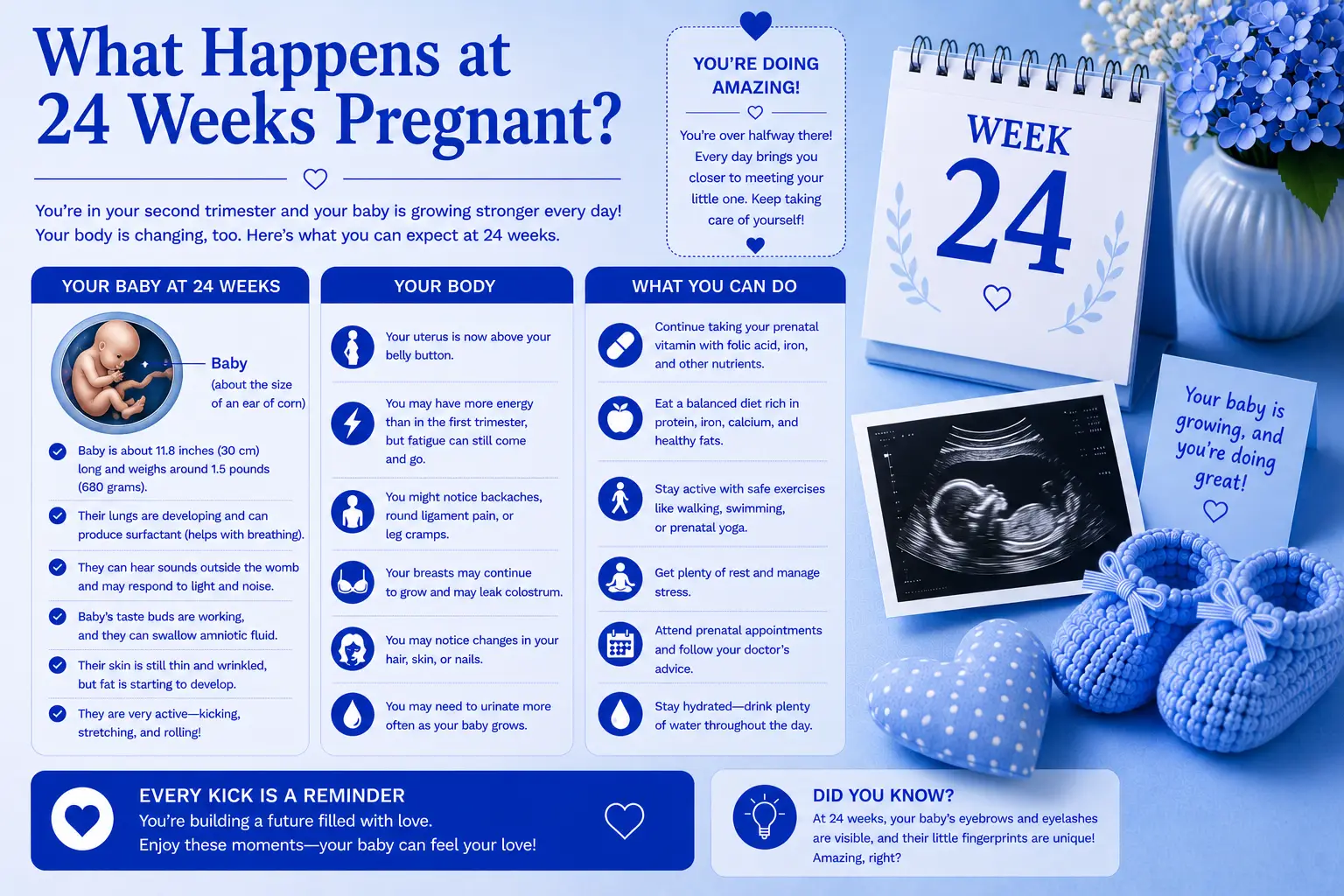
Your baby is about the size of an ear of corn — roughly 30 centimeters from head to heel and weighing around 600 grams (a little over 1.3 pounds). From this week on, measurements shift from crown-to-rump to head-to-toe, reflecting a more stretched-out position. Key developments include:
Lungs are developing surfactant, a substance that keeps the tiny air sacs in the lungs from collapsing and is essential for breathing after birth
The face is nearly fully formed, with eyebrows, eyelashes, and hair visible
Skin is still thin and wrinkled, since your baby hasn’t yet built up much fat
The inner ear’s balance mechanism has developed, so your baby can sense which way is up or down
Steady weight gain continues, along with the development of body fat that will support temperature regulation after birth
What “Viability” Actually Means
Reaching 24 weeks is often called the age of viability — the point at which, with specialized neonatal intensive care, a baby has a chance of surviving outside the womb. It’s an important and often reassuring milestone, though the goal of every pregnancy remains carrying to full term, since babies born this early still face significant medical challenges, particularly with breathing, since their lungs are still producing surfactant.
The Glucose Screening Test
Between 24 and 28 weeks, most healthcare providers recommend a glucose tolerance test to screen for gestational diabetes — a temporary form of diabetes that develops when the body can’t produce enough insulin to manage rising blood sugar during pregnancy. It typically works one of two ways:
A one-hour test: you drink a sweet glucose solution and have your blood sugar checked an hour later — no fasting required
A follow-up three-hour test, if the first test comes back elevated, which does require fasting beforehand
Gestational diabetes usually doesn’t cause noticeable symptoms on its own, which is exactly why the screening matters. Estimates on how many people develop it vary by source, generally in the range of 2–10% of pregnancies. The good news: it’s very manageable with monitoring and, in most cases, resolves after birth — though it does raise the likelihood of developing it again in future pregnancies or type 2 diabetes later in life.
Common Symptoms at 24 Weeks Pregnant
A visibly rounder bump — the top of your uterus (fundus) now sits just above the belly button
Braxton Hicks contractions — mild, irregular tightening as your uterus practices for labor
More prominent veins in the legs and breasts, due to increased blood flow
Increased vaginal discharge — normal if clear or white; contact your provider if it becomes green, yellow, or has an unusual smell
Backache
Fatigue
A changing belly button, which may flatten or start to protrude
Increased appetite — most guidance suggests adding roughly 340 extra calories a day during the second trimester
Your Body at 24 Weeks Pregnant
Your uterus continues expanding steadily, and by now your bump is likely unmistakable. Focus on getting enough iron, folate, calcium, vitamin D, protein, and vitamin C to support your baby’s ongoing growth, and continue avoiding alcohol, smoking, and excess caffeine.
When to Call Your Doctor
Contact your provider if you notice regular contractions before 37 weeks, vaginal bleeding, sudden swelling, severe headaches, or a significant change in fetal movement — these can be early signs of preterm labor or other complications worth checking promptly.
Tips for Week 24
- Schedule your glucose screening test if it hasn’t happened yet
- Keep up with iron-rich foods to support your increasing blood volume
- Try gentle exercise like walking or prenatal yoga to ease back discomfort
- Track fetal movement patterns so you know what’s normal for your baby
FAQ
How big is a baby at 24 weeks pregnant?
About the size of an ear of corn — roughly 30 centimeters from head to heel and around 600 grams (about 1.3 pounds).
What does viability mean at 24 weeks?
It means that with specialized neonatal care, a baby born at this stage has a chance of surviving outside the womb, though the goal remains reaching full term for the healthiest possible outcome.
What is the glucose test at 24 weeks for?
It screens for gestational diabetes, a temporary form of diabetes that can develop during pregnancy when the body can’t produce enough insulin to manage blood sugar.
Do I need to fast before my glucose test?
It depends on the version your provider uses. The standard one-hour screening usually doesn’t require fasting, but the longer three-hour diagnostic test typically does.
Why am I having Braxton Hicks contractions at 24 weeks?
Braxton Hicks are mild, irregular tightenings of the uterus that can start as early as the second trimester as your body “practices” for labor. They’re generally harmless, but regular, painful, or increasingly frequent contractions before 37 weeks should be checked by your provider.