Skip to content
DidYouSearch DidYouSearch
  • did you search?
  • Baby Plus+
    • Baby Activities
      • Arts & Crafts
      • Indoor Activities
      • Montessori
      • Music
      • Outdoor Activities
      • Reading
      • Sensory Play
      • Tummy Time
    • Baby Development
      • Brain Development
      • Cognitive Development
      • Emotional Development
      • Fine Motor Skills
      • Growth Milestones
      • Monthly Milestones
      • Motor Skills
      • Physical Development
      • Social Development
      • Speech Development
    • Baby Feeding
      • Allergies
      • Baby Led Weaning
      • Bottle Feeding
      • Breast feeding
        • Breastfeeding Diet
        • Breastfeeding Positions
        • Latch Problems
        • Low Milk Supply
        • Mastitis
        • Pumping Schedule
        • Weaning
      • Burping
      • Cluster Feeding
      • Feeding Schedule
      • Formula Feeding
        • Formula Amount
        • Formula Brands
        • Formula Comparison
        • Formula Preparation
        • Formula Storage
      • Hydration
      • Pumping
      • Solid Foods
    • Baby Gear Reviews
      • Best Baby Carrier
      • Best Baby Monitor
      • Best Baby Strollers
      • Best Bottles
      • Best Breast Pump
      • Best Car Seat
      • Best Cribs
      • Best Diapers
      • Best Formula
      • Best Toys
    • Baby Growth
      • Growth Spurts
      • Height Charts
      • Monthly Growth
      • Percentiles
      • Weight Charts
    • Baby Health
      • Allergies
      • Cold
      • Constipation
      • Cough
      • Diarrhea
      • Ear Infection
      • Fever
      • Flu
      • Pediatric Visits
      • Rashes
      • Teething
      • Vaccines
      • Vomiting
    • Baby Nutrition
      • Dairy
      • Drinks
      • Eggs
      • Fish
      • Fruits
      • Healthy Recipes
      • Meat
      • Snacks
      • Vegetables
      • Vitamins
    • Baby Products
      • Baby Carriers
      • Bassinets
      • Bottles
      • Breast Pumps
      • Car Seats
      • Cribs
      • Diaper Bags
      • High Chairs
      • Monitors
      • Strollers
      • Swings
      • Toys
      • Walkers
    • Baby Recipes
      • BLW Recipes
      • Breakfast
      • Dinner
      • Finger Foods
      • Lunch
      • Purees
      • Snacks
    • Baby Safety
      • Baby Proofing
      • Car Seats
      • Choking Hazards
      • CPR
      • Home Safety
      • Poison Prevention
      • Safe Sleep
      • Sun Protection
      • Water Safety
  • Baby Names
    • Boy Names
    • Girl Names
    • American baby boy names
    • American baby girl names
    • Biblical Names
    • Middle Names
    • Modern Names
    • Short Names
    • Unique Names
    • Unisex Names
  • Recommended
    • Baby Shopping
      • Baby Registry
      • Budget Baby Shopping
      • Hospital Bag
      • Must Have Products
      • Newborn Checklist
      • Nursery Ideas
    • Baby Sleep
      • Bedtime Routine
      • Co Sleeping
      • Crib Safety
      • Nap Schedules
      • Night Wakings
      • Sleep Environment
      • Sleep Products
      • Sleep Regression
      • Sleep Training
      • Wake Windows
      • White Noise
    • Childcare
      • Daycare
      • Babysitters
      • Kindergarten
      • Nannies
      • Preschool
    • Newborn Care
      • Nail Care
      • Baby Hygiene
      • Bathing
      • Crying
      • Diapering
      • Ear Care
      • Eye Care
      • Skin Care
      • Soothing Techniques
      • Temperature
      • Umbilical Cord
    • Special Needs
      • Premature Babies
      • Autism Signs
      • Developmental Delays
      • Down Syndrome
      • NICU
      • Twins
    • Seasonal Baby Care
      • Spring
      • Summer
      • Travel
      • Fall
      • Holidays
      • Winter
  • Parenting
    • Bonding
    • Discipline
    • Emotional Intelligence
    • First Time Parents
    • Gentle Parenting
    • Positive Parenting
    • Routines
    • Single Parents
    • Working Parents
  • Pregnancy
    • Pregnancy Complications
    • Labor & Delivery
    • Postpartum Recovery
    • Pregnancy Exercises
    • Pregnancy Medications
    • Pregnancy Nutrition
    • Pregnancy Sleep
    • Pregnancy Symptoms
    • Pregnancy Tests
    • Pregnancy Vitamins
    • Pregnancy Weeks
  • Toddler
    • Preschool
    • Speech
    • Tantrums
    • Toddler Food
    • Toddler Sleep
    • Behavior
    • Independence
    • Learning
    • Potty Training
  • Traveling with Baby
    • Road Trips
    • Beach
    • Camping
    • Flying
    • Hotels
    • Packing Lists
  • did you search?
  • Baby Plus+
    • Baby Activities
      • Arts & Crafts
      • Indoor Activities
      • Montessori
      • Music
      • Outdoor Activities
      • Reading
      • Sensory Play
      • Tummy Time
    • Baby Development
      • Brain Development
      • Cognitive Development
      • Emotional Development
      • Fine Motor Skills
      • Growth Milestones
      • Monthly Milestones
      • Motor Skills
      • Physical Development
      • Social Development
      • Speech Development
    • Baby Feeding
      • Allergies
      • Baby Led Weaning
      • Bottle Feeding
      • Breast feeding
        • Breastfeeding Diet
        • Breastfeeding Positions
        • Latch Problems
        • Low Milk Supply
        • Mastitis
        • Pumping Schedule
        • Weaning
      • Burping
      • Cluster Feeding
      • Feeding Schedule
      • Formula Feeding
        • Formula Amount
        • Formula Brands
        • Formula Comparison
        • Formula Preparation
        • Formula Storage
      • Hydration
      • Pumping
      • Solid Foods
    • Baby Gear Reviews
      • Best Baby Carrier
      • Best Baby Monitor
      • Best Baby Strollers
      • Best Bottles
      • Best Breast Pump
      • Best Car Seat
      • Best Cribs
      • Best Diapers
      • Best Formula
      • Best Toys
    • Baby Growth
      • Growth Spurts
      • Height Charts
      • Monthly Growth
      • Percentiles
      • Weight Charts
    • Baby Health
      • Allergies
      • Cold
      • Constipation
      • Cough
      • Diarrhea
      • Ear Infection
      • Fever
      • Flu
      • Pediatric Visits
      • Rashes
      • Teething
      • Vaccines
      • Vomiting
    • Baby Nutrition
      • Dairy
      • Drinks
      • Eggs
      • Fish
      • Fruits
      • Healthy Recipes
      • Meat
      • Snacks
      • Vegetables
      • Vitamins
    • Baby Products
      • Baby Carriers
      • Bassinets
      • Bottles
      • Breast Pumps
      • Car Seats
      • Cribs
      • Diaper Bags
      • High Chairs
      • Monitors
      • Strollers
      • Swings
      • Toys
      • Walkers
    • Baby Recipes
      • BLW Recipes
      • Breakfast
      • Dinner
      • Finger Foods
      • Lunch
      • Purees
      • Snacks
    • Baby Safety
      • Baby Proofing
      • Car Seats
      • Choking Hazards
      • CPR
      • Home Safety
      • Poison Prevention
      • Safe Sleep
      • Sun Protection
      • Water Safety
  • Baby Names
    • Boy Names
    • Girl Names
    • American baby boy names
    • American baby girl names
    • Biblical Names
    • Middle Names
    • Modern Names
    • Short Names
    • Unique Names
    • Unisex Names
  • Recommended
    • Baby Shopping
      • Baby Registry
      • Budget Baby Shopping
      • Hospital Bag
      • Must Have Products
      • Newborn Checklist
      • Nursery Ideas
    • Baby Sleep
      • Bedtime Routine
      • Co Sleeping
      • Crib Safety
      • Nap Schedules
      • Night Wakings
      • Sleep Environment
      • Sleep Products
      • Sleep Regression
      • Sleep Training
      • Wake Windows
      • White Noise
    • Childcare
      • Daycare
      • Babysitters
      • Kindergarten
      • Nannies
      • Preschool
    • Newborn Care
      • Nail Care
      • Baby Hygiene
      • Bathing
      • Crying
      • Diapering
      • Ear Care
      • Eye Care
      • Skin Care
      • Soothing Techniques
      • Temperature
      • Umbilical Cord
    • Special Needs
      • Premature Babies
      • Autism Signs
      • Developmental Delays
      • Down Syndrome
      • NICU
      • Twins
    • Seasonal Baby Care
      • Spring
      • Summer
      • Travel
      • Fall
      • Holidays
      • Winter
  • Parenting
    • Bonding
    • Discipline
    • Emotional Intelligence
    • First Time Parents
    • Gentle Parenting
    • Positive Parenting
    • Routines
    • Single Parents
    • Working Parents
  • Pregnancy
    • Pregnancy Complications
    • Labor & Delivery
    • Postpartum Recovery
    • Pregnancy Exercises
    • Pregnancy Medications
    • Pregnancy Nutrition
    • Pregnancy Sleep
    • Pregnancy Symptoms
    • Pregnancy Tests
    • Pregnancy Vitamins
    • Pregnancy Weeks
  • Toddler
    • Preschool
    • Speech
    • Tantrums
    • Toddler Food
    • Toddler Sleep
    • Behavior
    • Independence
    • Learning
    • Potty Training
  • Traveling with Baby
    • Road Trips
    • Beach
    • Camping
    • Flying
    • Hotels
    • Packing Lists
Close

Search

Home/Pregnancy/Pregnancy Weeks/What happens at 28 weeks pregnant (third trimester)?
Pregnancy Weeks

What happens at 28 weeks pregnant (third trimester)?

By DrAdam
August 8, 2026 4 Min Read
0

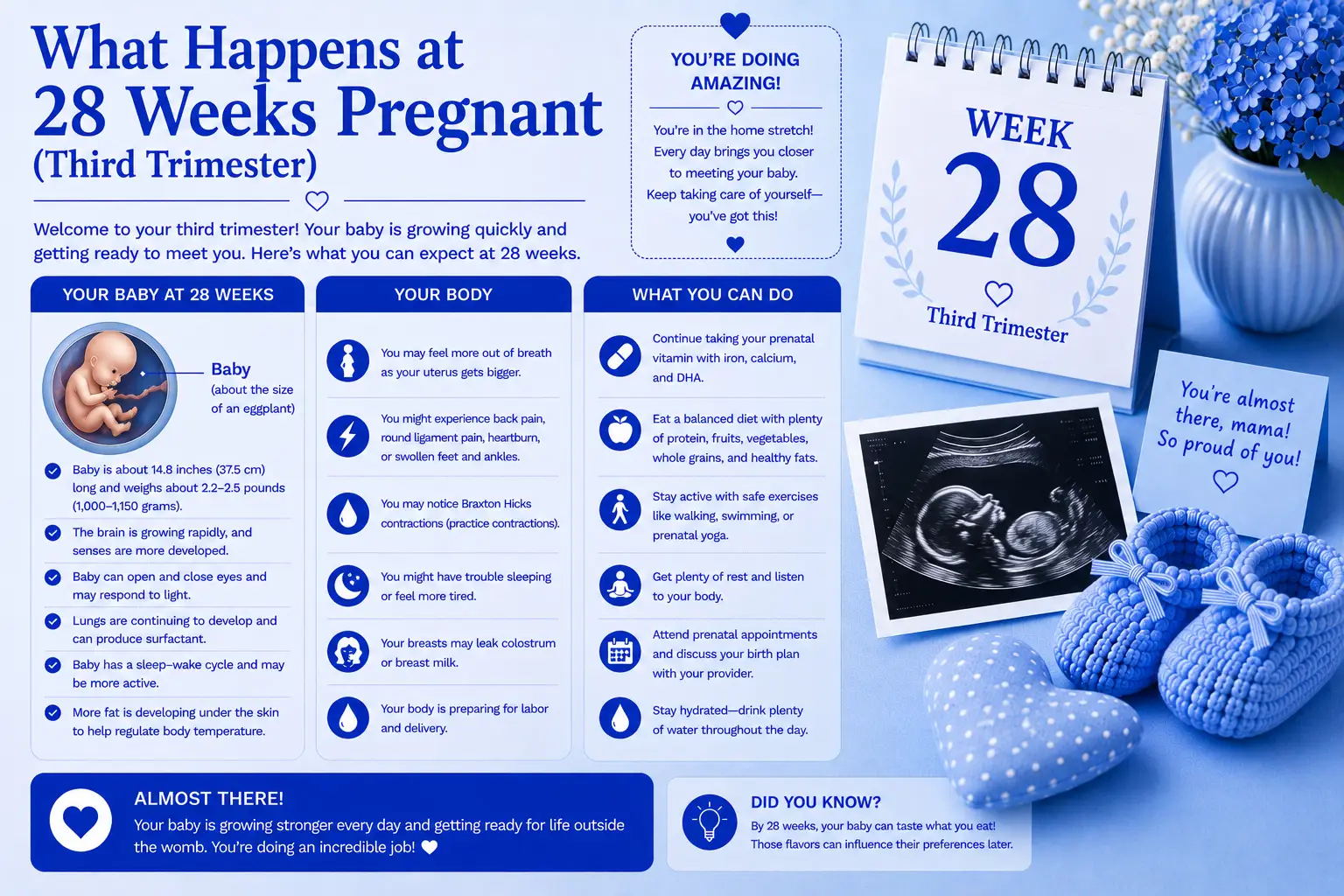
Welcome to the third trimester. At 28 weeks, you’re in the home stretch — roughly 12 weeks to go — and both your body and your baby are gearing up for the final push. Here’s what’s happening this week.

Your Baby at 28 Weeks

Contents hide
1 Your Baby at 28 Weeks
2 Why 28 Weeks Marks the Third Trimester
3 Common Symptoms at 28 Weeks Pregnant
4 Starting Kick Counts
5 Your Body at 28 Weeks Pregnant
6 Preparing for Birth
7 When to Call Your Doctor
8 Tips for Week 28
9 FAQ
9.1 How big is a baby at 28 weeks pregnant?
9.2 Does the third trimester start at 27 or 28 weeks?
9.3 How many kicks should I feel at 28 weeks?
9.4 Why am I so tired at 28 weeks pregnant?
9.5 Is it normal to have Braxton Hicks contractions every day at 28 weeks?

Your baby is about the size of a head of lettuce or eggplant, weighing around 2¼ pounds and measuring roughly 10 inches from crown to rump (about 37–38 cm total length). Development this week includes:

Eyes can open and close, and eyelashes are visible

The brain is developing rapidly, forming deeper grooves and folds

Lungs are maturing and practicing breathing movements, though they’re not yet ready to function outside the womb

Regular movement patterns are becoming established — somersaults, rolls, and position changes are common as there’s still some room to move

The heart rate typically ranges between 110–160 beats per minute

Why 28 Weeks Marks the Third Trimester

Pregnancy doesn’t divide evenly into three neat three-month blocks, so there’s no single universally agreed start date for the third trimester — but 28 weeks is the most widely accepted marker. From here, you’re often described as being at the start of month seven, with appointments typically shifting to every two weeks.

Common Symptoms at 28 Weeks Pregnant

As your baby and belly continue growing, cramped quarters can bring on a new round of symptoms:

Back or pelvic pain

Shortness of breath, as your expanding uterus pushes up against your diaphragm

Braxton Hicks contractions — often daily now, usually irregular and painless

Frequent urination

Hemorrhoids

Occasional incontinence

Fatigue — driven by the sheer metabolic demand of building the placenta, growing your baby, and increasing blood volume, plus disrupted sleep from a growing belly and frequent bathroom trips

Leaking colostrum — some people notice early breastmilk starting to appear, and nursing pads can help if it becomes noticeable

Starting Kick Counts

Twenty-eight weeks is a common time to start doing kick counts — tracking your baby’s movements to monitor wellbeing. The general guideline is to feel at least 10 movements within a two-hour window, ideally at the same time each day when your baby tends to be most active (often after meals or when you’re resting). Movements can feel like kicks, rolls, flutters, or jabs — all of it counts. If your baby’s movement pattern changes significantly or slows down noticeably, contact your provider right away rather than waiting.

Your Body at 28 Weeks Pregnant

Total pregnancy weight gain by this point is typically in the range of 17–24 pounds, though this varies widely depending on your pre-pregnancy weight and body. Your healthcare provider will likely check your weight, blood pressure, urine, and your baby’s heartbeat at each visit from here on, along with your iron levels — low iron is common in the third trimester and can add to fatigue, dizziness, and irritability.

Preparing for Birth

With the third trimester underway, this is a natural time to start thinking through logistics: choosing a pediatrician, deciding on a birth plan, discussing pain management preferences, and finalizing a hospital bag list. There’s no need to have it all figured out this week, but starting the conversation now takes some pressure off later.

When to Call Your Doctor

Contact your provider if you notice a significant decrease or change in fetal movement, regular or painful contractions before 37 weeks (a possible sign of preterm labor), vaginal bleeding, severe headaches, or sudden swelling in your hands or face.

Tips for Week 28

Start your kick count routine

Eat small, frequent meals to manage heartburn and maintain energy

Stay hydrated — aim for around 10 cups of water a day

Try gentle movement like walking or water walking to ease discomfort

Prioritize rest, and don’t be afraid to nap when you can

FAQ

How big is a baby at 28 weeks pregnant?

About the size of a head of lettuce or eggplant — roughly 2¼ pounds and 10 inches from crown to rump.

Does the third trimester start at 27 or 28 weeks?

There’s no single official cutoff, but 28 weeks is the most commonly accepted starting point for the third trimester.

How many kicks should I feel at 28 weeks?

A common guideline is at least 10 movements within a two-hour period during your baby’s active time. If movement seems to drop off significantly, contact your provider.

Why am I so tired at 28 weeks pregnant?

Third-trimester fatigue is driven by the energy demands of growing your baby, disrupted sleep, physical strain from extra weight, and sometimes mild anemia from increased blood volume.

Is it normal to have Braxton Hicks contractions every day at 28 weeks?

Yes, occasional Braxton Hicks are common and usually irregular and painless. If they become regular, painful, or increasingly frequent, contact your provider, as this could signal preterm labor.

Author

DrAdam

Dr. Adam. Obstetrician and Gynecologist

Follow Me
Other Articles
Previous

What happens at 24 weeks pregnant?

Next

What happens at 32 weeks pregnant?

No Comment! Be the first one.

Leave a Reply Cancel reply

Your email address will not be published. Required fields are marked *

What is Did You Search?

The “Did You Search” website was created for all mothers and families. Just search to find all your needs about your children.

Links

  • about
  • contact
  • privacy policy
  • medical disclaimer
  • sitemap
Copyright 2026 — DidYouSearch. All rights reserved.