
Skip to content
DidYouSearch DidYouSearch
  • did you search?
  • Baby Plus+
    • Baby Activities
      • Arts & Crafts
      • Indoor Activities
      • Montessori
      • Music
      • Outdoor Activities
      • Reading
      • Sensory Play
      • Tummy Time
    • Baby Development
      • Brain Development
      • Cognitive Development
      • Emotional Development
      • Fine Motor Skills
      • Growth Milestones
      • Monthly Milestones
      • Motor Skills
      • Physical Development
      • Social Development
      • Speech Development
    • Baby Feeding
      • Allergies
      • Baby Led Weaning
      • Bottle Feeding
      • Breast feeding
        • Breastfeeding Diet
        • Breastfeeding Positions
        • Latch Problems
        • Low Milk Supply
        • Mastitis
        • Pumping Schedule
        • Weaning
      • Burping
      • Cluster Feeding
      • Feeding Schedule
      • Formula Feeding
        • Formula Amount
        • Formula Brands
        • Formula Comparison
        • Formula Preparation
        • Formula Storage
      • Hydration
      • Pumping
      • Solid Foods
    • Baby Gear Reviews
      • Best Baby Carrier
      • Best Baby Monitor
      • Best Baby Strollers
      • Best Bottles
      • Best Breast Pump
      • Best Car Seat
      • Best Cribs
      • Best Diapers
      • Best Formula
      • Best Toys
    • Baby Growth
      • Growth Spurts
      • Height Charts
      • Monthly Growth
      • Percentiles
      • Weight Charts
    • Baby Health
      • Allergies
      • Cold
      • Constipation
      • Cough
      • Diarrhea
      • Ear Infection
      • Fever
      • Flu
      • Pediatric Visits
      • Rashes
      • Teething
      • Vaccines
      • Vomiting
    • Baby Nutrition
      • Dairy
      • Drinks
      • Eggs
      • Fish
      • Fruits
      • Healthy Recipes
      • Meat
      • Snacks
      • Vegetables
      • Vitamins
    • Baby Products
      • Baby Carriers
      • Bassinets
      • Bottles
      • Breast Pumps
      • Car Seats
      • Cribs
      • Diaper Bags
      • High Chairs
      • Monitors
      • Strollers
      • Swings
      • Toys
      • Walkers
    • Baby Recipes
      • BLW Recipes
      • Breakfast
      • Dinner
      • Finger Foods
      • Lunch
      • Purees
      • Snacks
    • Baby Safety
      • Baby Proofing
      • Car Seats
      • Choking Hazards
      • CPR
      • Home Safety
      • Poison Prevention
      • Safe Sleep
      • Sun Protection
      • Water Safety
  • Baby Names
    • Boy Names
    • Girl Names
    • American baby boy names
    • American baby girl names
    • Biblical Names
    • Middle Names
    • Modern Names
    • Short Names
    • Unique Names
    • Unisex Names
  • Recommended
    • Baby Shopping
      • Baby Registry
      • Budget Baby Shopping
      • Hospital Bag
      • Must Have Products
      • Newborn Checklist
      • Nursery Ideas
    • Baby Sleep
      • Bedtime Routine
      • Co Sleeping
      • Crib Safety
      • Nap Schedules
      • Night Wakings
      • Sleep Environment
      • Sleep Products
      • Sleep Regression
      • Sleep Training
      • Wake Windows
      • White Noise
    • Childcare
      • Daycare
      • Babysitters
      • Kindergarten
      • Nannies
      • Preschool
    • Newborn Care
      • Nail Care
      • Baby Hygiene
      • Bathing
      • Crying
      • Diapering
      • Ear Care
      • Eye Care
      • Skin Care
      • Soothing Techniques
      • Temperature
      • Umbilical Cord
    • Special Needs
      • Premature Babies
      • Autism Signs
      • Developmental Delays
      • Down Syndrome
      • NICU
      • Twins
    • Seasonal Baby Care
      • Spring
      • Summer
      • Travel
      • Fall
      • Holidays
      • Winter
  • Parenting
    • Bonding
    • Discipline
    • Emotional Intelligence
    • First Time Parents
    • Gentle Parenting
    • Positive Parenting
    • Routines
    • Single Parents
    • Working Parents
  • Pregnancy
    • Pregnancy Complications
    • Labor & Delivery
    • Postpartum Recovery
    • Pregnancy Exercises
    • Pregnancy Medications
    • Pregnancy Nutrition
    • Pregnancy Sleep
    • Pregnancy Symptoms
    • Pregnancy Tests
    • Pregnancy Vitamins
    • Pregnancy Weeks
  • Toddler
    • Preschool
    • Speech
    • Tantrums
    • Toddler Food
    • Toddler Sleep
    • Behavior
    • Independence
    • Learning
    • Potty Training
  • Traveling with Baby
    • Road Trips
    • Beach
    • Camping
    • Flying
    • Hotels
    • Packing Lists
  • did you search?
  • Baby Plus+
    • Baby Activities
      • Arts & Crafts
      • Indoor Activities
      • Montessori
      • Music
      • Outdoor Activities
      • Reading
      • Sensory Play
      • Tummy Time
    • Baby Development
      • Brain Development
      • Cognitive Development
      • Emotional Development
      • Fine Motor Skills
      • Growth Milestones
      • Monthly Milestones
      • Motor Skills
      • Physical Development
      • Social Development
      • Speech Development
    • Baby Feeding
      • Allergies
      • Baby Led Weaning
      • Bottle Feeding
      • Breast feeding
        • Breastfeeding Diet
        • Breastfeeding Positions
        • Latch Problems
        • Low Milk Supply
        • Mastitis
        • Pumping Schedule
        • Weaning
      • Burping
      • Cluster Feeding
      • Feeding Schedule
      • Formula Feeding
        • Formula Amount
        • Formula Brands
        • Formula Comparison
        • Formula Preparation
        • Formula Storage
      • Hydration
      • Pumping
      • Solid Foods
    • Baby Gear Reviews
      • Best Baby Carrier
      • Best Baby Monitor
      • Best Baby Strollers
      • Best Bottles
      • Best Breast Pump
      • Best Car Seat
      • Best Cribs
      • Best Diapers
      • Best Formula
      • Best Toys
    • Baby Growth
      • Growth Spurts
      • Height Charts
      • Monthly Growth
      • Percentiles
      • Weight Charts
    • Baby Health
      • Allergies
      • Cold
      • Constipation
      • Cough
      • Diarrhea
      • Ear Infection
      • Fever
      • Flu
      • Pediatric Visits
      • Rashes
      • Teething
      • Vaccines
      • Vomiting
    • Baby Nutrition
      • Dairy
      • Drinks
      • Eggs
      • Fish
      • Fruits
      • Healthy Recipes
      • Meat
      • Snacks
      • Vegetables
      • Vitamins
    • Baby Products
      • Baby Carriers
      • Bassinets
      • Bottles
      • Breast Pumps
      • Car Seats
      • Cribs
      • Diaper Bags
      • High Chairs
      • Monitors
      • Strollers
      • Swings
      • Toys
      • Walkers
    • Baby Recipes
      • BLW Recipes
      • Breakfast
      • Dinner
      • Finger Foods
      • Lunch
      • Purees
      • Snacks
    • Baby Safety
      • Baby Proofing
      • Car Seats
      • Choking Hazards
      • CPR
      • Home Safety
      • Poison Prevention
      • Safe Sleep
      • Sun Protection
      • Water Safety
  • Baby Names
    • Boy Names
    • Girl Names
    • American baby boy names
    • American baby girl names
    • Biblical Names
    • Middle Names
    • Modern Names
    • Short Names
    • Unique Names
    • Unisex Names
  • Recommended
    • Baby Shopping
      • Baby Registry
      • Budget Baby Shopping
      • Hospital Bag
      • Must Have Products
      • Newborn Checklist
      • Nursery Ideas
    • Baby Sleep
      • Bedtime Routine
      • Co Sleeping
      • Crib Safety
      • Nap Schedules
      • Night Wakings
      • Sleep Environment
      • Sleep Products
      • Sleep Regression
      • Sleep Training
      • Wake Windows
      • White Noise
    • Childcare
      • Daycare
      • Babysitters
      • Kindergarten
      • Nannies
      • Preschool
    • Newborn Care
      • Nail Care
      • Baby Hygiene
      • Bathing
      • Crying
      • Diapering
      • Ear Care
      • Eye Care
      • Skin Care
      • Soothing Techniques
      • Temperature
      • Umbilical Cord
    • Special Needs
      • Premature Babies
      • Autism Signs
      • Developmental Delays
      • Down Syndrome
      • NICU
      • Twins
    • Seasonal Baby Care
      • Spring
      • Summer
      • Travel
      • Fall
      • Holidays
      • Winter
  • Parenting
    • Bonding
    • Discipline
    • Emotional Intelligence
    • First Time Parents
    • Gentle Parenting
    • Positive Parenting
    • Routines
    • Single Parents
    • Working Parents
  • Pregnancy
    • Pregnancy Complications
    • Labor & Delivery
    • Postpartum Recovery
    • Pregnancy Exercises
    • Pregnancy Medications
    • Pregnancy Nutrition
    • Pregnancy Sleep
    • Pregnancy Symptoms
    • Pregnancy Tests
    • Pregnancy Vitamins
    • Pregnancy Weeks
  • Toddler
    • Preschool
    • Speech
    • Tantrums
    • Toddler Food
    • Toddler Sleep
    • Behavior
    • Independence
    • Learning
    • Potty Training
  • Traveling with Baby
    • Road Trips
    • Beach
    • Camping
    • Flying
    • Hotels
    • Packing Lists
Close

Search

Home/Baby Safety/Types of Car Seats Explained
Baby SafetyCar Seats

Types of Car Seats Explained

By Ali
August 3, 2026 4 Min Read
0

Choosing the right car seat can feel overwhelming, especially for first-time parents. With infant seats, convertible models, booster seats, and all-in-one options available, it’s easy to wonder which one your child actually needs—and when it’s time to switch.

The truth is that the safest car seat isn’t simply the most expensive one. It’s the one that matches your child’s age, height, weight, and developmental stage while being installed and used correctly every trip. Safety authorities recommend keeping children in each stage as long as they remain within the manufacturer’s height and weight limits because each transition changes the level of protection your child receives.

This complete guide explains every major type of car seat, compares their features, highlights common mistakes, and helps you choose the best option for your growing child.

Why Different Types of Car Seats Exist

Contents hide
1 Why Different Types of Car Seats Exist
2 Types of Car Seats at a Glance
3 Infant Car Seats
3.1 What Is an Infant Car Seat?
3.2 Advantages
3.3 Disadvantages
4 Convertible Car Seats
4.1 What Is a Convertible Car Seat?
4.2 Advantages
4.3 Disadvantages
5 Booster Seats
5.1 What Is a Booster Seat?
5.2 High-Back Booster
5.3 Backless Booster
6 Infant vs Convertible vs Booster Comparison
7 When Should You Switch Car Seats?
8 Which Type Is Safest?
9 Common Parent Mistakes
10 How to Choose the Right Car Seat
11 Cost Comparison
12 Myth vs Fact
12.1 Myth:
12.2 Myth:
12.3 Myth:
13 Final Thoughts
14 Frequently Asked
15 Common Questions

Children’s bodies develop rapidly during the first decade of life.

A newborn’s head represents nearly one-quarter of total body weight, while neck muscles and spinal structures are still developing. As children grow, their bodies become better able to withstand crash forces, allowing them to transition through different restraint systems.

Each type of car seat is specifically engineered for a different stage of growth, providing age-appropriate protection that standard seat belts alone cannot offer.

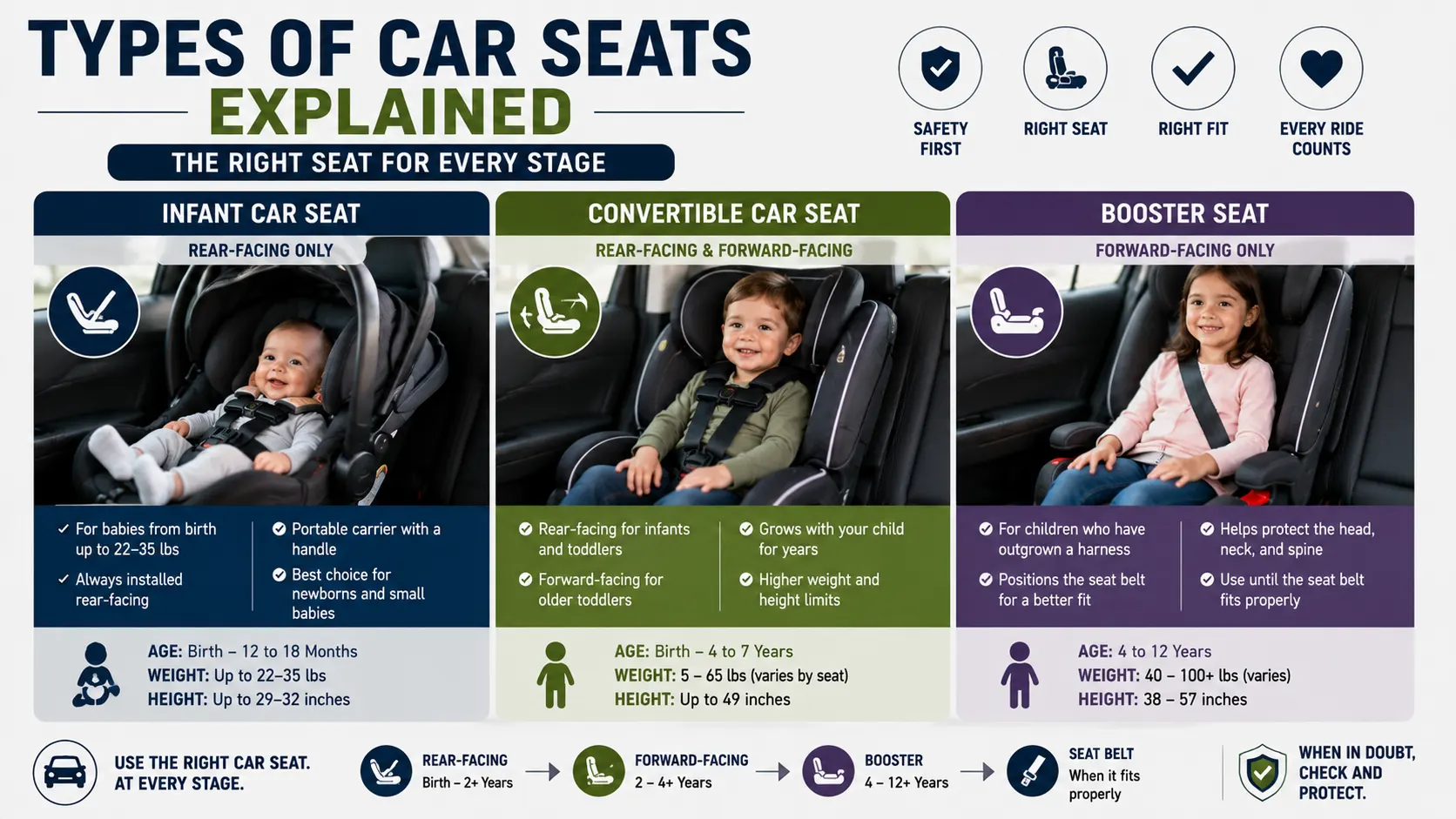
Types of Car Seats at a Glance

Car Seat Type Age Direction Best For
Infant Car Seat Birth–12+ months Rear-facing only Newborns and young babies
Convertible Car Seat Birth–4+ years Rear & Forward-facing Long-term use
Booster Seat Around 5–12 years Forward-facing Older children using vehicle seat belt

Infant Car Seats

What Is an Infant Car Seat?

An infant car seat is designed exclusively for newborns and young babies. It can only be installed in the rear-facing position, which provides the highest level of protection for an infant’s fragile neck, head, and spine.

Most infant seats feature a removable carrier that clicks into a base installed in the vehicle, making it easy to move a sleeping baby without disturbing them.

Advantages

  • Excellent newborn fit
  • Portable carrier
  • Compatible with many strollers
  • Easy transfers between vehicles
  • Lightweight

Disadvantages

  • Short lifespan
  • Must eventually purchase another seat
  • Weight limits reached relatively quickly

Convertible Car Seats

What Is a Convertible Car Seat?

A convertible car seat grows with your child by transitioning from rear-facing to forward-facing.

Unlike infant seats, convertible models stay installed inside the vehicle and are intended for years of use.

Many modern models support extended rear-facing, allowing children to remain in the safest position for longer.

Advantages

  • Long lifespan
  • Better value over time
  • Higher rear-facing limits
  • Excellent crash protection

Disadvantages

  • Heavier
  • Not portable
  • Cannot function as an infant carrier

Booster Seats

What Is a Booster Seat?

Booster seats are designed for children who have outgrown a forward-facing harness but are still too small for an adult seat belt.

Rather than restraining the child directly, a booster positions the vehicle’s seat belt correctly across the strongest parts of the body.

There are two common types:

High-Back Booster

Ideal for vehicles without headrests or for children who benefit from additional side-impact protection.

Backless Booster

Suitable for older children in vehicles with adequate head support.

Infant vs Convertible vs Booster Comparison

Feature Infant Convertible Booster
Rear-facing Yes Yes No
Forward-facing No Yes Yes (seat belt)
Portable Yes No Usually No
Best for newborn Excellent Good Not suitable
Long-term use Low High Medium
Works with stroller Yes No No

When Should You Switch Car Seats?

Instead of changing seats based on age alone, always follow the manufacturer’s height and weight limits. Safety experts recommend keeping children in each stage for as long as the seat allows.

Typical progression:

  • Birth → Rear-facing infant or convertible seat
  • Toddler → Rear-facing convertible
  • Preschool → Forward-facing convertible
  • School age → Booster
  • Older child → Adult seat belt after proper belt fit

Which Type Is Safest?

No single type is universally safer than another.

The safest choice is always:

  • Appropriate for your child’s size
  • Correctly installed
  • Properly adjusted
  • Used on every ride

Research consistently shows that rear-facing travel provides superior protection for young children because it distributes crash forces across the back, neck, and head.

Common Parent Mistakes

Many injuries occur not because parents buy the wrong seat, but because they use the right seat incorrectly.

Avoid these common mistakes:

  • Switching to forward-facing too early
  • Moving to a booster before the child is ready
  • Loose harness straps
  • Twisted harness
  • Bulky winter coats under the harness
  • Incorrect recline angle
  • Improper installation
  • Ignoring expiration dates
  • Using a seat after a moderate or severe crash

How to Choose the Right Car Seat

When shopping, consider:

  • Your child’s current height and weight
  • Your vehicle size
  • Ease of installation
  • Daily travel habits
  • Budget
  • Number of vehicles
  • Future family plans

Families expecting multiple children often save money by investing in a high-quality convertible seat after the infant stage.

Cost Comparison

Seat Type Average Lifespan Approximate Value
Infant 9–18 months Moderate
Convertible 4–8 years Excellent
Booster 4–6 years Good

Although convertible seats usually cost more upfront, they often provide the best long-term value because they eliminate the need for an early replacement.

Myth vs Fact

Myth:

A more expensive car seat is always safer.

Fact: Every car seat sold in regulated markets must meet required federal safety standards. Premium models often add convenience features rather than higher crash protection.

Myth:

Children should face forward at their first birthday.

Fact: Children should remain rear-facing until they reach the rear-facing height or weight limit of their seat.

Myth:

Booster seats are only for short children.

Fact: Booster readiness depends on proper seat belt fit, not age or height alone.

Final Thoughts

Understanding the differences between infant, convertible, and booster car seats helps parents make informed decisions that keep children safer at every stage of growth.

Instead of rushing through each stage, keep your child in the current seat until they reach its maximum height or weight limit, ensure the seat is installed correctly, and check the harness fit before every trip. A properly chosen and correctly used car seat offers far more protection than simply upgrading to the next stage too early.

Continue exploring: browse the full Baby Safety hub.

Frequently Asked

Common Questions

Until reaching the manufacturer's height or weight limit, which varies by model.
Yes. Many convertible car seats are approved for newborns, provided they fit your baby's size and are installed correctly.
Only after your child outgrows the forward-facing harness and meets the booster seat requirements specified by the manufacturer.
All-in-one seats offer extended usability, but they are generally larger, heavier, and less portable than dedicated infant seats.
Author

Ali

Digital Marketing enthusiast with a passion for SEO, web design, analytics, and creative problem-solving.

Follow Me
Other Articles
Previous

Chest Clip Position: The Most Common Car Seat Mistake

Next

How to Choose the Right Car Seat for Your Child

No Comment! Be the first one.

Leave a Reply Cancel reply

Your email address will not be published. Required fields are marked *

What is Did You Search?

The “Did You Search” website was created for all mothers and families. Just search to find all your needs about your children.

Links

  • about
  • contact
  • privacy policy
  • medical disclaimer
  • sitemap
Copyright 2026 — DidYouSearch. All rights reserved.