
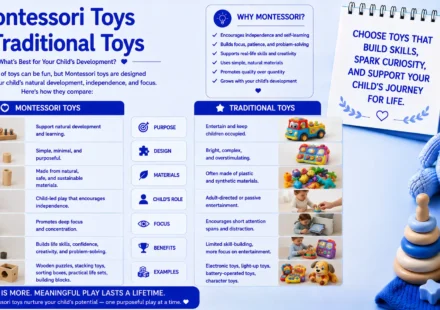
Montessori Toys vs Traditional Toys

Walk down any toy aisle and you’ll see two very different worlds colliding: rows of flashing, battery-powered gadgets next to a smaller, quieter shelf of plain wooden blocks and stacking rings. Parents researching Montessori toys vs. traditional…
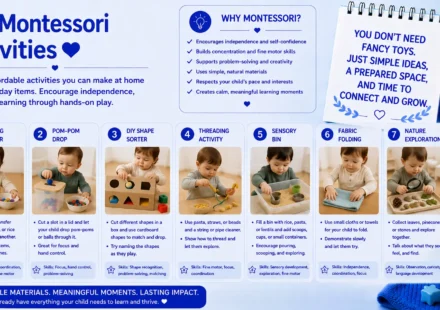
DIY Montessori Activities
You don’t need a shelf full of expensive wooden materials to raise a curious, capable kid. Some of the best Montessori activities for toddlers and preschoolers come from things already sitting in your kitchen drawer — a spoon, a pitcher, a few…
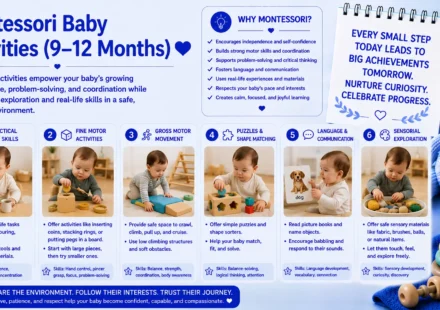
Montessori Baby Activities (9–12 Months)
Between 9 and 12 months, babies become true explorers on the move. Many crawl confidently, pull to stand, cruise along furniture, and begin practicing early walking skills. Fine motor control sharpens as the grasp becomes more precise, pointing appears,…
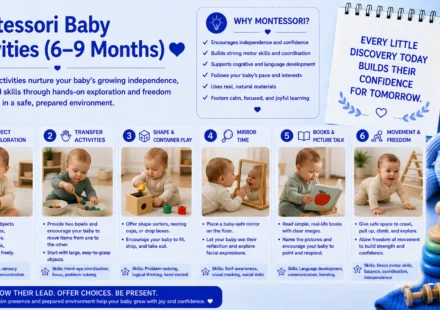
Montessori Baby Activities (6–9 Months)
Between 6 and 9 months, babies shift from mostly reflexive movements to more purposeful exploration. They begin sitting more steadily, reaching with intention, transferring objects hand-to-hand, and discovering cause and effect. This stage is ideal for…
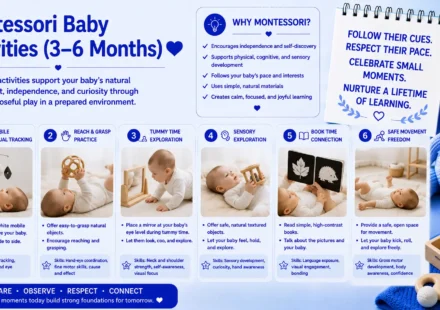
Montessori Baby Activities (3–6 Months)
Between three and six months, babies change quickly. Vision improves, hands begin to open and grasp with intention, and many start rolling or showing stronger head control. Play emerges in a new way. Montessori activities for this stage focus on…
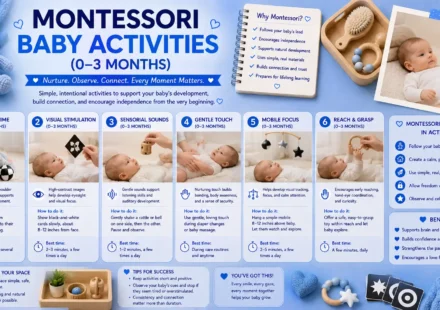
Montessori Baby Activities (0–3 Months)
The first three months with a newborn feel intense and quiet at the same time. Your baby sleeps a lot, feeds often, and spends most awake moments simply taking in the world. Montessori in this stage is not about elaborate toys or structured lessons. It…
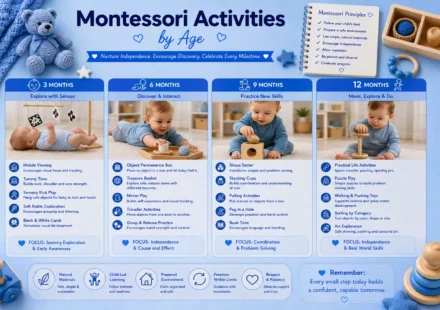
Montessori Activities by Age
Montessori activities by age follow the child’s natural developmental stages rather than a fixed curriculum. Dr. Maria Montessori observed that children pass through sensitive periods—windows of intense interest in movement, language, order, and…
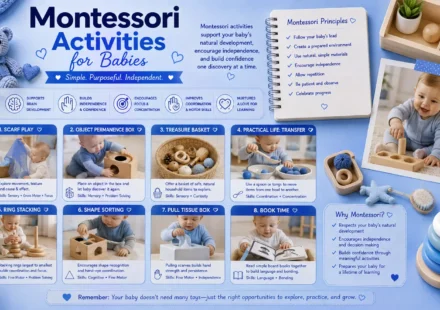
Montessori Activities for Babies
Montessori activities for babies focus on supporting natural development from the earliest months. Rather than flashy toys or structured lessons, the approach emphasizes a prepared environment, freedom of movement, and simple sensory experiences that…