


















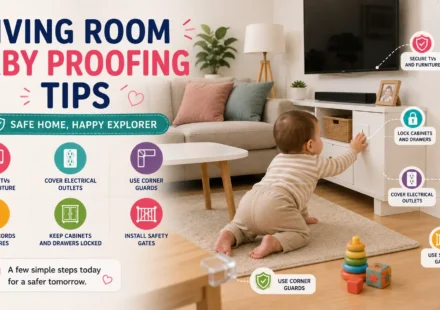
Living Room Baby Proofing Tips
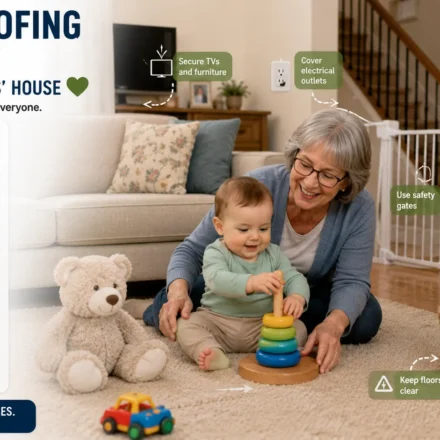
The living room causes a specific kind of trouble other rooms don’t: it’s full of things designed to be interesting — remotes, cords, glowing screens, low shelves — sitting at exactly a baby’s height and reach. This guide focuses on the…
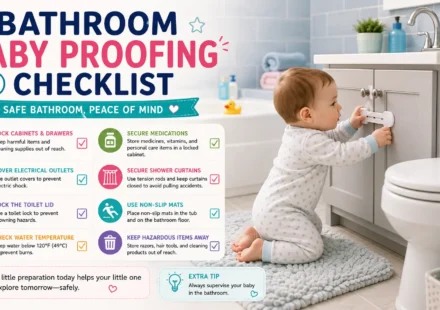
Bathroom Baby Proofing Checklist
The bathroom is consistently ranked as the second most hazardous room in the house, right behind the kitchen — and for a reason many parents underestimate: drowning is the leading cause of unintentional death for children ages 1 to 4, and it can happen…
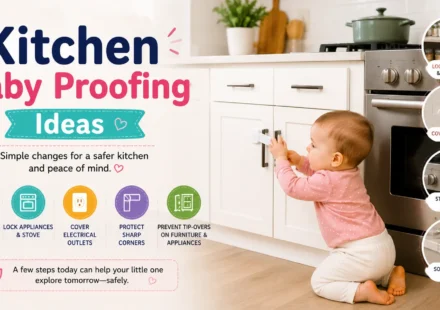
Kitchen Baby Proofing Ideas
The kitchen is consistently identified as the most hazardous room in the house for young children, and the reason is specific: it’s the one room that combines heat, toxic substances, and sharp or heavy objects all within a toddler’s reach,…
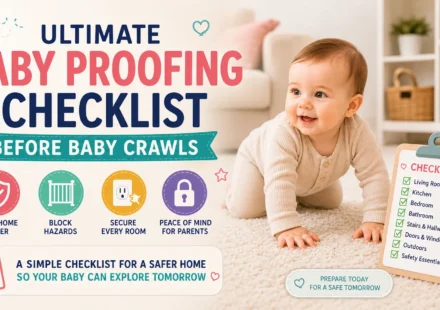
Ultimate Baby Proofing Checklist Before Baby Crawls
If your baby is rocking on hands and knees, pivoting on their belly, or scooting backward, crawling is close — typically days to a few weeks away. This isn’t a timeline spread across months; it’s the complete list of what needs to be done,…
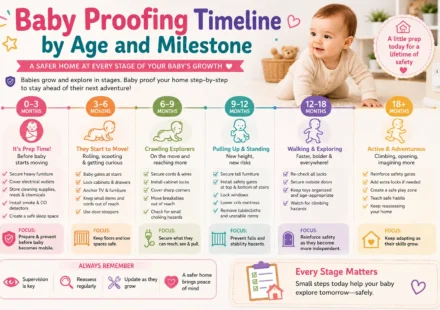
Baby Proofing Timeline by Age and Milestone
This is a working timeline, not an explainer — a schedule you can save and check off as your baby grows. Each stage lists exactly what to buy, install, or fix, organized by the age range where it typically becomes relevant. For the reasoning behind why…
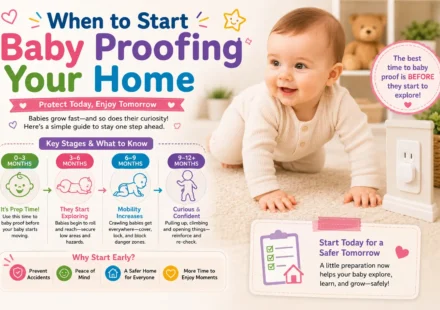
When to Start Baby Proofing Your Home
“I’ll baby proof once they start crawling” is the most common plan parents describe — and it’s also the plan that leaves the most families scrambling. Babies reach for objects around 4 months, roll as early as 4–5 months, and some…
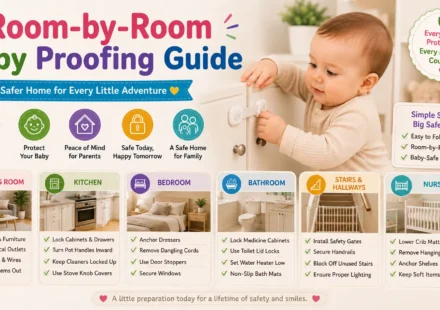
Room-by-Room Baby Proofing Guide
Most baby proofing guides either give you one giant checklist with no order of priority, or focus on a single room and leave you to figure out the rest. This guide does both: it tells you what to fix first, no matter your budget or timeline, then walks…
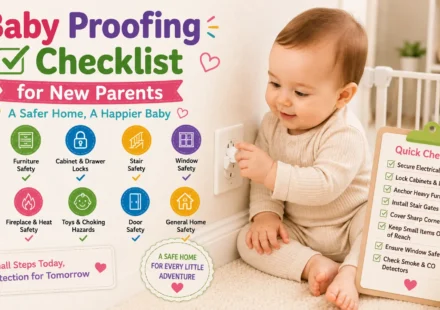
Baby Proofing Checklist for New Parents
Most baby proofing checklists list every hazard in every room at once, which makes the task feel bigger than it needs to be on day one. Babies don’t gain access to every hazard simultaneously — a newborn can’t reach a low cabinet, and a…
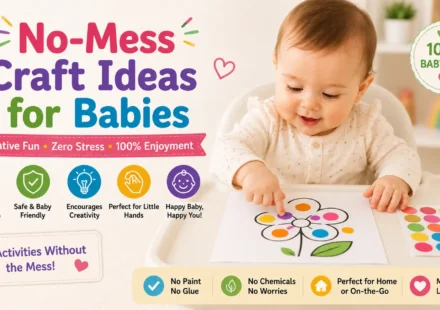
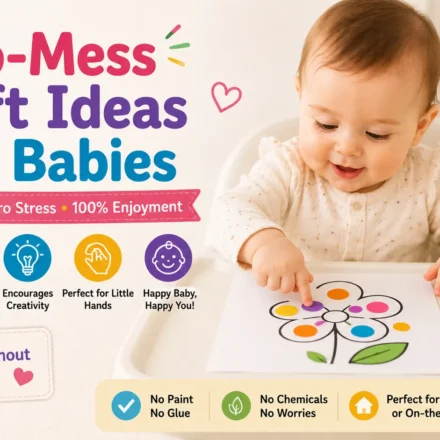
No-Mess Craft Ideas for Babies
Plenty of “mess-free” round-ups include cotton ball bins, loose small-item sensory bottles, or bead-filled containers — fine for a toddler who’s stopped mouthing things, but not actually mess-free or safe once a baby gets hold of them.…
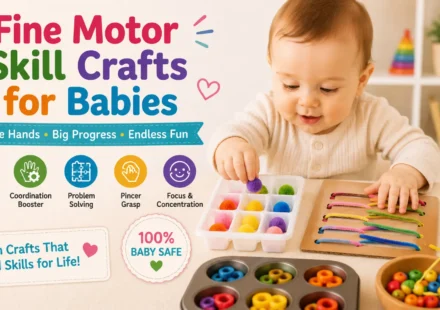
Fine Motor Skill Crafts for Babies
Search “fine motor activities” and most results are beads, tongs, scissors, and buttons — all toddler and preschooler skills that require a pincer grasp and hand control a baby simply doesn’t have yet. A baby’s fine motor…